A friction tester is an essential type of testing equipment in modern materials science, engineering research and development, quality control, and product performance evaluation. Its core function is to measure the friction behavior and friction performance of material surfaces during contact and relative motion, providing critical data support for design, manufacturing, and quality inspection. Friction is a ubiquitous phenomenon in engineering applications; it affects mechanical efficiency, energy consumption, safety performance, and product lifespan. Therefore, accurate and repeatable friction testing is crucial across multiple industries. This article systematically introduces the principles, classifications, testing methods, data analysis, application scenarios, industry standards, and future development trends of friction testers, helping readers gain a comprehensive understanding of this testing tool and its value in scientific research and practical engineering.
Definition of a Friction Tester
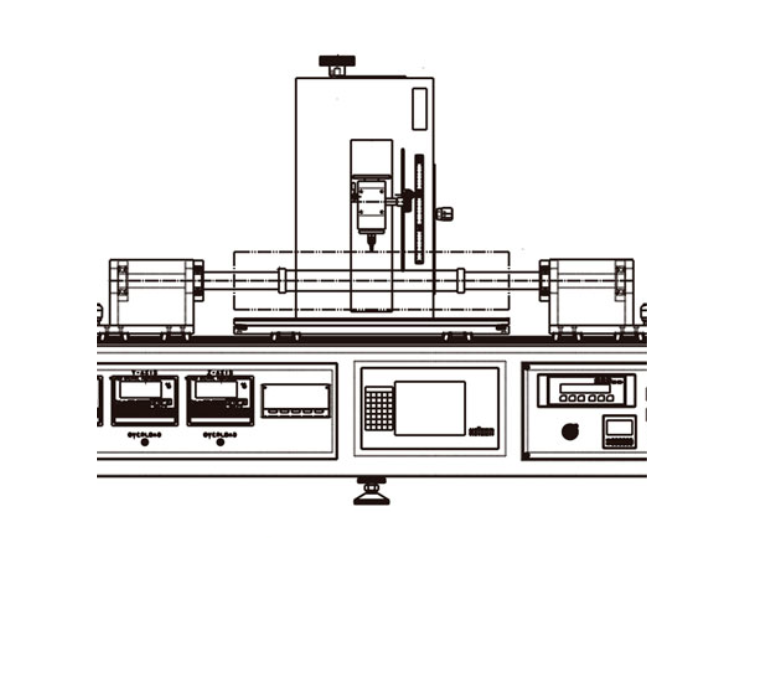
A friction tester is a device used to measure the friction behavior of materials or material combinations under contact conditions. It can determine key values such as friction resistance, friction force, and coefficient of friction. Typically, it consists of a specimen clamping device, a load application mechanism, a motion execution system, and force sensors. It allows control of parameters such as force, speed, and motion mode, enabling precise measurement of friction characteristics.
This type of testing equipment is mainly used to measure the coefficient of friction (COF) of material surfaces during contact, including two primary parameters: static friction and dynamic friction. Static friction describes the resistance before sliding begins, while dynamic friction represents the resistance during continuous sliding.
In addition to measuring friction force, friction testers can be equipped with various sensors and accessories to measure more complex tribological parameters, such as wear amount, wear rate, sound generated during friction, and temperature changes.
Core Value of Friction Testing
Friction is the resistance generated when two contacting surfaces move relative to each other. It has a decisive impact on mechanical performance, energy consumption, material lifespan, and safety. In industrial applications, friction testing provides several key benefits:
Product design optimization: Friction data serve as an important basis for designing mechanical components, contact interface structures, and lubrication schemes.
Material selection and development: By testing friction performance of different material combinations, engineers can develop materials with lower friction and improved wear resistance.
Quality control: The stability of the friction coefficient is an important indicator for evaluating surface treatment quality, coating performance, and manufacturing processes.
Safety and performance verification: In applications requiring high friction (such as brake materials) or low friction (such as conveyor belts and packaging films), precise friction testing ensures performance and safety compliance.
A friction tester operates by bringing two material surfaces into contact under controlled conditions and generating relative motion between them. A force sensor records the friction force, and performance indicators are calculated based on load, speed, and other parameters. The basic workflow can be summarized as follows:
Sample preparation
Materials that meet experimental requirements are selected and mounted in the test fixtures. Surface preparation, dimensions, and fixation methods must comply with relevant standards or testing protocols.
Load application
The friction tester applies a vertical load (normal force) to press the two contact surfaces together. The load may be constant or dynamic, depending on the test objective and material characteristics.
Generation of relative motion
The instrument creates relative motion between the two samples. This motion may involve linear sliding, rotational movement, or reciprocating motion, each simulating different real-world operating conditions.
Measurement of friction force
During testing, high-precision force sensors record changes in friction force in real time. The coefficient of friction is calculated as the ratio of friction force to applied load.
Data processing and analysis
The accompanying software processes the collected force, displacement, and speed data to generate curves and automatically calculate static and dynamic friction coefficients. It also supports statistical analysis and report generation.
Friction testing not only records the magnitude of friction force but also displays friction trends over time or under varying loads, helping analyze friction mechanisms, evaluate surface treatments, and assess lubrication conditions.
Although the structure of a friction tester may vary depending on its type and purpose, it generally includes the following key components:
Specimen fixture and loading mechanism
These components secure the test materials and apply the required load. Loading mechanisms may use weights, springs, mechanical hydraulic systems, or electric control systems to precisely regulate the applied force.
Motion system
The motion system enables relative sliding between specimens. Common configurations include:
Linear sliding platforms for straight-line motion;
Rotating disks where one sample rotates against another;
Reciprocating systems that simulate repeated contact conditions.
Force sensors and measurement system
Force sensors are the core component of a friction tester, recording friction force and load data in real time. Common sensor types include strain-gauge and piezoelectric sensors. High-precision measurement systems reduce error and improve reliability.
Modern friction testers often include displacement sensors to measure movement distance, speed control modules to regulate motion rate, and temperature or environmental sensors to study friction under varying environmental conditions.
Data acquisition and analysis software
The accompanying software typically provides real-time curve display, automatic calculation of friction coefficients, data storage, and report generation, enabling engineers to analyze and compare experimental results efficiently.
Different friction testers support various testing modes, including:
Static coefficient of friction testing
The static coefficient of friction is defined as the ratio of the maximum friction force required to initiate motion to the normal load. The tester records the peak friction force just before sliding begins.
Common methods include the horizontal sliding method, where a weighted sled slides across a surface, and the inclined plane method, where the platform angle is gradually increased until the sample begins to slide.
Dynamic coefficient of friction testing
The dynamic (kinetic) coefficient of friction is the ratio of friction force to load during continuous sliding motion. The tester measures friction force during movement and calculates the dynamic coefficient accordingly.
Reciprocating friction testing
Some friction testers support reciprocating motion, simulating repeated contact conditions that closely resemble actual mechanical operation.
Rotational friction testing
In rotational testing, one specimen rotates while in contact with a stationary or oppositely moving sample. This method is commonly used to study continuous friction behavior and evaluate coatings, wear-resistant layers, and lubricating materials.
Industry Standards and Specifications
Friction testing must follow standardized procedures to ensure comparability of results. Major international standards include:
ISO 8295 for determining the coefficient of friction of plastic films and sheets;
ASTM D1894 for measuring static and kinetic coefficients of friction of plastic films and sheeting;
TAPPI T549 for friction testing of paper and paperboard.
These standards specify sample dimensions, load conditions, speed ranges, and measurement methods, ensuring consistency across laboratories.
Friction testers are widely used across industries involving contact or sliding between materials. Typical application areas include:
Manufacturing and material development
Used to evaluate friction performance under varying loads, speeds, and surface conditions, particularly in metals, composites, and plastics research.
Packaging and film industry
Packaging films, paper, and plastic bags require controlled friction characteristics to prevent jamming or slipping during production and handling.
Textile and consumer goods industry
Fabric and leather friction properties affect tactile feel and comfort. Friction testing supports textile design and performance evaluation.
Automotive and transportation
Brake pads, tires, and road surfaces rely on controlled friction characteristics for safety and performance verification.
Medical devices and micro-mechanics
In biomedical implants and precision mechanical systems, friction behavior directly affects function and service life.
Aerospace and extreme environments
Vacuum and low-temperature friction testing supports evaluation of material performance under extreme conditions.
Data Interpretation and Analysis
The primary outputs of friction testing typically include:
Static coefficient of friction (μs), reflecting resistance before motion;
Dynamic coefficient of friction (μk), representing resistance during motion;
Friction force curves showing changes over time, load, or speed;
Relationships between friction and load.
Analysis of these curves can reveal surface consistency, lubrication failure, material wear, and comparative responses among materials.
For example, in packaging materials, an excessively high static coefficient may cause stacking resistance, while an excessively low dynamic coefficient may result in slipping during transport.
Precise control of load and motion
Accurate load and speed control are essential to avoid interference in results. Modern friction testers use precision servo systems and sensor feedback to enhance control accuracy.
Environmental influence factors
Temperature, humidity, and contaminants can significantly affect results. High-precision testing often requires controlled environmental conditions.
Data noise and error processing
Friction signals are typically small and susceptible to noise. Advanced data acquisition and filtering technologies are used to ensure reliability.
High precision and multifunctional integration
Future friction testers will emphasize higher resolution measurement, multi-parameter synchronization (force, displacement, temperature), and expanded environmental simulation capabilities.
Automation and intelligent control
Automated specimen loading, intelligent data analysis, and result evaluation will reduce human error and improve efficiency.
Digitalization and cloud data sharing
Friction test data may be stored and analyzed via cloud platforms, enabling remote monitoring and large-scale comparative analysis.
Multi-physics coupled testing
Integration of temperature control, humidity simulation, and high-speed friction modules will allow testing under more realistic service conditions.
As a key device for measuring surface friction performance, the friction tester plays a vital role in modern material evaluation, quality control, and engineering development. Whether in packaging, material research, automotive manufacturing, or high-precision component industries, accurate measurement of friction performance is indispensable. With continued technological advancement, friction testers will evolve toward higher precision, broader applicability, greater functional integration, and intelligent operation, providing reliable and scientific friction performance data for a wide range of industries.


