Adhesion Strength is a quantitative indicator of the bonding force between a material surface and its substrate. It is a critical parameter in evaluating the engineering performance of coatings, adhesives, composite materials, and other interfacial systems. Whether in durability testing of coating–substrate bonding, quality control of adhesive products, or evaluation of interlaminar bonding strength in composites, adhesion testing plays an irreplaceable role. There are numerous adhesion test methods, ranging from simple tape pull-off tests to quantitative pull-off techniques. Each method is suited to different material structures and testing objectives. This article provides a comprehensive introduction to how adhesion strength is tested, including basic principles, testing methods, standards and specifications, equipment selection, experimental procedures, and result analysis, offering systematic guidance for research and engineering practice.
Definition of Adhesion and Mechanisms
Adhesion refers to the magnitude of force required to separate two different materials at their interface. It reflects the strength of interfacial bonding. For coatings, adhesion represents the ability of the coating to adhere to the substrate and is fundamental to ensuring long-term corrosion resistance, wear resistance, decorative performance, and overall durability.
The formation of adhesion involves multiple physicochemical mechanisms, including:
Mechanical interlocking: Mechanical anchoring formed when the coating penetrates microscopic pores and irregularities on the substrate surface.
Chemical bonding: Chemical bonds formed at the interface, including covalent and ionic bonds.
Physical adsorption (van der Waals forces): Weak intermolecular interactions contributing to interfacial bonding.
Diffusion bonding: Interfacial molecular diffusion between layers that enhances bonding strength.
These mechanisms collectively determine the magnitude and quality of adhesion. Insufficient coating adhesion often leads to premature peeling, fatigue failure, accelerated corrosion, and reduced product lifespan. Therefore, proper evaluation and testing of adhesion are essential for design, manufacturing, and quality supervision.
Although different adhesion test methods are based on varying mechanical principles, their core objective is consistent: to apply an external force to separate the interface and record the force value or failure behavior at the point of separation. According to the direction of force and testing approach, adhesion testing methods can be classified as follows:
Peel tests are primarily used for flexible materials and adhesive tapes. The force is applied by peeling one bonded material from another at a specified angle and speed. This dynamic separation method reflects mechanical behavior during the peeling process.
Pull-off tests involve bonding a standardized loading fixture (dolly) to the coating surface and applying tensile force perpendicular to the surface until separation occurs. The maximum force is recorded and used to calculate quantitative adhesion strength.
Cross-cut or cross-hatch tests involve cutting a grid pattern into the coating surface, applying adhesive tape over the area, and rapidly removing it. The degree of coating detachment is evaluated to assign an adhesion rating. This is a qualitative or semi-quantitative method.
Scratch tests and related methods use a stylus or hard indenter to apply progressively increasing load to the coating surface, identifying the critical load at which failure occurs. These are especially suitable for thin films or nanocoatings.
Each method has specific application ranges and limitations. The appropriate choice depends on material type, coating thickness, substrate characteristics, and testing objectives.
Cross-Cut / Cross-Hatch Test
Method Overview
The cross-cut method is a simple and intuitive adhesion test commonly used for field quality assessment or rapid screening. A grid pattern is cut into the coating, adhesive tape is applied over the cut area, and then quickly removed. Adhesion is evaluated based on the extent of coating removal.
Procedure
Straight, evenly spaced cuts are made in one direction on the coating surface.
Perpendicular cuts are then made to form a grid pattern.
A standard pressure-sensitive tape is applied and pressed firmly to ensure full contact.
The tape is removed at a specified angle and speed.
The amount of coating detachment is visually evaluated and rated according to standard grading scales, often from 0 to 5. with higher grades indicating better adhesion.
While simple and cost-effective, this method involves some subjectivity due to visual assessment. It is commonly standardized under ASTM D3359 and ISO 2409.
Suitable for relatively thin and uniform coatings such as conventional paints and powder coatings.
Not suitable for thick, flexible, or highly deformable coatings.
Useful for on-site inspection but does not provide absolute quantitative values.
Pull-Off Test
Principle
The pull-off test is a quantitative method for measuring adhesion strength. A standardized loading fixture (dolly) is bonded to the coating surface using a strong adhesive. After curing, tensile force is applied perpendicular to the surface until failure occurs. Adhesion strength is calculated by dividing the maximum force by the bonded area, typically expressed in MPa or psi.
Procedure
Select an appropriate dolly size and bond it to the coating surface using a suitable adhesive.
Allow the adhesive to fully cure.
Attach the testing device to the dolly.
Apply perpendicular tensile force at a controlled rate until separation occurs.
Record the maximum load and calculate adhesion strength based on the test area.
This method can be conducted using manual, mechanical, or hydraulic devices and provides precise numerical results. It is standardized under ASTM D4541 and ISO 4624.
Advantages
Provides quantitative adhesion values.
Applicable to various rigid and deformable substrates, including metals, wood, and plastics.
Offers good comparability when parameters are controlled.
Limitations
Requires compatible adhesives.
More complex operation and stricter test conditions.
Time is needed for adhesive curing.
Peel Strength Test
Overview
The peel test is a dynamic adhesion method commonly used for flexible materials, adhesive tapes, and laminated films. One end of the bonded specimen is peeled from the substrate at a constant speed and defined angle (such as 90° or 180°). The force required per unit width represents peel strength.
It is widely used in evaluating pressure-sensitive tapes, packaging materials, and composite films. Typical standards include ASTM D3330.
Applications
Quality control of adhesive tapes.
Reliability evaluation of flexible bonded interfaces.
Testing of consumer goods and medical adhesive products.
Scratch Test and Other Methods
Scratch tests apply increasing load via a stylus to determine the critical load at which coating failure occurs.
Bend tests evaluate cracking or detachment under bending stress.
Impact tests apply sudden force via falling weight to assess adhesion performance under shock conditions.
These methods are often used in research or specific engineering analyses.
Adhesion testing is governed by numerous international and national standards that define procedures, equipment requirements, parameters, specimen preparation, and reporting formats to ensure repeatability and comparability.
ASTM Standards
ASTM D4541 — Defines pull-off strength testing procedures, including equipment, loading rates, specimen preparation, and reporting requirements.
ASTM D3359 — Specifies tape test methods including X-cut and cross-cut evaluations.
ASTM D3330 — Covers peel adhesion testing of pressure-sensitive tapes.
ISO Standards
ISO 4624 — Specifies pull-off adhesion testing methods for paints and varnishes.
ISO 2409 — Standardizes cross-cut adhesion evaluation procedures.
National standards in various countries often align with ISO and ASTM frameworks to ensure global consistency.
Pull-Off Adhesion Testers
These devices may be mechanical, hydraulic, or electric and are equipped with loading heads, load sensors, and control systems. They apply perpendicular force and record maximum load or force–time curves.
Cross-Cut Test Tools
Include standardized cutting blades and spacing guides used with adhesive tape for rapid evaluation.
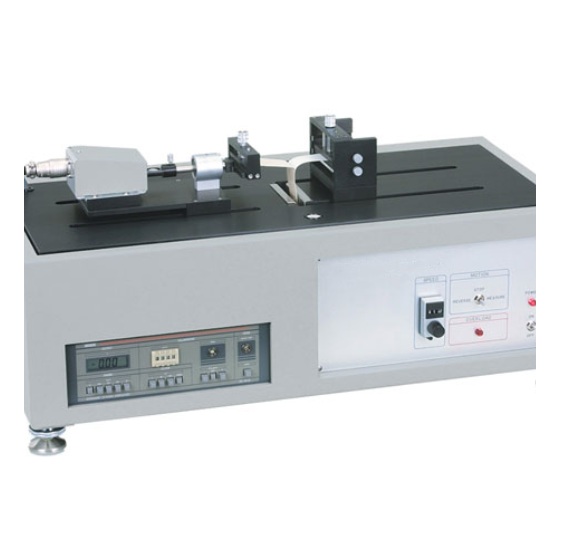
Peel Test Machines
Universal testing machines configured for controlled angle and speed peel testing with force sensors.
Other Instruments
Scratch testers, bending test devices, and impact testers are used for advanced analysis.
Specimen Preparation
Surfaces must be clean and free from contamination. Standardized preparation methods such as polishing, sandblasting, or degreasing ensure consistency.
Adhesive and Dolly Selection
In pull-off tests, adhesive compatibility and full curing are essential to prevent adhesive failure influencing results.
Control of Test Parameters
Loading rate, force direction, temperature, and humidity must comply with relevant standards.
Result Evaluation and Reporting
Results may be numerical (MPa) or graded (0–5). Reports should specify the standard used, test conditions, specimen preparation, and failure mode (cohesive, adhesive, or mixed failure).
Adhesion test results include both numerical values and failure mode observations:
Adhesive failure: Separation at the interface, indicating insufficient bonding.
Cohesive failure: Failure within the coating, suggesting good interfacial adhesion but limited internal strength.
Mixed failure: Combined interfacial and cohesive failure.
Quantitative data support material selection, production control, and reliability assessment. High adhesion coatings improve corrosion resistance and durability, while low adhesion may predict premature delamination.
Adhesion testing is a core technology for evaluating interfacial strength in coatings, adhesives, and composite materials. Depending on material systems and testing objectives, qualitative methods such as cross-cut testing or quantitative methods such as pull-off and peel testing may be selected. Standardized procedures ensure reliable and comparable results. Proper method selection, strict parameter control, and scientific result analysis form the foundation for achieving high-adhesion design and reliability verification. Mastery of adhesion testing principles and techniques is therefore essential for research, manufacturing, and quality management.


