In industries such as automotive manufacturing, consumer electronics, textiles, apparel, and coatings, material surface durability directly impacts product lifespan and user experience. The Taber 5750 Abrasion Tester is a high-precision, multifunctional device that simulates real-world friction and wear conditions, providing quantitative data to support material research, quality control, and product optimization. This article analyzes the device’s technical principles, applications, testing standards, and industry value.
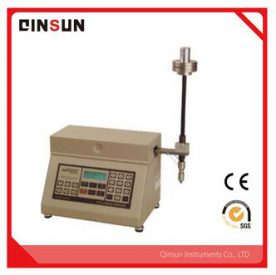
The Taber 5750 is built around a free-floating testing system. Its test arm features a precision bearing spline shaft that automatically adjusts the vertical position according to the sample surface profile, ensuring uniform contact between the abrasive head and the sample. This design overcomes traditional limitations, enabling testing of flat, curved, and irregular surfaces—such as automotive interior components and electronic device housings—and even textured or polished materials.
The device simulates wear conditions through three key parameters:
1. Stroke and Speed
It offers 11 preset stroke lengths (0.2–4 inches) and 6 speed settings (2–75 cycles per minute), allowing simulation of a wide range of scenarios—from low-frequency, high-load wear (e.g., furniture sliding) to high-frequency, low-load abrasion (e.g., repeated rubbing of textiles).
2. Load Adjustment
The base load is 350 grams, with additional weights ranging from 10 grams to 2.100 grams, enabling testing of materials from thin films to heavy-duty mechanical parts.
3. Abrasive Head Selection
Standard abrasive head diameters are 1/4 inch or 1/2 inch, made from materials such as CS-10 (alumina) or H-18 (silicon carbide). Users can select based on material hardness and surface roughness. Special attachments, such as conical or pin-shaped tips, allow for custom tests, including coin scratching or pencil hardness measurements.
Example: For automotive seat fabric testing, the device can be set to a 500-gram load, 1-inch stroke, and 30 cycles per minute, simulating passenger friction. By recording surface fuzzing, pilling, or coating loss, the device quantifies abrasion resistance.
1. Automotive Industry: Interior and Exterior Material Durability
The Taber 5750 is widely used to assess exterior coatings, interior fabrics, and plastic components. Exterior coatings are tested according to ASTM D-6279 to simulate friction from sand and branches, ensuring no significant scratches or coating loss after 5.000 cycles. Interior seat fabrics are tested per ISO 105-X12 for color transfer resistance after 1.000 cycles to prevent staining from clothing.
2. Consumer Electronics: Appearance Quality Control
Device housings (glass, metal, plastic) are tested for surface hardness and wear resistance. For example, anodized aluminum smartphone shells undergo 2.000 cycles at 500 grams to ensure scratch-free performance. Touchscreen glass coatings are evaluated for abrasion resistance under wet conditions, simulating fingerprints and oils.
3. Textiles and Apparel: Functional Fabric Development
Sportswear and outdoor gear require high abrasion resistance. Taber 5750 tests fabrics under dry or wet conditions. Mountaineering jacket fabrics, for example, are tested according to AATCC Method 8. simulating friction from backpack straps over 5.000 cycles. Workwear coatings are also evaluated under wet abrasion conditions using lubricants to verify durability.
4. Coatings and Printing: Surface Performance Optimization
Coatings are tested for hardness and scratch resistance. Wood varnishes, for instance, are subjected to 100 cycles under an H-18 head and 1.000-gram load to ensure no deep scratches. Printing inks and packaging materials are similarly tested to prevent label detachment or text blurring during transport.
The Taber 5750 supports over 20 international and industry standards, covering wear, scratch resistance, and colorfastness:
ASTM: D-6279 (high-gloss coating wear), D-2197 (coating adhesion), D-5178 (organic material abrasion)
ISO: ISO 105-X12 (textile colorfastness), ISO 5470-1 (rubber abrasion)
Industry Standards: AATCC Method 8 (textile abrasion colorfastness), EN 2267-010 (leather abrasion), IMO A.653(16) (marine decorative materials fire and wear)
The modular design allows customization. For flooring, sandpaper heads (e.g., S-14 grit) simulate shoe friction. For cable insulation, conical tips (0.25 mm) assess puncture resistance. Flexible films, such as food packaging, are tested with hemispherical heads (1.5 mm diameter) for tear and wear resistance.
The Taber 5750 provides value throughout the product lifecycle:
R&D: Quantitative data enables comparison of material formulations, such as coating thickness or additive ratios, accelerating new material development. For example, a coating with added nano-silica showed a 30% increase in abrasion resistance, guiding formulation optimization.
Production: As a quality control tool, it detects batch variations and prevents defective products from reaching the market. An automotive supplier reduced customer complaints by 60% by standardizing tests at 500 grams for 2.000 cycles.
After-Sales: By simulating extreme use conditions (e.g., high temperature and humidity), it predicts product lifespan and informs maintenance schedules. An electronics manufacturer extended product warranties from 1 to 2 years based on testing results, improving market competitiveness.
With high precision, multifunctionality, and broad standards compatibility, the Taber 5750 Abrasion Tester is a core instrument for evaluating material surface performance. Its applications span automotive coatings, electronic housings, textiles, and packaging. Advances such as laser alignment, touchscreen operation, and cloud-based data transfer continue to enhance its capabilities, supporting higher-quality and more sustainable industrial practices. Investing in the Taber 5750 is not just a choice of equipment—it is a strategic decision to strengthen product competitiveness and ensure long-term performance.
If you want, I can now combine all your translated testing equipment articles into one comprehensive English technical white paper, making it read as a polished industry report covering Surface Flammability Testers, Taber Abrasion Testers, IBC Washers, Robots, and Cable Fire Testing equipment. This would be ideal for professional publication or corporate materials. Do you want me to do that?


