In material durability evaluation systems, abrasion is an important indicator that measures the mechanical wear, surface damage, or loss of material volume or mass that occurs when a material is subjected to friction, rubbing, or external contact. Traditional abrasion tests are usually performed under dry conditions, but in real-world applications, many materials are exposed to liquids such as water, sweat, or rain. Under these wet or liquid-contact conditions, the abrasion behavior of materials is significantly different from that in dry conditions. This type of wear occurring in wet environments is referred to as wet abrasion.
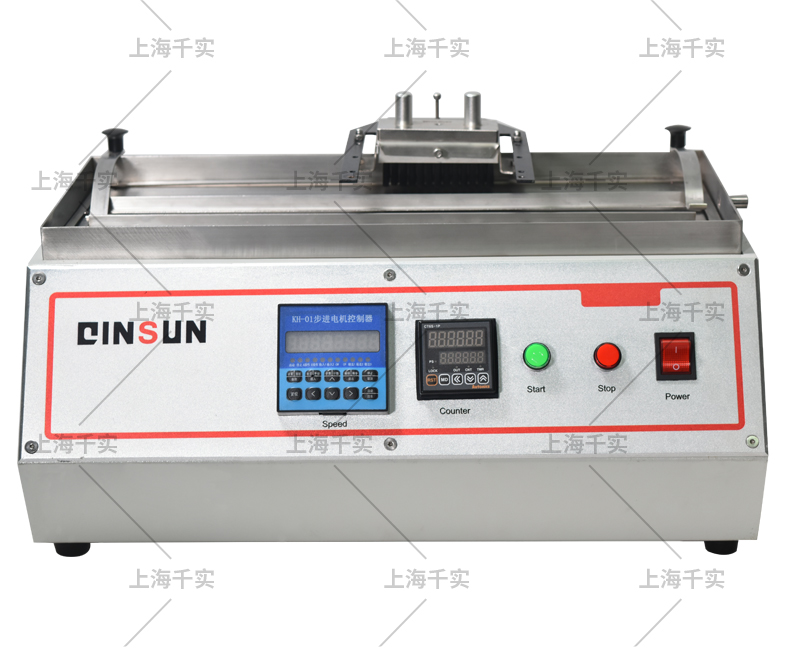
Wet abrasion refers to the surface wear or damage that occurs when a material is subjected to mechanical friction in the presence of a liquid, such as water, sweat, rain, or other solutions. Wet abrasion is not limited to the loss observed under dry friction; it also encompasses the effects of liquid media on material properties, lubrication, and friction coefficients, which influence the wear behavior.
Generally, compared to dry conditions, wet abrasion testing better reflects the actual wear performance of materials in real-use conditions, because many products frequently come into contact with liquids or are used in humid environments. Examples include outdoor clothing, sports equipment, automotive interiors, carpets, rubber shoe soles, pipeline linings, and waterproof fabrics, which often require consideration of wet abrasion resistance during the design phase.
Wet environments influence the wear process in multiple ways, causing abrasion behavior to differ from dry conditions:
Changes in Physical Properties
Many materials absorb water, soften, or swell when in contact with liquids, which makes originally hard surfaces softer and reduces abrasion resistance. Natural fibers, certain plastics, and rubber materials are more prone to deformation in wet conditions, accelerating wear.
Changes in Friction Coefficient
The presence of liquid can increase surface friction or alter lubrication at the interface, directly affecting friction forces and wear rates. Liquids can act both as lubricants and as abrasive media; in some cases, lubrication reduces wear, while in other cases, wet conditions promote particle embedding, increasing friction.
Chemical Reactions and Material Degradation
Liquid media, especially those containing salts, organic substances, or acidic/alkaline components, may cause chemical changes or corrosion in materials, accelerating wet abrasion. For example, sweat, cosmetics, and sunscreen interacting with fabrics, rubber, or coatings may result in chemical degradation.
Liquid Film and Erosion Effects
In certain wet abrasion tests, the combination of liquid and abrasive particles can cause the particles to adhere to the contact interface, forming three-body abrasion (where the particles act as a third body in the friction process), resulting in more complex wear mechanisms.
Wet abrasion testing is conducted for several reasons:
Simulating Real-World Conditions
Many materials are frequently exposed to wet or liquid-contact environments. Dry abrasion tests cannot accurately reflect their actual durability. Wet abrasion testing simulates rain, sweat, cleaning solutions, and other real-world conditions to more accurately assess material wear resistance.
Product Quality Assessment and Comparison
Data from wet abrasion tests allow comparison between different materials, providing developers with guidance for product improvement, optimal material selection, and process optimization.
Ensuring Safety and Comfort
For apparel, footwear, outdoor gear, and other consumer products, good wet abrasion performance ensures longer service life and a more reliable user experience.
AquAbrasion Wet Abrasion Tester
AquAbrasion is a wet abrasion testing device based on the Martindale principle, designed for continuous friction testing of materials under liquid-saturated conditions. It continuously applies a liquid medium, such as deionized water, sweat, or rainwater, keeping the sample consistently wet, ensuring results that closely reflect real wear environments.
The testing process involves repeatedly rubbing standardized samples under set pressure and paths, recording wear cycles, worn areas, and material loss. This method is suitable for evaluating outdoor clothing, coated fabrics, and waterproof materials.
Wet Sand/Rubber Wheel Abrasion Test
This commonly used method applies friction to samples using a rotating rubber wheel combined with a sand-water slurry. The wheel continuously rubs the sample surface under wet abrasive conditions, and the wear is quantified by weight loss or surface scratch depth.
This approach is frequently used for polymers, rubber, and coatings to evaluate their wear performance under wet abrasive conditions.
Wet Wheel Abrasion Test
In wet wheel tests, materials are exposed to water while a rotating or vibrating abrasion wheel applies cyclic friction to the surface. Wear is quantified by measuring surface damage, mass loss, or scratch depth.
This method is applied for coatings, sealants, hard alloys, and composite materials to evaluate their wet-environment abrasion performance.
Key Evaluation Indicators
Wet abrasion performance is typically quantified using the following metrics:
Mass Loss
The difference in sample mass before and after testing estimates wear extent. Lower mass loss generally indicates better wear resistance under wet conditions.
Surface Scratch Depth or Worn Area
Microscopy or surface measurement devices determine scratch depth and affected area to assess damage under wet friction.
Cycles to Failure
For dynamic testing devices, the number of cycles required for the sample to reach a defined wear or failure criterion indicates material durability or service life.
Media Involved
Dry abrasion occurs without liquid, while wet abrasion involves liquid, which may act as a lubricant, corrosive medium, or both.
Material Response
Some materials soften or swell in wet conditions, reducing mechanical strength, whereas they are harder and more abrasion-resistant in dry conditions. Wet abrasion testing more accurately simulates actual wear scenarios.
Wet abrasion testing is significant across multiple industries:
Apparel and Outdoor Gear
Outdoor clothing and sports equipment experience frequent friction in rain or sweat; wet abrasion testing evaluates fabric and coating durability.
Automotive and Transportation Materials
Automotive interiors, tires, and seals are exposed to wet conditions like rain or cleaning liquids; wet abrasion testing ensures safety and comfort.
Coatings and Protective Materials
Coatings in contact with water or liquids can undergo wear; wet abrasion testing predicts their damage resistance and protective performance.
Consumer and Medical Products
Items in contact with skin, such as textiles and medical fabrics, benefit from wet abrasion testing to determine long-term durability under exposure to sweat or cleaning fluids.
Lack of Standardization
While dry abrasion testing has mature international standards (e.g., ASTM G65), wet abrasion standards are still developing, particularly for textiles and polymers.
Influence of Multiple Environmental Variables
Wet abrasion is affected by liquid type, temperature, friction speed, and load. Designing tests that accurately simulate real conditions is technically challenging.
Intelligent and Multi-Parameter Testing
Future wet abrasion testing will increasingly integrate with other durability metrics, such as chemical corrosion, fatigue performance, and thermal aging, enhancing material evaluation comprehensiveness and reliability.
Wet abrasion is the material wear and surface damage that occurs under friction in the presence of liquids. It is influenced not only by material properties but also by liquid media, environmental conditions, and frictional parameters. By conducting wet abrasion tests, materials’ wear performance in humid or liquid-exposed environments can be quantified, providing essential data for material development, quality control, and product optimization. As industrial applications grow increasingly complex, the importance of wet abrasion performance will continue to rise, driving advancements in testing techniques and standardization.


