In the fields of industry, quality control, safety certification, and product testing, the term DIN test or DIN standard test is often encountered. It is neither a single specific test nor a particular piece of equipment, but rather a type of standardized testing closely related to a set of internationally recognized technical standards and testing methods. Essentially, a DIN test is based on a series of technical standards issued by the Deutsches Institut für Normung (DIN), the German Institute for Standardization, and evaluates and verifies the performance, durability, quality, and safety of products or materials through specific testing methods.
This article provides a systematic explanation of DIN tests from multiple perspectives, including the background of DIN, testing subjects, test principles, common types and examples, test procedures, and practical applications.
"DIN" stands for Deutsches Institut für Normung, the German Institute for Standardization. DIN is responsible for developing national standards in Germany and promoting standardization at European and international levels. Its standard system covers mechanical engineering, electrical engineering, material performance, safety testing, product specifications, and many other technical fields, encompassing thousands of standard documents.
A standard is a document that specifies requirements, testing methods, and terminology definitions for products, services, or processes. Its purpose is to ensure quality, safety, interoperability, and traceability. DIN standards are voluntary in Germany but can become effectively mandatory when adopted by contracts, regulations, or market agreements.
A DIN test refers to testing conducted according to DIN standards or derived standards, where the performance and compliance of a product, component, or system are evaluated in a standardized manner. These tests are usually carried out by independent testing organizations or laboratories. The testing process and equipment measurement results are used to determine whether the product meets the standard's requirements.
The core significance of DIN testing includes:
Quality Assurance: Ensuring products meet standard requirements and reducing defects.
Safety Verification: Evaluating operational risks and performance limits.
Performance Comparison: Providing a uniform benchmark to compare products from different brands or batches.
International Recognition: DIN standards often align with European EN and international ISO standards, allowing test results to be recognized across broader markets.
A DIN test is not a single technique but a standardized testing process based on established standards. Typically, these standards include three key elements:
Test Conditions and Environmental Requirements
Standards specify atmospheric conditions, temperature, humidity, and sometimes equipment configuration to ensure comparability across different tests.
Sample Preparation and Dimensions
Standards define how samples should be prepared, including shape, size, and surface condition. For example, material testing standards often require samples to meet specific specifications before testing.
Measurement Methods and Evaluation Criteria
Standards describe the measurement process, required instruments, parameters, and pass/fail criteria to ensure accuracy and repeatability.
In short, the principle of DIN testing is: quantitatively measuring the performance of samples under uniform conditions and evaluation criteria to produce comparable and reliable results.
Common Types and Examples
Since DIN standards cover a wide range of fields, DIN tests vary according to product type or property. Typical examples include:
Metals or composite materials are often tested for mechanical properties such as tensile strength and impact resistance according to DIN standards. These physical and mechanical properties are fundamental for product development and quality control.
Wear Resistance Testing
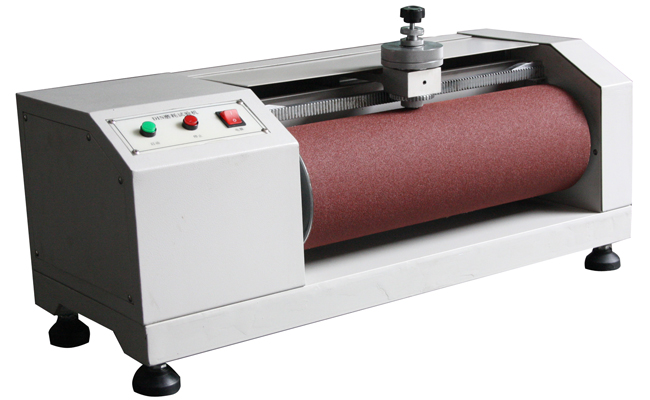
DIN wear testers simulate material wear under friction conditions to evaluate durability. These tests are common in the rubber and plastic industries to compare the wear resistance of different materials or formulations.
Corrosion and Salt Spray Testing
Some DIN standards include corrosion tests, such as salt spray tests that simulate real-world corrosive environments. These tests assess the resistance of coatings, materials, or components in harsh conditions and are widely used in automotive and metal surface treatment industries.
DIN Certification and Test Marks
Certain test results may be certified with marks like DINGeprüft (DIN Tested), indicating that a product has been independently tested according to DIN standards and meets the required performance. These marks demonstrate reliability and standard compliance in the market.
DIN Test Procedures and General Steps
Although specific tests differ, the basic workflow of DIN testing is generally: standard selection → sample preparation → test execution → data analysis → evaluation and reporting. Detailed steps are as follows:
Selecting and Understanding the Standard
Determine the applicable DIN standard number and understand the test conditions, sample specifications, and measurement requirements.
Prepare samples according to standard specifications and set up calibrated equipment to ensure all test conditions comply with requirements.
Executing the Test
Perform the test according to the DIN standard procedures, including applying force, temperature, humidity, vibration, or other environmental conditions while continuously recording measurements.
Analyzing Results and Evaluation
Analyze the data and compare it against the limits defined in the standard. If results meet the requirements, the test is considered “passed”; otherwise, it is “failed.”
Reporting and Documentation
Produce a complete report containing test conditions, measurement data, and evaluation results. This serves as a basis for internal quality control, customer contracts, certification, or regulatory compliance.
Relationship with International Standards
DIN standards not only serve Germany but also play an important role in the European (EN) and international (ISO) standard systems. Many DIN standards are jointly developed or harmonized with EN and ISO standards. For example, DIN EN ISO standards are issued in collaboration with European and international standardization bodies.
Therefore, DIN tests provide results that are recognized both in Germany and internationally, establishing a foundation for uniform quality evaluation in global markets.
DIN testing has significant value in multiple areas:
Improving Product Quality and Safety
Accurate measurement of product performance under typical and extreme conditions allows potential reliability or safety issues to be detected early, enabling design optimization.
Enhancing Market Competitiveness
Products that pass DIN tests or carry the DINGeprüft mark gain higher trust in the market, facilitating international promotion.
Reducing Costs and Risks
Standardized testing provides quantifiable quality assessment, reducing rework, returns, and accident risks, thereby lowering costs.
Guiding R&D and Improvement
Test results help R&D teams identify weaknesses in materials or processes, supporting subsequent technological improvements.
Overall, a DIN test is not a single technique but a comprehensive, standardized testing process implemented within the German standardization framework. It relies on authoritative standard documents and follows repeatable, regulated steps to verify the quality, safety, and performance of products or systems. DIN testing enhances product reliability, supports process evaluation, and ensures standard compliance in global markets. Whether in industrial manufacturing, material testing, or product certification, DIN testing is an essential component of modern quality management systems.


