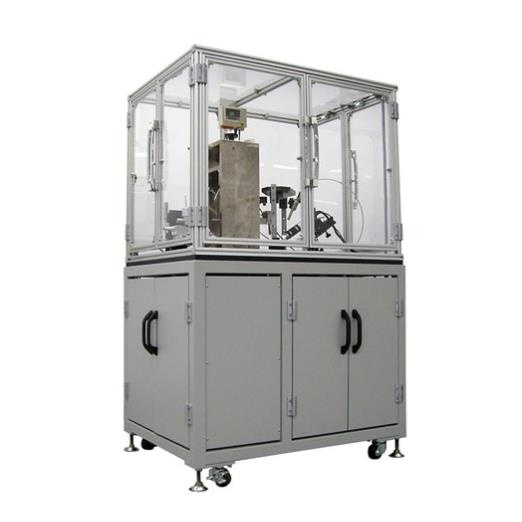
Friction and wear phenomena are key research topics in the fields of materials engineering, mechanical design, lubrication research, and quality control. Friction behavior not only determines component efficiency, energy consumption, and service life, but also directly affects material selection, lubricant formulation, and reliability evaluation. In laboratory research and industrial development, in order to accurately obtain data such as coefficient of friction, wear volume, durability, and wear mechanisms under controlled conditions, specialized tribological testing equipment is required. The Wide-Load Friction and Wear Testing Machine is one such high-performance platform designed to cover an extremely broad load range, enabling friction and wear studies from light-load to heavy-load conditions and providing strong data support for material evaluation and engineering development.
Industrial and Scientific Importance of Friction and Wear
Friction and wear refer to the material loss and energy dissipation that occur when surfaces are in relative motion. They are central subjects in tribology. Friction generates resistance and consumes energy, while wear leads to material volume or mass reduction. Over time, accumulated wear can cause component failure, reduced efficiency, and even safety hazards. Studies indicate that friction and wear account for a significant proportion of global energy losses in industrial production, severely affecting product lifespan and operational efficiency.
Friction and wear behavior are influenced by multiple factors, including load magnitude, contact configuration, speed, environmental conditions, and lubrication state. To understand material behavior under different operating conditions, systematic experimental investigations are required, supported by highly controllable testing equipment capable of simulating various service scenarios.
Friction and wear testing equipment is designed to quantitatively evaluate material properties such as coefficient of friction, wear rate, and performance degradation under contact pressure. Depending on load range, motion type, testing objectives, and applicable standards, these machines can be categorized into several types, including:
Ball-on-disk tribometers for determining friction coefficient and wear rate;
Linear reciprocating friction testers for studying reciprocating sliding behavior;
Four-ball testers for evaluating extreme pressure properties of lubricants;
Roller-on-disk testers for rolling contact wear analysis;
Wide-load testing machines covering friction and wear behavior from low to high loads.
Each type has its specific application scope. Wide-load testing machines are particularly suitable for investigating friction and wear phenomena across multiple load levels, such as transitions from light contact to heavy-load wear.
Definition of the Wide-Load Friction and Wear Testing Machine
A Wide-Load Friction and Wear Testing Machine is an experimental platform capable of covering an extremely broad load range, typically starting from several hundred grams (for example, around 20 g) up to several tens or even hundreds of kilograms. It can accommodate various motion modes, speed ranges, and environmental conditions, integrating high-performance load control, high-precision measurement, and multi-condition simulation into a single comprehensive system. With this equipment, comparative studies of materials under low, medium, and high load conditions can be conducted on the same platform, significantly improving testing efficiency and data consistency.
Load and Speed Coverage Characteristics
A typical wide-load friction and wear testing machine features an exceptionally broad load range, from very low loads (such as approximately 20 g) up to tens or hundreds of kilograms. This enables both light-load phenomena and heavy-load wear characteristics to be evaluated within a single platform. Load application methods often combine sensitive balance arms, calibrated weights, and mechanical lifting mechanisms to ensure stable, adjustable, and repeatable load distribution.
To meet diverse experimental requirements, such machines also provide a wide range of motion speeds. Rotational tests commonly support speeds from several tens of revolutions per minute to several thousand revolutions per minute, allowing simulation of conditions ranging from mild sliding to high-speed sliding or rolling contact.
Comprehensive Measurement Capabilities
Controlling load and speed alone is insufficient for complete friction and wear analysis. Accurate measurement of parameters such as friction force, coefficient of friction, wear depth, torque variation, and temperature is essential. Therefore, wide-load testing machines are typically equipped with multiple measurement systems, including load sensors, torque meters, displacement sensors, and temperature sensors. Integrated data acquisition and analysis software supports real-time monitoring, recording, and post-test analysis.
Load Application System
To cover the range from light to heavy loads, the load application system must be carefully designed. It typically includes:
Sensitive balance arm and weight combinations for precise low-load application;
Mechanical lifting and counterweight systems for stable medium- and high-load application;
Load-support structures ensuring effective force transmission without lateral interference.
This combination enables load adjustment from a few grams to hundreds of kilograms within a single testing mechanism.
Drive and Motion System
The motion system determines friction mode, speed range, and test stability. Wide-load friction and wear testing machines generally use a rotational drive system combined with speed control mechanisms, enabling constant-speed or variable-speed operation from low to high speeds. In rotational testing, specimens are mounted on a rotating disk or fixture, while the counterface or loading device maintains contact.
Some systems also support alternative motion forms, such as linear reciprocating movement, using high-precision motors and control systems to achieve multiple contact configurations.
Measurement System and Data Acquisition
To ensure precise testing, multiple sensing systems are integrated, such as:
Load sensors for real-time monitoring of applied load;
Friction force or torque sensors for calculating friction coefficient;
Displacement measurement systems for evaluating wear depth or deformation;
Temperature sensors for detecting frictional heat at the interface.
These measurement systems are typically connected to computer software that provides real-time display, recording, curve generation, and report output, enabling in-depth analysis by engineers and researchers.
Typical Friction and Wear Testing Standards
Friction and wear tests are often conducted in accordance with recognized standards, such as:
ASTM G99 for ball-on-disk wear testing;
Other ASTM standards covering different contact geometries and lubrication environments;
ISO and national standards specifying various friction pair combinations, speeds, and environmental conditions.
Wide-load friction and wear testing machines are often designed to be compatible with multiple specimen configurations and testing methods, allowing compliance with various standard requirements.
Multiple Testing Modes
These machines can support different testing configurations and conditions, including:
Rotating disk/pin friction tests for evaluating friction coefficient and wear depth;
Immersed lubrication tests under oil-bath conditions;
High-temperature testing modes using integrated heating systems;
High-speed and high-load tests for analyzing material wear under extreme conditions.
Through flexible combinations of testing modes, comprehensive tribological behavior under diverse service conditions can be evaluated.
Mechanical Materials and Surface Engineering Evaluation
Wide-load friction and wear testing machines are widely used in studying friction performance of mechanical materials such as steels, aluminum alloys, and other engineered alloys, as well as surface treatments including coatings, heat treatments, and surface hardening layers. Testing under different loads, speeds, and lubrication conditions enables comparison of wear resistance and friction characteristics among material systems.
Lubricant and Lubricating Material Development
The design of lubrication systems relies heavily on friction and wear testing. Lubricating oils, greases, and solid lubricants such as graphite and molybdenum disulfide must be evaluated under varying load conditions, which is precisely where wide-load equipment demonstrates its advantages.
Life Prediction of Seals, Bearings, and Mechanical Components
In mechanical systems, components such as bearings, seals, and gears operate under varying loads and speeds. Their friction and wear behavior significantly influences service life and reliability. Experimental data obtained from wide-load friction and wear testing machines can be used to predict performance degradation trends under real working conditions.
Friction Characteristics of New and Nanomaterials
With the emergence of advanced materials, composites, and nanomaterials, friction behavior may vary significantly across load levels. Wide-load testing machines provide continuous cross-load testing capability, helping to reveal friction mechanisms and lubrication phenomena and supporting innovative material design.
Evaluation Indicators and Data Analysis
Key evaluation indicators typically include:
Coefficient of friction, reflecting interface resistance;
Wear volume or wear rate, indicating material loss;
Wear depth and surface morphology changes;
Temperature variation, reflecting frictional heating effects.
Together, these indicators characterize the tribological performance of materials and provide quantitative support for product design and condition assessment.
Wide-Range Load Control and Accuracy
Covering an extremely wide load range requires maintaining high precision in the low-load region while ensuring stability under heavy loads. The load application mechanism must therefore support multi-scale adjustment while maintaining linearity, accuracy, and repeatability.
Complexity of Multi-Parameter Synchronous Measurement
Friction and wear experiments involve multiple coupled parameters, including load, friction force, displacement, speed, and temperature. Integrating high-precision sensors and employing high-frequency data acquisition and processing technologies are essential to address this complexity.
Environmental Control and Simulation
Real-world operating conditions often involve lubrication, temperature fluctuations, and environmental changes. Therefore, testing equipment may incorporate environmental control modules such as lubrication systems, atmospheric control, and heating units to better simulate practical service conditions.
Intelligent and Automated Analysis
With advancements in data processing and artificial intelligence, future testing systems may integrate intelligent analysis modules capable of automatically detecting data anomalies, predicting wear trends, and recommending experimental schemes, significantly improving efficiency.
Multi-Physics Coupled Testing Capabilities
In real applications, friction and wear result from the combined influence of load, temperature, vibration, and lubrication. Future equipment will emphasize multi-physics coupling capabilities, such as high-temperature, high-pressure, and humidity control, to better replicate actual service environments.
Modular and Expandable Platforms
Through modular design, measurement modules, environmental control units, and data analysis systems can be expanded according to testing needs, creating scalable platforms adaptable to various research and industrial applications.
Cloud-Based Data Connectivity and Sharing
Future systems may connect to cloud platforms, enabling cross-laboratory data sharing, standardized data modeling, and knowledge base construction for test parameters, thereby enhancing the comparability and reference value of tribological test results.
In summary, the Wide-Load Friction and Wear Testing Machine is a highly integrated experimental platform capable of covering an extremely broad load range. It enables real-time friction and wear research from light-load to heavy-load conditions on a single device, supported by precision measurement systems that provide friction coefficients, wear indicators, and operational parameters. It has broad application prospects in materials engineering, advanced material development, lubrication research, mechanical component evaluation, and industrial quality control. With ongoing technological advancements and evolving engineering demands, such testing systems will continue to develop toward intelligent, multi-physics integrated, and scalable platforms, providing increasingly comprehensive and reliable data support for tribological research and engineering design.


