In modern materials science, mechanical engineering, tribology research, and industrial quality control, experimental testing of friction and wear behavior is a core activity. “Wear” refers to the gradual loss of material or degradation of performance from a surface due to relative motion, applied load, and environmental factors. It has a significant impact on mechanical reliability, energy efficiency, and product lifespan. A specialized instrument designed to investigate wear behavior under low-load conditions is the Low-Load Wear Testing Machine, which is used to precisely measure and analyze the friction and wear characteristics of materials under very small applied loads.
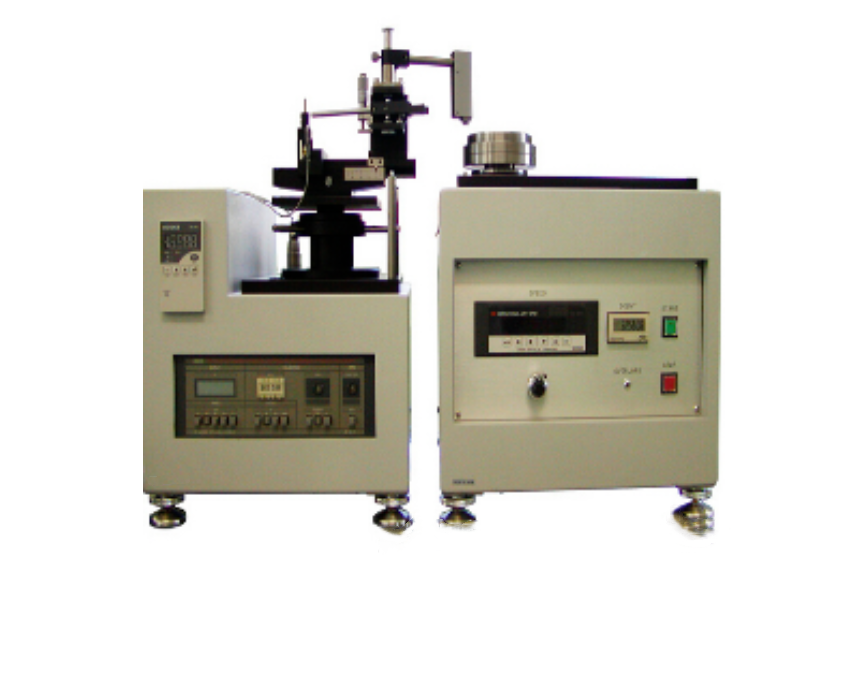
This article provides a comprehensive explanation of the definition, background, working principles, key technologies, typical application scenarios, and future development trends of this type of equipment.
Importance of Friction and Wear Phenomena
Friction and wear are core topics in tribology, encompassing the study of frictional forces, wear mechanisms, and lubrication behavior. Friction is not an inherent property of a material but a system-level phenomenon that occurs when two surfaces come into contact and move relative to each other. It is closely related to load, speed, surface roughness, and environmental factors.
Friction affects mechanical efficiency and energy consumption, while wear determines component lifespan and reliability. Specifically, friction and wear can lead to:
Loss of mechanical efficiency
Increased energy consumption
Surface degradation and premature failure
Evaluation of lubricant load-bearing performance
Therefore, friction and wear testing is a fundamental part of materials engineering, lubricant development, mechanical design, and quality control in both research and industrial applications.
Classification of Friction and Wear Testing Equipment
Tribometers can be classified according to motion mode, load type, and contact configuration. Common types include ball-on-disc testers, four-ball testers, reciprocating sliding testers, rolling contact testers, and fretting wear testers. Each type is suitable for specific experimental requirements. Equipment selection depends on load magnitude, speed, motion type (rotational or linear), and material properties.
Among these, when studying thin films, surface-treated materials, or microstructured materials under extremely low loads, specialized low-load wear testing equipment is required. This is the focus of the present discussion.
A Low-Load Wear Testing Machine is an experimental device designed to simulate and measure friction and wear behavior under very small loads, typically ranging from tens of milligrams to several grams. It can precisely apply micro-loads, control motion modes (such as rotation or reciprocation), and measure parameters such as friction force, wear amount, and surface deformation in real time.
Compared with conventional wear testers, the key features of a low-load wear testing machine include:
Extremely low load range: typically from approximately 0.1 g to several grams or a few hundred grams, enabling more refined micro-load measurements than traditional equipment.
High-precision measurement system: utilizing highly sensitive displacement gauges and load sensors for friction and wear measurement.
High stability and low interference: vibration-reduction and noise-isolation designs minimize measurement error.
Suitability for special materials and thin films: such materials may be severely damaged under high loads, making analysis difficult.
Thus, the low-load wear testing machine serves as an essential platform for micro-scale tribological research.
Conventional testers, such as ASTM G99 ball-on-disc wear testers or four-ball testers, typically operate at loads of tens or even hundreds of newtons. These are suitable for medium- or high-load wear studies aimed at evaluating practical contact or lubrication system performance.
In contrast, low-load wear testing machines are primarily used for:
Nano-scale wear behavior of thin-film materials
Interface behavior in micro-electromechanical systems (MEMS)
Surface treatment performance of micro-mechanical components
Friction and wear analysis of fine structural parts or ultra-thin coatings
Compared with traditional equipment, low-load systems emphasize precision measurement and micro-load control—experimental conditions that large-scale machines cannot easily achieve.
Overview of Working Principle
The core objective of a low-load wear testing machine is to simulate relative motion between two contacting surfaces under micro-load conditions while continuously measuring friction force, wear depth, and related physical signals. The system generally includes:
Precision load application mechanism: using springs, sensors, or loading arms to apply and measure extremely small forces.
Motion system: including rotational platforms, reciprocating mechanisms, or other movement configurations to simulate actual contact conditions.
Measurement and sensing system: incorporating high-precision displacement sensors, load sensors, and friction force sensors.
Data acquisition and processing unit: equipped with software for real-time monitoring of friction coefficient, wear depth, rotational speed, and other parameters, generating curves and analytical outputs.
During operation, the two test surfaces are brought into contact under controlled load and motion parameters. Friction force and wear amount are continuously recorded throughout the test. After completion, additional surface analysis techniques, such as profilometry, may be used for microscopic observation.
Load Application Mechanism
In low-load testers, the load application system must provide stable and linear micro-forces. This can be achieved through:
Spring compression and balance arm designs to achieve loads as low as 0.1 g.
Load sensor feedback control for precise calibration and regulation of micro-load values.
Vibration isolation structures separating drive components from measurement units.
Such designs are ideal for capturing micro-scale wear behavior but are not suitable for high-load applications, highlighting the specialized nature of low-load testing machines.
Friction Force Measurement
Load sensors measure the friction force generated at the contact interface, enabling calculation of the coefficient of friction. The friction coefficient is a key parameter for evaluating surface performance.
Wear Measurement
Wear amount is typically determined through displacement measurement or mass loss evaluation. Some devices integrate high-precision displacement gauges to record geometric surface changes in real time.
Additionally, three-dimensional profilometers or white-light interferometers may be used for wear volume and depth analysis.
Data Acquisition and Analysis
Modern low-load wear testers are equipped with specialized software that displays friction coefficient curves, load curves, and displacement trends in real time. Data can be exported for further analysis. By examining friction coefficient variations and wear progression over time, researchers can uncover wear mechanisms at the contact interface, supporting material design and tribological studies.
Precision Control of Extremely Small Loads
Controlling microgram- to gram-level loads presents technical challenges. External vibrations, system noise, and sensor sensitivity can significantly influence measurement accuracy. Therefore, vibration isolation and high-precision sensors are essential.
Measurement System Sensitivity
Low-load testing requires sensors with high resolution and low noise characteristics. Without sufficient sensitivity, small friction force variations cannot be accurately recorded. Many devices integrate highly sensitive sensors and adopt structural isolation designs to enhance measurement stability.
Data Processing and Analysis Algorithms
In micro-scale friction and wear testing, signals are subtle and easily affected by noise. Reliable data acquisition and processing algorithms are crucial. Modern systems often provide automatic:
Friction coefficient calculation
Cumulative wear analysis
Multi-parameter curve correlation
Experimental error evaluation
Thin Films and Surface Treatment Evaluation
Low-load wear testing machines accurately simulate wear behavior of thin films and surface-treated layers under micro-load conditions. This is critical for nanomaterials and surface engineering studies. High-load tests may destroy such materials, whereas low-load systems preserve their integrity for realistic analysis.
MEMS and Micro-Structural Component Research
In MEMS applications, material interfaces often experience extremely small loads, yet friction and wear significantly influence performance. Low-load testing machines effectively simulate real operating conditions for microstructures, supporting design optimization and failure analysis.
Lubricant and Lubrication Film Evaluation
Lubricant performance is important not only under high loads but also under light contact conditions. Low-load wear testing can evaluate lubricant film formation and breakdown behavior under minimal contact pressure.
Biomaterials Tribology
Medical implant materials and joint replacement components often operate under relatively small loads and experience micro-motion wear. Low-load wear testing machines provide essential data for evaluating surface properties and biocompatibility.
Experimental Parameter Design
Key parameters in low-load wear testing typically include:
Load: set to simulate micro-contact conditions
Motion mode: rotational, reciprocating, or custom trajectories
Speed and frequency: controlling movement rate
Lubrication condition: dry or lubricated
Environmental conditions: temperature and humidity
Careful experimental design enables analysis of wear mechanisms and friction coefficient trends.
Standards and References
Common tribological standards such as ASTM G99 (ball-on-disc wear testing) are widely used for medium-load testing. However, unified standards specifically for low-load wear testing are less common. Therefore, experimental procedures are often customized according to equipment characteristics and research objectives.
With advancements in materials science and digital tribology, low-load wear testing machines are evolving in several directions:
Higher Precision Load and Displacement Control
Nanometer-level displacement and ultra-precise load control will enable deeper exploration of friction and wear mechanisms.
Multi-Physical Field Coupling
Integration of temperature, humidity, and vibration control will allow simulation of more realistic service environments.
Intelligent Automation and Data Analysis
Incorporation of machine learning and big data technologies may enable automated experiment planning, real-time fault detection, and performance prediction, improving efficiency and analytical value.
The low-load wear testing machine is an essential experimental instrument in tribology research and engineering applications. Through precise micro-load control and high-accuracy measurement systems, it provides an indispensable platform for analyzing material wear behavior. It compensates for the limitations of traditional wear testers in low-load applications and advances research in thin films, micro-mechanical structures, and lubrication science.
As equipment technology and testing methodologies continue to improve, low-load wear testing machines are expected to play an increasingly significant role in future scientific research and industrial applications.


