With the development of advanced materials, aerospace engineering, semiconductor manufacturing, and space technology, the study of friction performance and wear behavior of materials under extreme environments has become increasingly important. Particularly under vacuum conditions, lubrication behavior, atmospheric interactions, and contact interface mechanisms differ significantly from those at atmospheric pressure. As a result, conventional friction and wear tests cannot accurately reflect real material performance. Therefore, the Vacuum Friction and Wear Tester has become a critical testing instrument in scientific research and engineering evaluation.
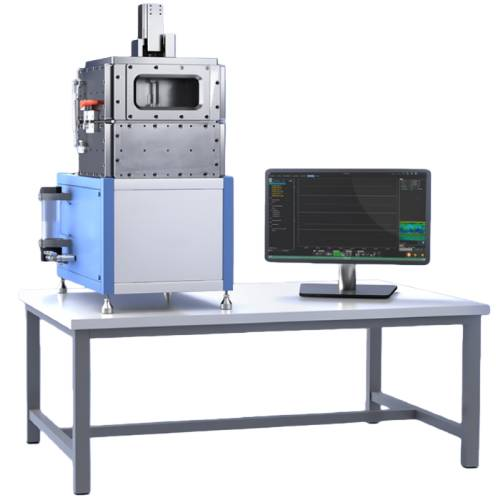
This article provides a comprehensive and detailed overview of the Vacuum Friction and Wear Tester based on publicly available web information, covering its definition, background principles, technical features, structural components, testing methods, application fields, and future development trends.
A Vacuum Friction and Wear Tester is an experimental device designed to simulate frictional contact and wear processes between materials within a controlled vacuum environment. Typically, the friction pair (two contacting surfaces) is placed inside a sealed vacuum chamber. Through specific loading mechanisms, motion modes, and environmental controls, the system uses precision sensors to measure parameters such as friction force, wear volume, and coefficient of friction in real time. This enables evaluation of the tribological performance of materials, coatings, lubricants, or mechanical components under vacuum conditions. The device is also commonly referred to as a vacuum tribometer or vacuum wear tester.
Compared with conventional friction and wear testers, the most significant feature of a vacuum friction and wear tester is its ability to simulate vacuum environments, including high-vacuum conditions. This capability is especially important for applications beyond Earth’s atmosphere, such as satellite mechanical components, vacuum pump systems, space equipment lubrication materials, and other aerospace-related mechanisms.
Friction and wear are fundamental research areas in materials science and mechanical engineering. Friction affects energy loss, heat generation, and surface damage, while wear directly impacts the service life and performance stability of mechanical components. Traditional friction and wear tests are primarily conducted under atmospheric conditions. However, in vacuum environments:
Lubricating oils may evaporate, degrade, or exhibit altered lubrication behavior.
Surface oxidation and adsorption phenomena change contact behavior.
Friction coefficients and wear mechanisms differ significantly from those observed in air.
To understand and predict material tribological performance under vacuum conditions, testing must be performed in simulated vacuum environments. The vacuum friction and wear tester addresses this need by providing critical material performance data for aerospace systems, space exploration equipment, vacuum machinery, semiconductor vacuum systems, and materials designed for extreme environments.
Tribology is the study of friction, wear, and lubrication between interacting surfaces in relative motion. It integrates mechanics, materials science, surface chemistry, and environmental factors. The core objective of tribological testing is to simulate real contact conditions and systematically measure parameters such as friction force, coefficient of friction, contact temperature, and wear volume to evaluate material performance.
Under vacuum conditions, friction behavior differs markedly from that at atmospheric pressure. In ultra-high vacuum environments, lubricants may lose effectiveness, while solid lubricants such as MoS₂ can exhibit distinct low-friction characteristics. Reduced adsorption layers at contact interfaces may lead to more direct metal-to-metal contact, resulting in adhesive wear or cold welding phenomena.
Therefore, to comprehensively assess material tribological behavior in vacuum environments, specialized testing systems capable of simulating vacuum conditions and recording precise friction and wear data are required.
A vacuum friction and wear tester typically consists of a vacuum chamber, loading mechanism, motion system, sensor measurement system, and control and data acquisition system. The general working process includes:
Establishing the Vacuum Environment
Before testing begins, vacuum pumps—such as rotary vane pumps and molecular pumps—evacuate the chamber to a preset vacuum level (for example, from 10⁻³ Pa to 10⁻⁷ Torr), simulating space or vacuum operating conditions.
Sample Loading and Relative Motion
The test materials are mounted in dedicated fixtures. The loading mechanism applies constant or dynamic normal loads between the friction pair. Various motion modes can be implemented, such as rotational motion (e.g., rotating disc against a pin), reciprocating linear sliding, or ball-on-disc contact, to simulate real operational contact conditions.
Real-Time Data Measurement
Sensors integrated into the system measure friction force, normal load, coefficient of friction, wear depth or volume, and temperature in real time. The control system records data curves such as friction force versus time and coefficient of friction versus displacement.
Data Analysis and Evaluation
After the test is completed, the software analyzes the collected data to generate friction coefficient trends, wear curves, and wear volume calculations. These results are used to evaluate the frictional performance, wear resistance, and reliability of the tested materials.
This complete process can be repeated under different vacuum levels, loads, speeds, and temperatures, enabling systematic evaluation of material behavior in complex vacuum operating environments.
Vacuum friction and wear testers typically offer the following core technical characteristics:
Controlled Vacuum Environment
Through integrated vacuum pump systems, chamber pressure can be reduced to very low levels, enabling test conditions ranging from low vacuum to high or ultra-high vacuum.
Multiple Friction Motion Modes
The system supports various friction configurations, including rotational friction, pin-on-disc, ball-on-disc, and reciprocating sliding modes. This versatility allows comprehensive simulation of real-world operating conditions.
Wide Load and Temperature Range
The instrument can accommodate a wide range of normal loads, from very low to relatively high values, enabling testing of different material scales. Some systems also support high- or low-temperature tribological testing, expanding application boundaries.
High-Precision Measurement System
Modern testers are equipped with precision sensors—such as capacitive force sensors, torque sensors, and displacement sensors—to achieve high-resolution measurement of friction force, coefficient of friction, and wear depth, ensuring stable and reliable data.
Automation and Data Processing
Advanced control software enables automated test sequences and data recording, standardizing experimental procedures, improving repeatability, reducing human error, and facilitating report generation and further analysis.
Typical Application Fields
Due to their unique environmental simulation capability, vacuum friction and wear testers are widely applied in multiple industries, including:
Spacecraft components and satellite moving assemblies operate under vacuum conditions where friction and wear behavior differs from ground environments. Vacuum tribological testing evaluates the suitability and lifespan of materials and lubricants.
Space Manufacturing and Materials Development
In space manufacturing and advanced materials development, evaluating ceramics, metal alloys, and composite materials under vacuum conditions is essential for material selection and performance optimization.
Vacuum Systems and Mechanical Equipment
Components in vacuum pumps, vacuum valves, and vacuum transmission systems directly affect equipment stability. Vacuum friction testing assesses lubricant compatibility, seal performance, and material durability.
Semiconductor and Precision Manufacturing
Large vacuum chambers and internal moving components in semiconductor fabrication systems require reliable long-term operation. Vacuum friction testing verifies wear performance and supports material selection.
Depending on materials and testing objectives, vacuum friction and wear testing commonly employs the following methods:
Rotational Friction Testing
One sample rotates against another fixed surface, generating frictional wear. This method is often used for evaluating metals, coatings, and lubricants.
Pin-on-Disc Testing
A pin-shaped specimen is pressed against a rotating disc under load. Friction behavior and wear volume are recorded.
Ball-on-Disc Testing
A spherical specimen slides across a disc surface, providing effective evaluation of micro-contact wear and hardness-related friction behavior.
Reciprocating Sliding Testing
Simulates linear relative motion and is suitable for studying dynamic friction behavior.
All these methods can be implemented within the controlled environment of a vacuum friction and wear tester to meet various research and standard requirements.
Industry Standards and Specifications
Friction and wear testing methods involve multiple international standards such as ASTM, ISO, and DIN. Although vacuum tribological testing itself does not have a single unified global standard, related reference standards include those for friction coefficient measurement, lubricant evaluation, and wear testing. For example, ASTM G99 (pin-on-disc wear testing) and ASTM G133 (reciprocating wear testing) are widely recognized methods for tribological evaluation.
Vacuum environmental control typically follows vacuum science standards regarding pressure levels, temperature stability, and chamber sealing performance to ensure comparability and reliability of test results.
Despite continuous technological advancements, vacuum friction and wear testers still face several challenges, including:
Maintaining sensor stability and precision under vacuum conditions
Simulating complex real-world conditions such as high temperature, high load, and dynamic environments
Developing standardized testing procedures to meet diverse industry requirements
Future development trends include:
Enhanced Vacuum and Extreme Temperature Capability
Expanding operational ranges to simulate more demanding service conditions.
Automation and Intelligent Analysis
Integrating advanced software algorithms to analyze wear mechanisms and friction behavior in real time.
Multifunctional Integrated Testing Systems
Combining wear testing, scratch testing, hardness measurement, and surface morphology analysis within a single platform.
These advancements will further improve the precision, efficiency, and applicability of vacuum friction and wear testing technology.
As a specialized experimental device for evaluating material tribological behavior under vacuum conditions, the vacuum friction and wear tester plays a vital role in advanced materials research, aerospace component reliability assessment, vacuum machinery design, and new material development. By simulating vacuum environments, controlling relative motion, and precisely measuring friction and wear data, the system reveals the tribological performance of materials under extreme conditions and provides a solid experimental foundation for engineering design and material optimization.
With the gradual improvement of technical standards, increasing automation, and enhanced integrated testing capabilities, vacuum friction and wear testers are expected to find broader and deeper applications in scientific research, industry, and high-end manufacturing.


