The Taber abrasion tester primarily simulates the friction and wear experienced by materials in actual use to evaluate their abrasion resistance. This device is widely used for testing the abrasion resistance of various materials, including fabrics, paper, coatings, plywood, leather, floor tiles, glass, natural rubber, and artificial flooring, making it an ideal choice for research institutions and factory laboratories.
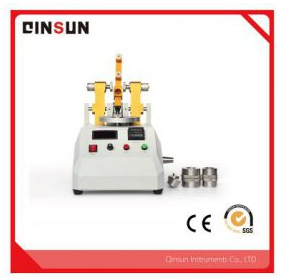
The working principle of the Taber abrasion tester is relatively simple yet efficient. It uses two abrasive wheels, typically made of specific wear-resistant materials such as tungsten carbide, which possess high hardness and wear resistance. During testing, the sample is fixed to the instrument's worktable, and the abrasive wheels contact the sample surface under a certain pressure and rotate at a specific speed. As the wheels rotate, friction is generated between them and the sample. After a specified number of rotations or when a certain degree of wear is reached, the abrasion resistance of the material is evaluated by measuring parameters such as mass loss, thickness change, and visual wear of the sample.
Linear Reciprocating Friction Test
Used to evaluate the abrasion resistance, scratch resistance (single or multiple scratches), and color transferability (usually abrasion resistance or wear resistance) of products. Both dry and wet abrasion tests can be performed. Commonly used for plastics, automotive parts, rubber, leather and textiles, electroplating, freely detachable components, paints, printed patterns, etc.
Rotary Friction Test
Used to test the rotary friction of flat products, such as: suitcases, carpets, cardboard, clothing, glass, plastic coatings, tiles, metal coatings, paints, varnishes, decorative panels, high-pressure laminates, plastics, textiles, elastic floor mats, transportation coatings, anodized layers, blankets, electronic components, decorative panels, waxes, labels, leather cases, dental materials, automotive interiors, resins, furniture, etc.
Reciprocating Friction Test
Reciprocating friction is used for various physical damage tests, such as wear and scratching on the material surface. This is ideal for testing flat samples. The actual weight of the balance arm can be weighed to ensure the accuracy of the test load. The end of the balance arm has a weight holder and an accessory holder. Below the reciprocating wear testing machine is a sample stage that moves horizontally back and forth. Test parameters such as reciprocating length, speed, and load can be adjusted.
Scratch Resistance Test
The scratch resistance test mainly detects the abrasion resistance of smooth and textured plastic parts in automotive interior and exterior components. In addition to material and product development, it is also suitable for quality control of related products. The five-finger scratch/abrasion tester is designed for the evaluation of plastic materials, abrasion resistance of hard materials, paints, inks, soft metals, linoleum, additives, and other materials.
There are many products suitable for abrasion resistance testing. In the actual testing process, if the number of abrasion cycles reaches two thousand, further testing is not very meaningful. This is something to keep in mind. These four testing methods can basically determine the quality of a product's abrasion resistance. Of course, different products can also choose single or multiple testing methods for detection.
1. Preparation
Accessory Check: Confirm that all necessary accessories for the test are available, including friction wheels (select models such as H-18. CS-10. etc., according to the standard), balance weights (load according to test requirements, e.g., 250g/500g), vacuum dust collection device, sample fixing clamp, and timer.
Sample Preparation: Cut the material to be tested into standard dimensions (usually a 100mm diameter circle or square), ensuring a flat and defect-free surface. If necessary to simulate actual working conditions, the sample can be pre-treated (e.g., coating, heat treatment, etc.).
2. Sample Installation
Sample Fixing: Place the sample in the center of the test platform and secure it firmly using the rotating clamp knob or vacuum adsorption device to prevent loosening during testing.
Dual-station Synchronous Setting (Optional): If the instrument is equipped with a dual-station system, install a control sample on the other test platform using the same method to improve testing efficiency.
3. Friction Wheel and Weight Installation
Friction Wheel Selection: Select the type of friction wheel based on the material characteristics (e.g., H-18 is suitable for hard materials, CS-10 is suitable for soft materials).
Weight Loading: Load the balance weights symmetrically on both sides of the friction wheel clamp, ensuring even pressure distribution. The weight of the weights should be set according to the test standard (e.g., a total load of 1000g is commonly used in ASTM D4060).
4. Vacuum Pump Adjustment and Debris Cleaning
Dust Suction Height Adjustment: Start the vacuum pump and adjust the nozzle height to 1-2mm above the sample surface to effectively remove debris generated by friction and prevent it from affecting the test results.
Pre-cleaning: Manually rotate the friction wheel a few turns to initially remove any loose particles or impurities that may be present on the sample surface.
5. Parameter Settings
Number of Cycles Setting: Set the number of cycles for the friction wheel using the control panel or timer (e.g., 500 cycles, 1000 cycles), or set the test time according to the standard requirements.
Speed Calibration: Confirm that the friction wheel rotation speed meets the standard (usually 60-72 rpm). Some instruments support speed adjustment to simulate different working conditions.
6. Starting the Test
Start Friction: Press the start button, and the friction wheel will cyclically rub against the sample at the set speed. Observe the instrument's operating status to ensure there are no abnormal vibrations or noises. Real-time Monitoring: Some high-end instruments are equipped with real-time wear monitoring functions, which can record data on mass loss or thickness changes.
7. Test Termination and Sample Handling
Automatic Stop: The instrument automatically stops running after reaching the set number of cycles. Turn off the vacuum pump and power supply, and remove the friction wheel and weights.
Sample Removal: Loosen the clamp and carefully remove the sample, avoiding surface damage due to friction that could affect subsequent analysis.
8. Results Analysis
Visual Assessment: Observe the wear marks on the sample surface and record any scratches, peeling, or discoloration.
Data Quantification:
Mass Loss Method: Use a precision balance to measure the mass difference of the sample before and after testing, and calculate the wear rate (mg/1000 revolutions).
Thickness Measurement Method: Use a thickness gauge to detect the thickness change in the worn area and evaluate the material's wear resistance.
Comparative Analysis: Compare the test results with control samples or standard values to determine whether the material's friction resistance meets the requirements.
Precautions
Environmental Control: The test must be conducted in a constant temperature and humidity environment to avoid temperature or humidity fluctuations affecting the results.
Safe Operation: Do not touch the friction wheel while it is rotating at high speed, and wear safety glasses to prevent debris from splashing.
Calibration and Maintenance: Regularly calibrate the instrument's rotation speed, load, and vacuum system to ensure testing accuracy.
Daily Cleaning and Inspection
1. External Cleaning: Regularly wipe the exterior of the testing machine with a soft cloth to remove dust and dirt, keeping the appearance clean. Avoid using cleaning agents containing chemicals to prevent corrosion of the equipment.
2. Internal Cleaning: After each test, promptly clean the testing area, including the turntable, grinding wheel, and fixtures. Wipe clean with a clean cloth to ensure no residue affects the next test.
3. Check Power Cord and Plug: Regularly check that the power cord and plug are in good condition. If there is any damage or aging, replace them promptly to ensure safe use of the equipment.
Grinding Wheel Replacement and Adjustment
1. Grinding Wheel Replacement: Select the appropriate grinding wheel according to the test requirements and install it correctly according to the instructions. When replacing the grinding wheel, check that the grinding wheel is intact. If there are cracks or severe wear, replace it promptly.
2. Grinding Wheel Adjustment: During the test, if uneven contact between the grinding wheel and the sample or abnormal noise is detected, adjust the position and angle of the grinding wheel promptly to ensure the accuracy and stability of the test.
Drive System Maintenance
1. Lubrication: Regularly lubricate the bearings, chains, and belts of the drive system to ensure smooth operation of the equipment. Use appropriate lubricating oil or grease and perform maintenance according to the lubrication cycle specified in the instruction manual.
2. Check Drive Components: Regularly check whether the drive components are loose, worn, or damaged. If there are any abnormalities, deal with them promptly. Tighten loose screws; replace worn or damaged parts promptly.
Control System Maintenance
1. Software Updates: Pay attention to software update information released by the equipment manufacturer and update the control system software promptly to improve the performance and stability of the equipment.
2. Regular Inspection of the Control Panel: Regularly check that the connecting wires on the control panel are intact. If there are any loose or damaged wires, deal with them promptly. Also, check that the indicator lights on the control panel are working properly. If there are any abnormalities, contact the manufacturer for repair.
Safety Protection Measures
1. Protective Cover Installation: During the test, ensure that the protective cover is properly installed to prevent operators from accidentally touching or contacting moving parts, ensuring personnel safety. 2. Emergency Stop Button: An emergency stop button should be installed in a prominent location on the equipment to quickly cut off the power and stop the equipment in case of an emergency.
3. Operator Training: Provide necessary training and guidance to new operators to ensure they understand the equipment's operation methods and safety procedures, and to enhance their safety awareness.


