A vehicle fabric abrasion tester is a device used to test the abrasion resistance of fabrics, primarily for evaluating the wear and tear of fabrics in actual use. These instruments simulate the friction process to test the abrasion resistance of fabrics, ensuring that the selected materials remain in good condition during prolonged use and avoid damage or discoloration caused by frequent friction.
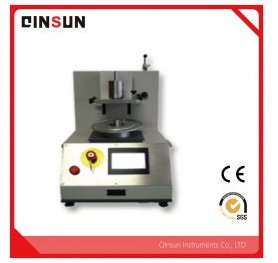
1. Linear Reciprocating Friction Test
Used to evaluate the abrasion resistance, scratch resistance (single or multiple scratches), and color transferability (usually abrasion resistance or wear resistance) of products. Both dry and wet abrasion tests can be performed. Commonly used for plastics, automotive parts, rubber, leather and textiles, electroplating, freely detachable components, paints, printed patterns, and other products.
2. Rotary Friction Test
Used to test the rotary friction of flat products, such as: suitcases, carpets, cardboard, clothing, glass, plastic coatings, tiles, metal coatings, paints, varnishes, decorative panels, high-pressure laminates, plastics, textiles, elastic floor mats, transportation coatings, anodized layers, blankets, electronic components, decorative panels, waxes, labels, leather cases, dental materials, automotive interiors, resins, furniture, etc.
3. Reciprocating Friction Test
Reciprocating friction is used for various physical damage tests, such as abrasion and scratching on the material surface. This is ideal for testing flat samples. The actual weight of the balance arm can be weighed to ensure the accuracy of the test load. At the end of the balance arm are a weight holder and an accessory holder. Below the reciprocating abrasion tester is a sample stage that moves horizontally back and forth. Test parameters such as reciprocating length, speed, and load can be adjusted.
4. Scratch Resistance Test
The scratch resistance test mainly detects the abrasion resistance of smooth and textured plastic parts in automotive interior and exterior components. In addition to material and product development, it is also suitable for quality control of related products. The five-finger scratch/abrasion tester is designed for evaluating plastic materials, abrasion resistance of hard materials, paints, inks, soft metals, linoleum, additives, and other materials. Many products are suitable for abrasion resistance testing. In actual testing, if the product can withstand two thousand abrasion cycles, further testing is largely unnecessary. This is something that everyone should keep in mind. These four testing methods can basically determine the abrasion resistance performance of a product. Of course, different products can also be tested using one or more of these methods.
A wear testing machine is a device used to evaluate the wear resistance of materials or coatings. It is widely used in research institutions, factory laboratories, and other fields. These devices conduct tests by simulating the wear process under actual operating conditions and mainly consist of a test bench, a sample clamping device, and a friction head. The working principle of a wear testing machine is to simulate the wear process under actual operating conditions and perform wear tests on the sample surface to evaluate its wear resistance.
When selecting a wear testing machine, factors such as testing requirements, standard specifications, accuracy and stability, functional characteristics, brand service, and budget should be considered. These devices can be widely used in materials engineering, mechanical engineering, automotive engineering, construction engineering, and electronic products to evaluate the wear resistance of materials or products.
| Standard Number | Standard Name | Test Method | Measurement Parameters | Applicable Scope |
|---|---|---|---|---|
| ASTM G65 | Standard test method for wear testing with a dry sand wheel | Abrasion using a sand wheel on the sample surface | Wear volume, wear depth | Metallic materials, coatings |
| ASTM G99 | Rotating disk wear test | Wear by rotating a disk to bring the sample into contact with a friction plate | Wear rate, friction coefficient | Metals, ceramics, composite materials |
| ISO 7148-2 | Determination of wear resistance | Pin-on-disk wear test | Wear amount, wear rate | Mechanical component materials |
| ISO 20502 | Wear test method for abrasives | Abrasive action on the sample surface | Wear rate, hardness change | Plastics, composite materials |
| ISO 4649 | Rubber wear test | Rotating disk method | Wear volume | Rubber materials |
There are two main categories of fabric abrasion resistance testing methods: actual wear tests and laboratory tests. In laboratory tests, instruments are often used to simulate various wear conditions encountered in actual use.
Actual wear tests: These tests reflect the actual wear of the fabric through real-world use. However, they require significant manpower and resources, and the testing time is long and the organization is complex. Therefore, in actual production, laboratory tests are more commonly used for quick analysis of fabric abrasion resistance.
Laboratory tests: In laboratory tests, instruments are often used to simulate various wear conditions encountered in actual use to determine the abrasion resistance of the fabric.
Based on the abrasion test results, the durability of the fabric can be roughly judged, which is of great significance in guiding fabric production processes.
Mechanical wear refers to the damage to electronic circuits caused by mechanical cutting, impact, and extrusion during the operation of specific components. It has many forms, affecting durability, motion performance, protection, and processing speed.
I. Abrasive Wear
Abrasive particles are an important influencing factor in abrasive wear. The wear process is divided into two stages: physical processing of the surface layer by abrasive particles and decomposition of the underlying material. When the surface is subjected to mechanical wear, abrasive particles propagate to the surface, releasing energy. The temperature rises sharply, and after thermal decomposition and wear, local mechanical wear residues form a new surface layer, creating the surface structure of abrasive mechanical wear.
II. Impact Wear
Impact wear is a type of mechanical wear caused by collision. It is caused by uneven surface temperature or uneven heat transfer. Surface contaminants decompose into smaller wear particles, increasing the number and energy of wear particles, thus creating a high-temperature environment, causing thermal expansion and uniform wear of the component.
III. Surface Wear
Surface wear is a form of wear caused by the scratching of the surface by abrasive particles. During surface wear, the thin film layer and surface layer are continuously worn away due to the sliding forces of abrasive particles, creating new crystal surfaces, resulting in a smooth surface morphology and good durability.
IV. Gas Abrasion
Gas abrasion refers to mechanical wear caused by gas phase impact, gas corrosion, gas particle breakage, and gas penetration during the pumping process. Gas abrasion generally occurs on polymer materials, including thermosetting plastics, polyurethanes, and polyethylene plastics, which are often used in pumps. The gas at the pump outlet can cause wear on the surface. Gas abrasion is more likely to occur than other forms of wear and often develops into a constant wear rate state.
V. Fluid Abrasion
Fluid abrasion is a form of wear caused by changes in fluid distribution as the fluid flows over the surface. It mainly occurs in fluid moving media, such as water and hydraulic oil. Abrasive particles in the fluid collide with the workpiece surface as the fluid moves, causing wear. Over time, the number of worn particles on the surface gradually increases, reducing the surface gloss, damaging the surface's fineness, thereby affecting performance and reducing efficiency.


