In the fields of textile and materials science, the rotary rubbing fastness tester is a crucial testing device, playing a key role in evaluating the colorfastness and abrasion resistance of materials such as fabrics, leather, and plastic films under specific conditions.
The rotary rubbing fastness tester is the most commonly used model in the textile industry for testing the dry and wet rubbing fastness of fabrics, especially printed fabrics. It is equipped with a 16mm diameter rubbing head that can provide 1143 grams of pressure. The rubbing head rotates clockwise for 1.125 revolutions and then counterclockwise; the operating handle can only be rotated in one direction.
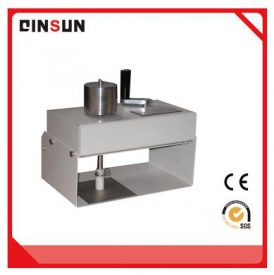
The rotary rubbing fastness tester performs quantitative friction tests on samples by simulating friction conditions that may be encountered in actual use. Its core components include a rotating rubbing head (usually covered with a specific rubbing cloth or rubber material), a sample clamping device, and a mechanism for applying and controlling the friction force. During the test, the rubbing head performs cyclic rubbing motion on the sample under preset pressure and speed, simulating the effects of daily activities such as wearing, washing, and friction on the material's color.
The general operating procedures for a rotary rubbing color fastness tester are as follows:
1. Preparation Stage: Select a suitable rubbing cloth or rubber head according to the test standard, prepare the sample to be tested, and adjust the pressure, speed, and number of rubbing cycles of the tester.
2. Sample Installation: Fix the sample on the sample clamping device, ensuring the sample is flat and wrinkle-free, and the rubbing area is accurately aligned.
3. Start Testing: Start the tester; the rubbing head will begin rubbing the sample according to the preset parameters. During the process, observe the color change of the sample and record relevant data.
4. Result Evaluation: After the test, use a standard colorimetric card or spectrophotometer to compare the colors of the sample before and after rubbing, calculate the color difference value, and evaluate the color fastness grade.
5. Report Generation: Based on the test results, write a test report, recording test conditions, data, conclusions, and other information for subsequent quality analysis and improvement.
The rotary rubbing color fastness tester is a professional device used to test the color fastness of textiles, leather, and other materials. Its primary purpose is to assess the colorfastness of materials by simulating the friction experienced during actual use. This equipment is widely used in colorfastness testing in industries such as textiles, leather, footwear, and bags. The test assesses the colorfastness of materials, providing a basis for product quality control and improvement.
Specifically, the rotary rubbing colorfastness tester can test the following:
Colorfastness of textiles: including the resistance to color transfer in various textiles such as clothing fabrics and home textiles.
Colorfastness of leather materials: assessing the colorfastness of leather under friction.
Colorfastness of footwear and bag materials: ensuring that the color of these materials does not easily fade during use.
The rotary rubbing colorfastness tester is widely used in multiple industries such as textiles, leather, footwear, bags, automotive interiors, and furniture fabrics. It is not only an important part of the quality control system of manufacturing enterprises, but also an essential tool for third-party testing institutions to conduct product certification and for market supervision departments to conduct quality spot checks. Specific applications include, but are not limited to:
- Textile testing: assessing the colorfastness of textiles such as clothing, bedding, and curtains to ensure that products do not easily fade during daily wear and washing.
- Leather and Synthetic Leather Testing: Tests the abrasion resistance and color stability of leather and synthetic leather materials such as leather goods, shoe uppers, and car seats.
- Plastic Film Evaluation: Analyzes the color changes of plastic film materials used in food and pharmaceutical packaging under friction to ensure product safety.
- Automotive Interior Material Verification: Tests the abrasion resistance and color retention of interior materials such as car seats, door panels, and center consoles to improve the passenger experience.
A rotary abrasion tester is a testing device used to evaluate the abrasion resistance of materials. It measures the degree of wear on samples by simulating wear conditions in actual use. It is widely used in materials science, product development, quality control, and other fields, especially in industries such as coatings, plastics, paper, textiles, metals, and ceramics, for testing and comparing the abrasion resistance of products.
A rotary abrasion tester typically includes a rotating platform on which the sample is fixed and brought into contact with an abrasive (such as sandpaper) under a certain load. By setting the number of rotations or the time, the machine can simulate the wear of the material. Routine maintenance and care are crucial to ensuring its long-term stable operation and the accuracy of test results. The following are maintenance and care measures for a rotary abrasion tester:
1. Operating Procedures: Before operating the equipment, thoroughly understand the structure, principle, and operating procedures of the tester, ensuring that operators are familiar with all functions and safety measures of the equipment.
2. Balance Calibration: Balance calibration must be performed before each test. Before calibration, ensure the equipment is clean and free of impurities. Calibration must be performed according to the steps in the equipment instruction manual. After calibration, a pre-test inspection should be conducted to ensure all components, such as sliding rails, elastic elements, transmission mechanisms, and control instruments, are functioning correctly.
3. Proper Operation: During equipment operation, avoid arbitrarily disassembling parts, do not touch any parts while the equipment is running, and do not manually adjust small parts.
4. Routine Maintenance: Routine maintenance of the equipment is typically divided into daily and weekly maintenance. Daily maintenance is performed by operators before, during, and after their shifts, including checking drawings and handover records. Weekly maintenance involves more comprehensive inspection and maintenance.
5. Periodic Maintenance: Periodic maintenance should be performed after approximately every 200 tests, including cleaning, lubrication, and inspection of the equipment. Necessary component replacements and adjustments should be made based on the equipment's operating condition.
Rotary rubbing color fastness testers and rotary abrasion testers are indispensable testing tools in the fields of textiles and materials science. The former accurately assesses the color durability of materials, safeguarding product color quality; the latter effectively measures the abrasion resistance of materials, contributing to improved product durability. With their rigorous scientific testing principles, standardized and meticulous operating procedures, wide range of diverse applications, and comprehensive and systematic maintenance measures, these testing machines play a crucial role in product quality control, product research and development, and industry standard setting across various industries. As technology continues to advance, these two types of testing machines will continue to be optimized and upgraded, contributing even more to promoting high-quality development in the fields of textile and materials science.


