Friction and wear are among the most common challenges encountered in practical engineering. During the operation of mechanical equipment, relative motion between components is inevitable. Friction and wear not only affect performance but also directly impact service life and reliability. To scientifically evaluate material performance under frictional conditions, industrial and research fields widely employ friction and wear testing machines to analyze materials, lubricants, and surface treatments, providing critical data for material selection, design, and engineering optimization.
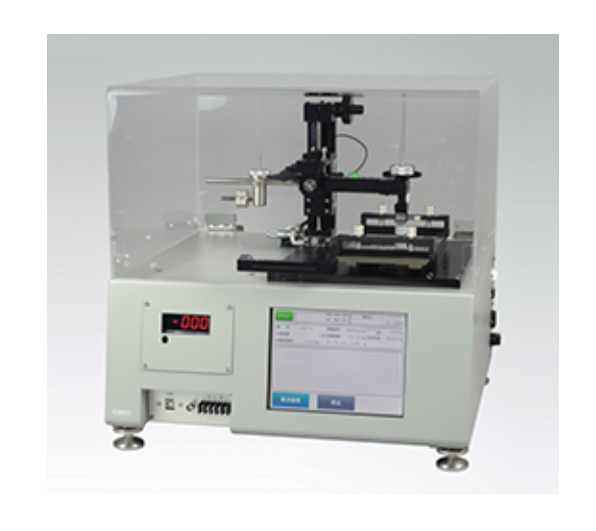
A friction and wear testing machine is specialized laboratory equipment used to measure friction forces, coefficients of friction, wear rates, and other related parameters of materials under specific frictional conditions. This article provides a comprehensive overview of these machines, including their basic structure, testing principles, common methods, and key applications in research and industrial production.
Friction and Wear Concepts
Friction is the resistance to relative motion between two contacting surfaces, while wear is the material loss that occurs due to friction, impact, or other mechanical interactions. Wear mechanisms are complex and include adhesive wear, abrasive wear, fatigue wear, and corrosive wear, commonly found in bearings, gears, seals, and sliding components.
Evaluating materials’ friction and wear performance not only provides insights under ideal conditions but also allows simulation of complex real-world operating scenarios, guiding structural design, material selection, and lubrication optimization.
Definition of Friction and Wear Testing Machines
A friction and wear testing machine simulates the frictional interactions between materials. By controlling load, motion type, speed, and environmental conditions, it quantifies material behavior under dynamic friction, including friction force, coefficient of friction, wear amount, and wear rate.
Typical components include:
Sample holding fixture: Secures the test material in place.
Friction pair and loading mechanism: Ensures contact between sample and counterbody and applies a normal load.
Drive system: Provides relative motion between sample and friction element, such as reciprocating, rotational, or combined motions.
Sensors and measurement system: Captures friction force, coefficient, displacement, and wear data in real time.
Control and data processing module: Manages test parameters, controls the process, and collects and analyzes data.
Modern machines often use computer-controlled systems, enabling automated testing, data acquisition, and graphical analysis, significantly enhancing test efficiency and accuracy.
The working principle of a friction and wear testing machine is essentially to simulate material wear under frictional conditions and measure relevant parameters to evaluate friction and wear performance. This principle can be understood from two perspectives: mechanical motion simulation and parameter measurement.
Mechanical Motion Simulation
The machine can reproduce different types of motion to mimic actual friction conditions:
Reciprocating motion: Linear back-and-forth movement of the sample or counterbody, simulating wear in reciprocating components.
Rotational motion: Circular movement of the sample or counterbody, simulating rolling or sliding contacts.
Combined motion: Integration of reciprocating and rotational motions to simulate complex contact conditions, such as rolling-sliding interactions.
By precisely controlling motion trajectory, speed, and load, the machine evaluates material behavior under different frictional scenarios, reflecting real engineering conditions such as bearing rolling, gear meshing, and seal sliding.
Parameter Measurement
During testing, the following parameters are measured:
Friction force and coefficient: Measured with force sensors and calculated relative to the normal load.
Wear amount: Quantified via mass loss, volume loss, or geometric changes.
Motion parameters: Speed, displacement, and cycle count, used to analyze dynamic friction behavior.
Temperature and environmental factors: Some advanced machines include temperature sensors to assess environmental effects on wear.
These measurements allow plotting friction coefficient versus time, wear versus cycle count, and other relevant curves, providing clear insight into material performance.
Different testing methods are selected based on motion type, load conditions, and evaluation objectives. Common methods include:
Sliding friction testing
The most basic form, where a sample slides against a counterbody under a controlled load, simulating practical sliding wear. It measures friction coefficient, wear depth, and wear rate under dry or lubricated conditions.
Rotational friction testing
Implements circular motion between sample and counterbody, simulating rolling or combined rolling-sliding wear, such as in bearings. Testing under varied speeds and loads evaluates lubricant effectiveness and the wear performance of metals, plastics, and coatings under rotational conditions.
Reciprocating friction testing
Simulates relative motion in reciprocating components, such as cylinder liners and piston rings, measuring friction and wear under repeated linear movement. Commonly used for seals, plastics, and rubber components under repetitive motion.
Combined friction modes
Some advanced machines support multiple friction types, such as rolling-sliding combinations, providing a more accurate simulation of complex real-world friction conditions.
Machines can be classified by motion type or application:
By motion type
Sliding testers: For linear sliding wear.
Rotational testers: For rolling or rotational wear.
Reciprocating testers: For linear reciprocating wear.
Combined testers: Support multiple motion types for complex scenarios.
By application
General-purpose testers: Basic tests for different materials and standards.
Special-purpose testers: Designed for specific environments or complex conditions, such as high temperature or high pressure.
To ensure comparability and reliability, friction and wear tests are often conducted according to international or industry standards. For example, ASTM and other national standards define test methods such as thrust washer friction tests and four-ball wear tests. Standards specify test procedures, sample preparation, loading conditions, and test duration, enabling results to support research, product development, and quality control.
Friction and wear testing machines are widely used in research, industrial testing, and new material development:
Material R&D and tribology research
Evaluate new materials and coatings by comparing friction coefficients and wear rates, guiding structural optimization.
Lubricant evaluation
Assess lubricant performance under varying loads and speeds to reduce wear, improve energy efficiency, and extend service life.
Engineering component testing
Test bearings, seals, gears, piston rings, and other components to predict service life and optimize design.
Automotive, aerospace, and manufacturing
Provide critical data for material selection, lubrication systems, and safety-critical components, ensuring reliability and performance.
With industrial technology advances, higher demands are placed on material testing. Traditional machines focus on standard friction tests, while modern engineering requires evaluation under high temperature, high pressure, corrosive, or vacuum conditions. Emerging trends include:
Integration of multi-physics simulation: Simulate temperature, humidity, and load simultaneously.
Real-time online measurement: Capture wear morphology dynamically using high-precision sensors and vision systems.
Intelligent systems and big data analysis: Combine automation and data analytics for enhanced efficiency and insight.
These developments bring friction and wear testing closer to real-world conditions, providing comprehensive data for materials engineering and mechanical design.
Friction and wear testing machines are indispensable platforms in tribology research and engineering practice. By precisely controlling frictional environments and motion states, they quantify material friction and wear performance, providing scientific support for engineering design and industrial applications. With ongoing technological advances, these testing systems are evolving toward higher accuracy, stronger simulation capabilities, and greater intelligence.


