The Low-Load Wear Testing Machine is specifically designed to measure wear behavior under extremely small loads that were previously difficult to evaluate. With a measurable load range starting as low as 0.1 g and extending up to 10 kg, this system enables precise wear analysis of thin films, surface treatments, and delicate materials. A high-speed, low-vibration rotating table ensures stable operation, making the instrument suitable for accurate and reproducible low-load wear testing.
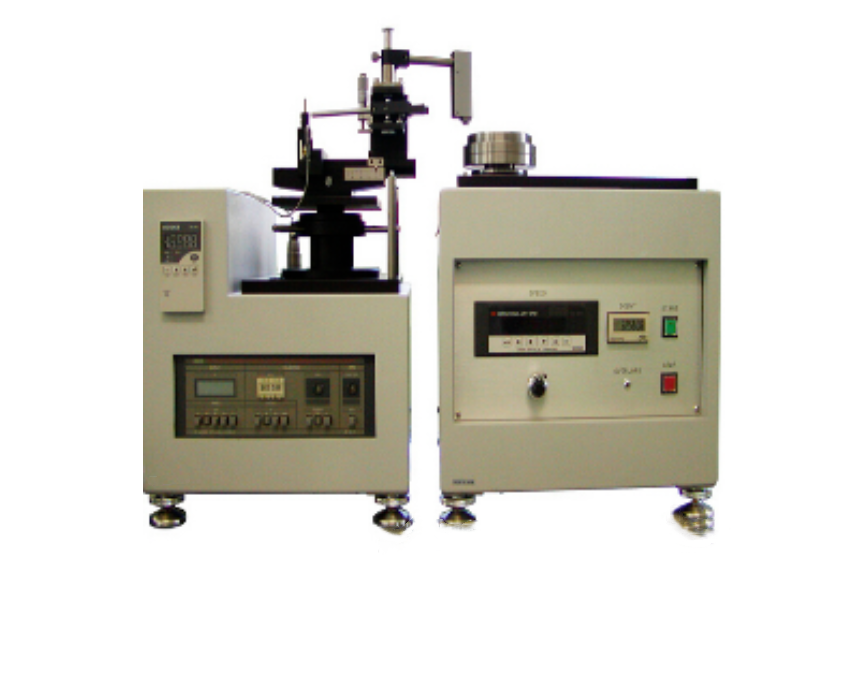
The Low-Load Wear Testing Machine is widely used in applications where ultra-low contact forces and high sensitivity are required, including:
Wear testing of thin films and functional coatings
Evaluation of surface-treated metals and micro-scale surface layers
Tribological testing of polymers, films, and soft materials
Wear behavior analysis of decorative and protective coatings
Research on micro-load friction and wear mechanisms
Typical test samples include:
Thin polymer films
Surface-treated metal sheets
Coated substrates
Functional and decorative coatings
The system supports test methods aligned with the following international and industry standards:
GB/T 6040-2008 (Test Method for Wear Resistance of Metal Surfaces)
GB/T 10375-2008 (Tribological Test Methods — Reciprocating Friction and Wear)
GB/T 17657-2022 (Test Methods for Properties of Wood-Based Panels)
ISO 12137-2 (Determination of Abrasion Resistance of Coated Fabrics and Films)
ISO 20502 (Fine Ceramics and Coatings — Scratch and Wear Testing under Micro Load)
ISO 1518-2 (Paints and Varnishes — Determination of Scratch Resistance)
ASTM D3702 (Wear Resistance of Polymers and Composite Materials)
ASTM D1044 (Taber Abrasion Resistance of Plastic Materials)
ASTM D1894 (Coefficient of Friction of Plastic Films and Sheeting)
JIS L 0849 (Wear Resistance Test of Plastic Products — Micro Load)
JIS L 0823 (Abrasion Resistance of Plastic Films and Sheets)
JIS P 8139 (Determination of Friction and Wear Properties of Coatings)
| Parameter Category | Specification |
|---|---|
| Main structure | Drive unit and measurement unit separated |
| Turntable size | Ø80 mm |
| Specimen fixing (turntable) | Center bolt fixing, adjustable to specimen shape |
| Optional fixing method | Vacuum chuck |
| Upper specimen fixing | Dedicated fixture, adjustable to specimen shape |
| Turntable speed | 30–3000 rpm |
| Rotation counter | Accumulative counter, max. 9.999.999.999 cycles |
| Auto-stop function | Stops at preset cycles, up to 9.999.999 cycles |
| Load method / range | Leaf spring displacement method / 0.1–10 g |
| Friction force measurement | Load cell method, max. 1 N (interchangeable) |
| Wear measurement | Eddy-current displacement sensor, accuracy 3 μm |
| Pivot movement range | Vertical adjustment 10–30 mm |
| Data analysis system | General-purpose friction and wear analysis software |
Ultra-low load measurement capability starting from 0.1 g
Wide load range up to 10 kg for diverse wear testing requirements
High-speed rotating table with low vibration to ensure stable micro-load measurement
Separation of drive and measurement units minimizes vibration interference
Optional vacuum chuck maintains rotational balance without damaging specimens
Integrated displacement sensor enables direct and simple wear depth measurement
Leaf-spring loading mechanism combined with load cell calibration ensures high measurement accuracy
(1) Diamond scratch needle, 0.005 mm radius
(1) Diamond scratch needle, 0.25 mm radius
(1) Leaf spring set
(1) Protective accessory cover
(1) Load cell for leaf spring calibration
(1) Power cable
(1) Ground wire
(1) Operating manual
Mount the test specimen on the rotating table or vacuum chuck.
Install the appropriate upper fixture or scratch needle.
Set the required load using the leaf spring displacement mechanism.
Adjust the rotation speed and test duration.
Calibrate the load using the dedicated load cell if required.
Start the test and monitor friction and wear behavior.
Stop the test automatically at the preset cycle count and record results.
Clean the turntable and fixtures after each test
Inspect the leaf spring and load calibration components regularly
Verify displacement sensor accuracy periodically
Keep the drive and measurement units free from dust and vibration
Store accessories in a dry and stable environment
1. What is the core advantage of this product?
Its ability to accurately measure wear under ultra-low loads down to 0.1 g, which is difficult to achieve with conventional wear testers.
2. Are the test results reliable?
Yes. The separated drive and measurement design, low-vibration turntable, and calibrated load system ensure stable and repeatable results.
3. Which international or industry standards does it comply with?
The machine supports wear and friction test methods referenced in GB, ISO, ASTM, and JIS standards.
4. Why is this product important?
It enables precise evaluation of wear behavior in thin films and surface-treated materials, supporting material development and quality control.


