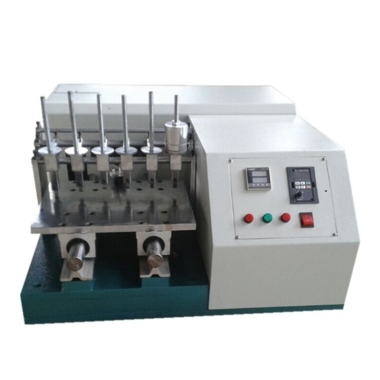
The Rubber Hose Wear Testing Machine is an instrument used to evaluate the abrasion resistance of the outer coverings of rubber hoses, hydraulic hoses, and similar tubular materials. It can also be used for wear performance testing of other types of pipes and sheet materials.This equipment is mainly designed for testing the outer layers of rubber hoses (such as those used in automotive cables, footwear materials, electronic components, etc.). By simulating the friction conditions that hoses experience during actual use when in contact with external objects, it assesses their wear life, surface damage level, and structural stability. It provides essential data support for quality control, material improvement, and performance verification of rubber hose products.This article will introduce the equipment from the following aspects, and we hope it will be helpful to you.
1. Working Principle
The rubber hose wear testing machine is designed to simulate real-world friction conditions and achieve quantitative evaluation of hose abrasion resistance through standardized and controllable test parameters. Its working principles mainly include the following three methods:
(1) Rotary Friction Type
The hose specimen is fixed onto a rotating shaft and rotated at a set speed (e.g., 0–500 r/min). At the same time, a wear-resistant grinding block (made of materials such as sandpaper, rubber, or metal depending on actual application conditions) is pressed against the hose surface with constant pressure. After a preset time or number of cycles, the wear resistance is evaluated by measuring material loss, such as mass loss, volume loss, or surface wear depth.
(2) Reciprocating Friction Type
The hose sample is kept stationary while the wear block moves in a linear reciprocating motion through a transmission mechanism. The stroke can be adjusted (e.g., 0–500 mm), and friction is applied under a defined load. This method simulates wear conditions where hoses undergo repeated movement, such as in construction machinery where hoses swing with moving parts.
(3) Sand Particle Impact Type
Standardized sand particles are propelled onto the hose surface using high-pressure airflow, simulating abrasive wear in dusty or sandy environments. Wear resistance is evaluated based on exposure time and sand consumption.
2. Main Components of the Rubber Hose Wear Testing Machine
The equipment mainly consists of the following parts:
(1) Test Bench (Main Frame System)
Includes the test platform, control panel, and power switch. It serves as the core structure of the machine and supports the entire testing process.
(2) Rotating Wheel System
Comprises the rotating wheel, bearing seat, and transmission belt. It is used to simulate friction conditions under real operating environments.
(3) Counter System
Used to record the duration of wear and the amount of surface abrasion on the hose, ensuring accurate test data collection.
(4) Specimen Fixture
Used to securely hold the hose sample in place during testing, preventing movement or loosening that could affect results.
(5) Sealing System
Ensures no leakage occurs during the testing process and maintains the accuracy and stability of the test results.
The rubber hose wear testing machine is primarily used to simulate real friction conditions and quantitatively evaluate the wear resistance and service life of rubber or hydraulic hose outer layers. It mainly serves product R&D validation, factory quality control, and material selection assessment.
1. Core Application Scenarios
(1) Manufacturing Quality Control
Rubber hose manufacturers use the equipment to test the abrasion resistance of hydraulic hoses and automotive hoses before shipment. This ensures that products meet relevant industry standards and performance requirements.
(2) R&D and Material Improvement
Research institutions and corporate laboratories use the machine to study how different rubber formulations and reinforcement structures (such as textile or steel wire layers) affect wear resistance. This helps optimize product design and extend service life.
(3) Engineering Selection and Acceptance
In industries such as mining, construction machinery, and petrochemical engineering, end users verify the wear resistance of large-diameter hoses (e.g., tailings transport or slurry transport hoses) before procurement. This ensures resistance to sand abrasion and mechanical wear under harsh working conditions.
(4) Multi-Industry Testing Applications
In addition to rubber hoses, the equipment can also be used to evaluate the wear resistance of similar materials such as footwear materials, cable sheaths, and electronic component housings made of rubber or plastic.
2. Typical Working Condition Simulations
Rotary Friction Test:
Simulates continuous friction between hoses and stationary objects (such as supports or ground surfaces), commonly used for automotive chassis piping systems.
Reciprocating Friction Test:
Simulates periodic friction caused by component movement in construction machinery, evaluating surface damage under dynamic bending conditions.
Sand Particle Impact Test:
Uses high-pressure airflow to spray sand particles onto the sample surface, simulating abrasive wear in high-dust environments such as mines and construction sites.
1. High-precision simulation for reliable evaluation
The rubber hose wear testing machine can accurately simulate real working friction conditions. By adjusting parameters such as rotation speed and load, it realistically reproduces the wear process of rubber hoses in complex environments. This ensures that test results are highly accurate and reliable, providing a solid experimental basis for product design and performance evaluation.
2. User-friendly operation with enhanced safety
The equipment is designed with an intuitive and easy-to-understand control interface, allowing operators to quickly learn and operate the system. In addition, its reliable sealing structure effectively prevents leakage during testing, ensuring a stable testing environment while protecting operator safety, making the entire process safer and more dependable.
3. Standardized testing for efficient quality control
Through standardized testing procedures, the machine can quickly and efficiently determine whether the wear resistance of rubber hoses meets preset standards. This enables strict quality control of products, ensures that all delivered products meet application requirements, and enhances overall market competitiveness.
4. High-precision data acquisition for accurate results
The equipment integrates a high-precision counter that accurately records wear time and wear amount. Combined with a stable and secure specimen fixture, it ensures precise positioning of the hose sample without displacement during testing. These core components work together to ensure that the final test data is highly accurate and reliable.
When selecting a rubber hose wear testing machine, the key focus should be on standards compliance, fixture adaptability, control stability, and after-sales support. Selection must not be based solely on price or promotional claims.
1. Key Selection Criteria
(1) Compliance with Testing Standards (Top Priority)
It is essential to confirm whether the equipment strictly complies with the required testing standards. Different standards define different motion trajectories and failure criteria. If the equipment does not meet the standard, the test data will be invalid and unusable for certification or quality control purposes.
(2) Fixture Compatibility and Working Condition Matching
Careful evaluation is required for the mandrel specifications and clamping system to ensure compatibility with the full range of current and future hose diameters. This helps avoid “un-testable” blind spots. It is also important to verify whether the loading method accurately simulates real wear conditions.
(3) Motion Control Accuracy and Stability
The stability of reciprocating motion and frequency consistency are critical. Low-quality equipment may suffer from stroke deviation or mechanical vibration, leading to abnormal wear paths and directly affecting repeatability and reliability of test results.
(4) Automation Level and Data Traceability
Priority should be given to models equipped with PLC or intelligent touch-screen control systems. Features such as automatic counting, auto-stop, and generation of tamper-proof test reports are important for reducing human error and ensuring full traceability in quality inspection systems.
(5) Manufacturer Technical Strength and Support Capability
It is recommended to choose manufacturers with proven laboratory application cases, third-party calibration services, and clear after-sales commitments. This helps avoid purchasing equipment that cannot pass certification audits (such as CNAS requirements) or lacks maintenance support after failure.
2. Key Pitfalls to Avoid
(1) Avoid “Universal Machine” Claims
Wear testing is highly sensitive to mandrel matching and surface contact pressure. Claims of “one machine for all tests” often indicate compromised accuracy. On-site testing or real sample demonstration videos should be requested before purchase.
(2) Beware of Low-Price Traps
Core components such as grinding materials, drive motors, and sensors determine equipment lifespan and accuracy. Machines priced significantly below market average often reduce material quality and motion smoothness, resulting in long-term data drift and unreliable results.
(3) Acceptance Testing Requirements
Before contract signing, acceptance criteria should be defined clearly, such as:
Repeatability of standard sample tests
Comparison with third-party testing institutions
Do not accept “machine runs normally” as the only acceptance condition. Suppliers should also provide material certificates and calibration documents for key components.
Overall, the rubber hose wear testing machine is a critical instrument for evaluating long-term durability under simulated working conditions. It plays an essential role in predicting service life, optimizing product design, improving material performance, and ensuring strict factory quality control.We sincerely welcome inquiries regarding technical specifications, testing standards, or application scenarios. Our professional team is ready to provide detailed product information, technical solutions, and customized support to help you achieve more reliable and efficient quality assurance for your products.


