The Socks Wear Tester is a specialized textile testing instrument designed to simulate the friction conditions experienced during sock wearing, quantitatively evaluate the abrasion resistance performance of knitted socks and hosiery products, and determine the number of abrasion cycles until damage occurs. This article will introduce this equipment from the following aspects and aims to provide useful information for readers.
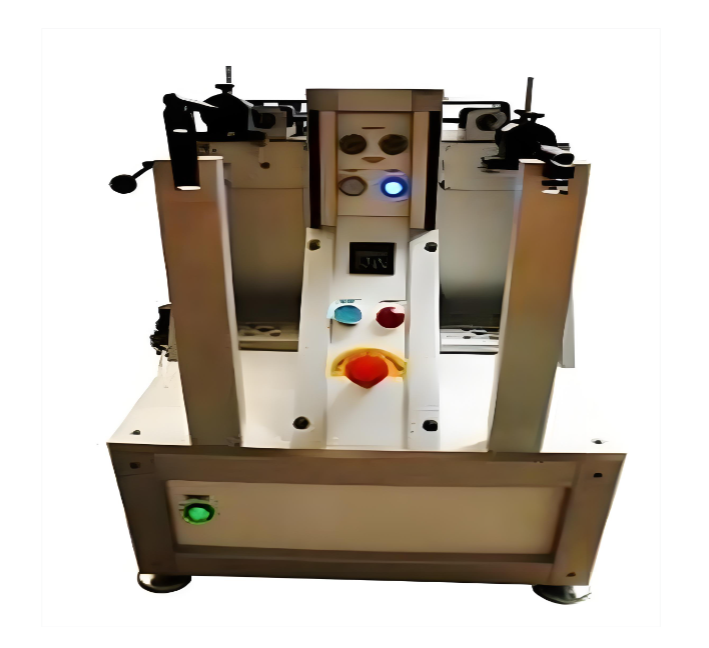
1. Comprehensive Testing Functions
The Socks Wear Tester provides a wide range of testing functions to meet various abrasion-related evaluation requirements for different types of socks. In addition to basic abrasion resistance testing, it can also perform tests for pilling performance, fabric tensile strength, elongation at break, and appearance changes after wear, providing a comprehensive evaluation of sock durability.
2. High-Precision Parameter Control for Accurate and Repeatable Test Results
To ensure the accuracy and repeatability of test results, the Socks Wear Tester features high-precision parameter control. In terms of friction pressure control, some advanced models can achieve gram-level precision adjustment, allowing the pressure value to be accurately set according to different testing standards and sock types. The friction frequency can also be precisely adjusted within a wide range, from several cycles per minute to hundreds of cycles per minute, meeting the requirements of different simulated wearing conditions.
3. Strict Control of Testing Environment
The tester provides strict control over testing conditions. The laboratory temperature can be maintained at 20±2°C, and the relative humidity can be controlled at 65±5%. This prevents environmental factors from affecting the friction coefficient of textile fibers and ensures the stability, reliability, and comparability of test data.
4. Intelligent Operation and Automatic Data Analysis
Most models are equipped with a color touchscreen display and adopt bilingual Chinese and English interfaces with menu-based operation. Operators can complete the entire testing procedure through simple instructions. The tester also features automatic data acquisition and analysis functions. During testing, parameters such as friction cycles, weight loss, and abrasion degree are recorded in real time. After testing, a detailed test report is automatically generated, greatly improving testing efficiency and data processing accuracy.
5. Professional Design for Knitted Sock Characteristics
Socks are knitted products with certain elasticity, and different areas of socks have different abrasion resistance requirements. The Socks Wear Tester is specially designed according to these characteristics. Some models are equipped with specially designed specimen holders that can securely fix critical areas such as the sole and heel of socks, ensuring stable positioning during testing and realistically simulating the stress conditions during actual wearing.
6. Realistic Friction Simulation and Adjustable Tension Control
The friction head is manufactured using materials similar to those found inside shoes, such as standard abrasive paper and textile friction materials, ensuring realistic friction contact conditions. Considering the elasticity of socks, the tester can adjust the tension load to maintain an appropriate stretching condition during testing, allowing a more accurate evaluation of actual wear resistance.
1. Simulation of Actual Wearing Abrasion Conditions
During daily use, areas such as the heel and toe of socks continuously rub against shoes and the ground. Over time, this friction may cause problems such as holes and pilling. The Socks Wear Tester accurately controls parameters including friction pressure, frequency, and contact materials to simulate different wearing conditions such as walking and sports activities.
2. Material Selection and Production Process Optimization
During the research and development stage of socks, the abrasion tester serves as an essential tool for selecting raw materials and optimizing manufacturing processes. Different fiber materials have significantly different abrasion resistance properties. Cotton fibers provide softness and comfort but have moderate abrasion resistance, while synthetic fibers such as nylon and polyester offer excellent wear resistance.
3. Evaluation of Knitting Technology and Structural Design
The influence of sock manufacturing techniques, such as stitch density and pattern design, on abrasion resistance can also be evaluated through abrasion testing. For example, increasing stitch density in heel and toe areas or applying reinforced knitting structures can be verified through testing. If these methods effectively improve abrasion resistance, they can be applied to mass production.
4. Quality Control for Sock Manufacturers
For sock manufacturers, abrasion resistance is one of the important indicators of product quality. By conducting sampling inspections on each production batch with an abrasion tester, manufacturers can ensure that products comply with national or industry standards, preventing customer complaints and brand reputation damage caused by insufficient abrasion resistance.
5. Support for Industry Standard Development
The test data generated by the Socks Wear Tester provide important references for establishing and improving industry abrasion resistance standards. Relevant organizations can collect abrasion test data from different brands and types of socks, analyze abrasion performance trends, and combine the results with consumer usage feedback to develop more scientific and reasonable industry standards.
The core testing process of the Socks Wear Tester includes:
Specimen conditioning and cutting → Specimen mounting and fixation → Parameter setting (pressure/cycles/trajectory) → Friction operation → End-point determination (hole formation or preset cycles) → Result recording
1. Preparation Stage
Condition the sock samples in a standard environment of 23±2°C temperature and 50%±4% relative humidity for at least 4 hours. Use a dedicated specimen cutter to cut circular specimens with a diameter of 38 millimeters from critical areas such as the sole and heel, or install the entire sock onto the fixture according to the testing method. Check the instrument level, clean the abrasion platform, and replace the standard wool felt or abrasive material.
2. Specimen Installation and Fixation
Place the specimen evenly into the specimen holder with the testing surface facing outward. Use an auxiliary mounting device to apply uniform tension and prevent wrinkles. Install the holder onto the testing station, align the guide wheel, and vertically lower the upper cover plate. Install the appropriate weights according to the testing standard, such as 395 grams weight load commonly used for textile testing.
3. Parameter Setting
Connect the power supply and select the "Abrasion Testing" mode on the touchscreen. Set the abrasion cycles (such as 5000 cycles or until specimen damage occurs), movement trajectory (usually a 60.5 millimeter × 24 millimeter Lissajous figure pattern), and rotation speed (50±5 revolutions per minute). Reset the cycle counter to zero.
4. Test Execution
After confirming that there are no foreign objects inside the instrument, press the "Start" button. The instrument automatically performs multi-directional friction movements. During testing, observe the specimen condition. If holes or broken yarns appear, the test can be manually stopped, or the instrument can automatically stop after reaching the preset failure condition. Some models are equipped with automatic damage detection functions.
5. Test Completion and Evaluation
After reaching the preset abrasion cycles or specimen failure, stop the instrument and remove the specimen. Evaluate the results according to the applicable standard:
Use the number of abrasion cycles when a hole first appears as the abrasion resistance index.
Alternatively, check whether the specimen is damaged after a fixed number of abrasion cycles.
Clean abrasive dust from the equipment, turn off the power supply, and record the test results.
Note:
The abrasive fabric should be replaced or turned over after each test. Different sock types, including cotton socks, nylon socks, and sports socks, require corresponding pressure settings and failure evaluation criteria according to applicable standards.
Most Socks Wear Testers are based on the Martindale abrasion testing principle. The key maintenance requirements include:
Daily cleaning and removal of textile debris.
Replacement of standard abrasive materials and foam pads after each test.
Weekly lubrication of transmission components.
Monthly calibration of movement trajectory and pressure.
Annual calibration by an accredited third-party measurement organization.
1. Daily and Individual Test Maintenance
Immediate Cleaning After Testing:
After switching off the power supply, remove the specimen and use a soft dry cloth to clean fiber residues, dust, and stains from the platform to prevent contamination from affecting future abrasion paths.
Mandatory Consumable Replacement:
Standard abrasive fabrics must be replaced after each test. Polyurethane foam pads must also be replaced after each test. Wool felt can be reused, but it must be replaced when the surface becomes worn, hardened, or contaminated. The typical service life is approximately 100.000 cycles, depending on actual usage conditions.
Appearance Inspection:
Check whether the fixtures are deformed, whether pins and shafts are loose, and whether the touchscreen and buttons operate normally. Stop operation immediately if abnormalities are detected.
2. Regular Maintenance and Calibration
Lubrication Cycle:
Every 2–4 weeks, or after a certain number of operating cycles, apply a small amount of dedicated lubricating grease to moving guide plates, ball bearings, and other transmission components to prevent dry friction damage.
Parallelism and Trajectory Calibration:
Use a dial indicator monthly to check the parallelism between the abrasion platform and guide plates. The required tolerance should be within ±0.05 millimeters. Use the "paper and pen method" to draw the Lissajous pattern and verify trajectory uniformity, with a required deviation of no more than ±0.2 millimeters.
Pressure System Inspection:
Regularly check the mass of weights, loading blocks, and pressure components to prevent deformation caused by impact. Complete parameter calibration should be performed annually by qualified measurement institutions.
Environmental Control:
The instrument should be installed in a temperature and humidity controlled environment. Recommended conditions are 20±2°C temperature and 65±4% relative humidity. When the instrument is unused for a long period, power it on once a month to prevent moisture accumulation.
3. Key Precautions
Do not operate the instrument under excessive loads or disassemble critical transmission components without authorization.
Maintenance records should be properly maintained, including the date, maintenance activities, consumable replacement batches, and calibration results for traceability.
If test results show systematic deviation or abnormal movement trajectories, first check the abrasion platform parallelism and abrasive installation condition rather than immediately assuming instrument failure.
In conclusion, the Socks Wear Tester is a precision instrument that plays a critical role in textile industry quality control. Its stable performance, standardized operating procedures, and scientific maintenance system demonstrate its significant value in ensuring product quality and improving testing efficiency.The instrument not only helps accurately evaluate the durability of sock products but also serves as an effective tool for manufacturers to optimize production processes and enhance product competitiveness.We sincerely welcome inquiries regarding product technical specifications, application fields, or purchasing requirements. Customers may leave messages or contact us directly by telephone or email. Our professional team will provide detailed product information, customized solutions, and comprehensive after-sales service support.


