In modern industrial manufacturing, the wear resistance of materials directly affects a product's service life, operational safety, and overall economic value. As a professional instrument for evaluating abrasion resistance, the Steel Wheel Abrasion Tester has become an essential quality control tool across a wide range of industries, thanks to its precise simulation capability and standardized testing procedures.The Steel Wheel Abrasion Tester is an important piece of equipment in the field of industrial material testing. It is primarily used to evaluate the abrasion resistance of metallic and non-metallic materials under controlled friction conditions. The instrument is widely used in material research and development, product validation, and quality control for industries such as automotive components, construction machinery, rail transportation, aerospace, and industrial manufacturing. By providing accurate, repeatable, and standardized wear test data, it enables manufacturers to optimize material selection, improve product durability, and ensure compliance with industry performance requirements.
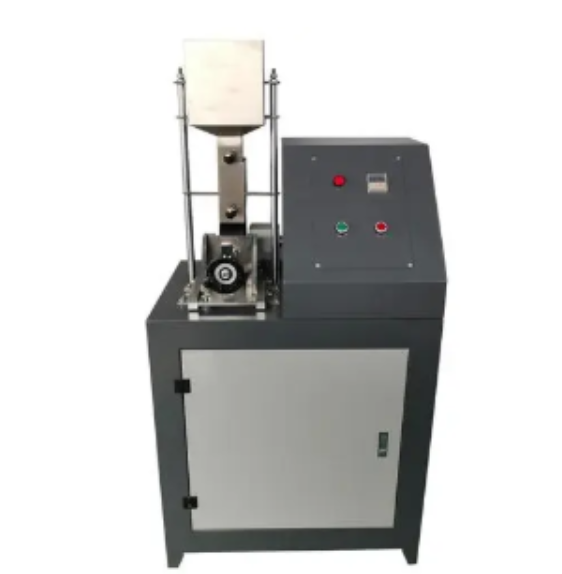
The Steel Wheel Abrasion Tester operates by simulating the wear mechanisms that materials experience under actual service conditions. Its core working principle is based on the rolling or sliding friction generated between a rotating steel wheel and the specimen surface under specified loading conditions and in the presence of abrasive media.
During the test, the specimen is securely mounted on a specimen holder or carriage. A predetermined normal load is applied through a calibrated weight system, ensuring firm contact between the specimen and the rotating steel wheel. At the same time, abrasive material is continuously and uniformly fed from a hopper into the contact area between the steel wheel and the specimen, accelerating the wear process and reproducing realistic abrasive wear conditions.
After the test is completed, the abrasion resistance of the material is evaluated by measuring parameters such as mass loss, thickness reduction, or wear scar length. These measured values are then used to calculate the material's wear resistance according to the applicable testing standard.
This testing method accurately reproduces wear conditions encountered in various real-world applications, including the abrasion of flooring materials caused by pedestrian traffic or vehicle loads, as well as the friction and wear experienced by mechanical components during operation. By employing standardized testing procedures and controlled operating parameters, the Steel Wheel Abrasion Tester provides accurate, repeatable, and comparable test results, offering a reliable basis for material research and development, product optimization, manufacturing quality control, and performance evaluation.
The Steel Wheel Abrasion Tester consists of several precision-engineered components, including a steel friction wheel, abrasive hopper, specimen carriage, loading system, drive unit, and control system. These components work together to provide accurate, repeatable, and standardized abrasion resistance testing.
1. Steel Friction Wheel
The steel friction wheel is the core component of the tester, as it comes into direct contact with the specimen to generate abrasion. Depending on the applicable test standard and material being evaluated, the wheel may vary in diameter, thickness, hardness, and material composition.
Typical specifications include:
Diameter: 200 ± 0.2 mm
Thickness: 10 ± 0.1 mm or 70 ± 0.1 mm
Hardness: HB 203–245
The surface of the steel wheel is precision-machined to ensure a smooth, defect-free finish, providing uniform contact and consistent abrasion throughout the test.
2. Abrasive Hopper and Feed System
The abrasive hopper stores the abrasive material and delivers it at a controlled, constant flow rate through an adjustable feed valve. This ensures that the abrasive is evenly supplied to the contact area between the steel wheel and the specimen.
The feed system consists of an abrasive hopper and a guide chute, which accurately direct the abrasive into the friction zone while minimizing material waste and reducing testing errors.
The abrasive commonly used is F80 white fused aluminum oxide specified in ISO standards. Its uniform particle size distribution and high hardness effectively simulate real-world abrasive wear conditions.
3. Specimen Carriage and Loading System
The specimen carriage securely holds the test specimen in place, preventing movement during the abrasion test. Mounted on precision guide rails, the carriage can move smoothly, allowing convenient specimen installation and removal.
The loading system applies a specified normal force by means of calibrated weights, accurately simulating the loads experienced by materials during actual service.
Common weight configurations include:
2.5 kg
14 kg
Different weight combinations can be selected to meet the requirements of various testing standards.
4. Drive Unit and Control System
The drive unit typically utilizes a cycloidal gear reducer or a gear transmission system to provide stable rotational power to the steel friction wheel.
The wheel speed is generally maintained at:
75 ± 4 rpm
This constant rotational speed ensures consistent and repeatable testing conditions.
The control system incorporates a timer relay and motor control circuit to precisely control the test duration. Once the preset testing time has been reached, the motor automatically stops, ensuring standardized operation.
Advanced models are equipped with a human-machine interface (HMI), such as a touchscreen display, allowing users to conveniently set testing parameters, monitor operating conditions, record test data, and review test results. This intelligent control system significantly improves operational efficiency, testing accuracy, and data traceability.
The Steel Wheel Abrasion Tester is widely used in a variety of industries, including construction, mechanical manufacturing, automotive, electronics, and home appliances. It is designed to evaluate the abrasion resistance of a broad range of materials, providing reliable data for product development, quality control, and performance verification.
1. Building Materials
In the construction industry, the Steel Wheel Abrasion Tester is primarily used to evaluate the abrasion resistance of ceramic tiles, natural stone, and inorganic flooring materials.
Typical applications include:
Determining the wear depth of unglazed ceramic tiles in accordance with GB/T test methods for abrasion resistance of unglazed tiles, allowing manufacturers to assess long-term durability under normal service conditions.
Evaluating the abrasion resistance of cement bricks, terrazzo, and other inorganic floor materials according to relevant GB/T standards, providing valuable data for flooring design, material selection, and construction quality assurance.
2. Mechanical Engineering Materials
In the mechanical manufacturing industry, the tester is widely used to assess the wear resistance of critical components such as gears, bearings, guide rails, and other machine parts.
By simulating friction and wear under operating conditions, the instrument evaluates the durability, wear life, and reliability of engineering materials, providing essential data for product design optimization and quality improvement.
Typical applications include:
Wear resistance testing of engine components
Evaluation of transmission gears
Durability assessment of mechanical transmission systems
Quality verification of precision mechanical components
These tests help ensure the long-term safety, reliability, and operational stability of mechanical equipment and automobiles.
3. Other Materials
In addition to construction and mechanical engineering applications, the Steel Wheel Abrasion Tester is also suitable for evaluating the abrasion resistance of plastics, rubber, coating materials, and other industrial materials.
Typical applications include:
Abrasion resistance testing of plastic pipes to evaluate their service life under abrasive conveying conditions.
Wear performance evaluation of protective and decorative coatings to determine their durability in practical applications.
Testing of rubber products, polymer composites, and other non-metallic materials used in industrial environments.
With its standardized testing methodology and high repeatability, the Steel Wheel Abrasion Tester provides reliable performance data across a wide range of materials, making it an indispensable instrument for material research and development, quality assurance, product certification, and manufacturing process optimization in numerous industries.
To ensure the accuracy, repeatability, and long-term reliability of the Steel Wheel Abrasion Tester, the instrument should be calibrated and maintained on a regular basis.
1. Calibration Items and Methods
According to the applicable testing standards, the main calibration items include the steel wheel rotational speed, geometric dimensions, total loading weight, abrasive flow rate, and test duration. The recommended calibration methods are as follows:
Steel Wheel Rotational Speed
With the tester operating under no-load conditions, use a calibrated tachometer to measure the rotational speed of the steel wheel. Repeat the measurement three times and calculate the average value. The rotational speed should be maintained within 75 ± 3 rpm.
Geometric Dimensions
Measure the diameter and thickness of the steel wheel using a calibrated vernier caliper.
Measure the diameter in two mutually perpendicular directions.
Measure the thickness at 90° intervals around the circumference.
Calculate the average of all measurements to verify compliance with the specified dimensional tolerances.
Total Loading Weight
Remove the loading weights from the instrument and measure their mass using a calibrated electronic balance. The measured weight should fall within the allowable tolerance specified by the applicable testing standard.
Abrasive Flow Rate
Collect the abrasive discharged over a specified period, weigh it using a precision balance, and calculate the abrasive feed rate. The measured flow rate should comply with the requirements of the relevant test standard to ensure consistent abrasion conditions.
Test Duration
Verify the timer function using a calibrated stopwatch to ensure that the preset testing time is accurate and consistent.
2. Maintenance Guidelines
Routine Cleaning
After each test, thoroughly remove residual abrasive particles, dust, and debris from the equipment, especially from the specimen fixture, guide rails, and steel friction wheel. Regular cleaning prevents abrasive accumulation that could affect testing accuracy and mechanical performance.
Lubrication
Periodically lubricate all moving components, including the gearbox, guide rails, and transmission mechanisms, using the recommended lubricating oil or grease to ensure smooth operation and minimize mechanical wear.
Under normal operating conditions, a comprehensive gearbox lubrication service is recommended once every year.
Inspection and Adjustment
Regularly inspect all major components to ensure proper operation, including:
Checking the steel friction wheel for wear, cracks, or surface damage
Verifying smooth operation of the abrasive flow control valve
Ensuring that the specimen carriage moves freely without sticking
Inspecting fasteners and transmission components for looseness or abnormal wear
Any worn or damaged parts should be adjusted, repaired, or replaced promptly to maintain optimal testing performance.
Environmental Requirements
The tester should be installed in a clean, dry environment at room temperature, free from corrosive gases and excessive dust. The equipment should be placed on a solid, level foundation to minimize vibration during operation.
For stable performance, the power supply voltage should be maintained within 380 V ±10% (or the specified operating voltage for the instrument), ensuring that environmental and electrical factors do not adversely affect testing accuracy or equipment reliability.
With continuous technological advancements, the Steel Wheel Abrasion Tester is evolving toward greater intelligence, automation, and multifunctionality. Future developments are expected to focus on improving testing efficiency, accuracy, and environmental sustainability.
1. Intelligent Control Systems
Future Steel Wheel Abrasion Testers will incorporate advanced sensors and intelligent control systems to achieve automatic parameter adjustment and highly precise test control.
For example:
Pressure sensors will continuously monitor the applied load and automatically adjust the loading system to maintain a constant testing force.
Flow sensors will monitor the abrasive feed rate in real time and automatically regulate the abrasive control valve to ensure a stable and consistent flow throughout the test.
Integrated data acquisition and analysis software will automatically collect testing data, perform calculations, and generate comprehensive test reports, significantly improving testing efficiency while reducing human error.
These intelligent features will enhance measurement accuracy, repeatability, and operational convenience.
2. Multifunctional Testing Capability
Future instruments will integrate multiple testing functions into a single platform, enabling compliance with various material testing standards.
By simply replacing components such as the steel friction wheel, loading weights, and abrasive media, one machine will be capable of performing multiple types of abrasion tests, including:
Abrasion depth testing of unglazed ceramic tiles
Wear resistance testing of inorganic flooring materials
Abrasion testing of natural stone
Evaluation of other construction and engineering materials
This multifunctional design reduces equipment investment, minimizes laboratory floor space requirements, and improves equipment utilization.
3. Green and Environmentally Friendly Design
Environmental sustainability is becoming an increasingly important consideration in equipment design.
Future Steel Wheel Abrasion Testers are expected to feature:
Energy-efficient drive systems that reduce power consumption
Low-noise mechanical designs to improve the laboratory working environment
Optimized abrasive recovery systems that collect and recycle abrasive materials, minimizing waste and lowering operating costs
These improvements contribute to more sustainable laboratory operations while maintaining high testing performance.
Future Outlook
As quality standards for rubber and plastic products continue to become more stringent, consumers are placing greater emphasis on the durability and abrasion resistance of products such as shoe soles, rubber components, and industrial elastomer products. Consequently, abrasion resistance testing is gradually becoming a mandatory quality inspection item before product shipment.
Looking ahead, the Steel Wheel Abrasion Tester is expected to evolve toward fully intelligent testing systems featuring:
Multi-station simultaneous testing for higher throughput
Automatic abrasive replacement systems
Intelligent dust collection and filtration
Cloud-based data storage and remote management
Automatic report generation and quality traceability
Industrial IoT connectivity for smart laboratory integration
These technological advancements will further improve testing automation, efficiency, and measurement accuracy, while supporting continuous innovation in material formulation and manufacturing processes. As a result, the Steel Wheel Abrasion Tester will continue to play a vital role in advancing the quality and competitiveness of the rubber, plastics, footwear, construction materials, and industrial manufacturing industries.We sincerely welcome you to leave a message or contact us directly for more detailed product information, technical specifications, or customized testing solutions. Our professional team is ready to provide comprehensive technical support and help you select the most suitable abrasion testing equipment for your application.


