In recent years, with the diversification of carpets and flooring materials, the market has placed increasingly higher demands on the wear resistance of floor casters. To meet this demand, many companies have begun seeking professional testing equipment to ensure product quality.The Floor Caster Wear Tester is a laboratory testing device specifically designed to evaluate the durability, wear resistance, and anti-cracking performance of elastic flooring, laminated flooring, and textile floor coverings under repeated friction from chair casters.This article will introduce this equipment from the following aspects, and we hope it will be helpful to you.
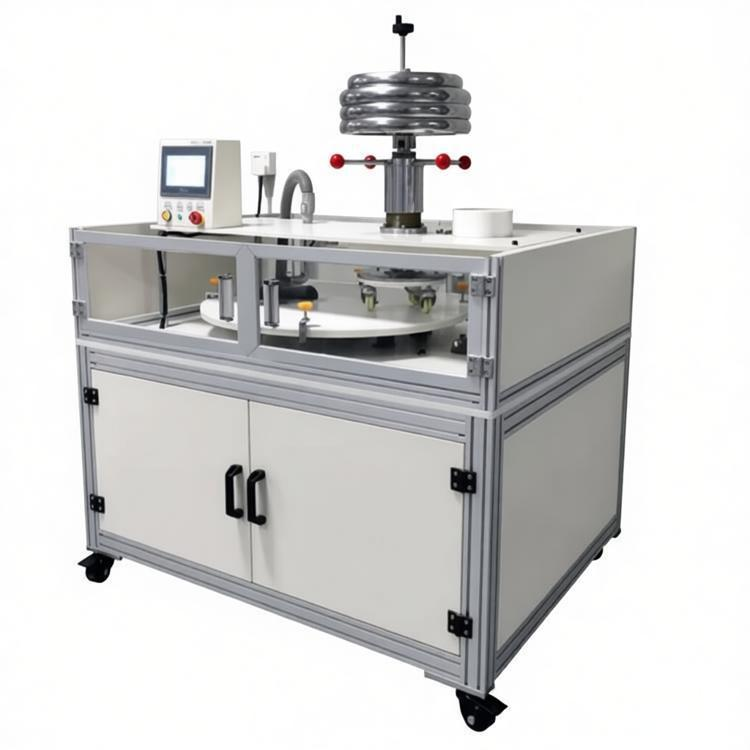
The caster wear testing machine simulates the rolling, steering, and loading actions of casters on different flooring surfaces to evaluate their performance. During the test, the equipment applies a specified load while a motor drives the caster to operate at a preset speed. The test duration can be adjusted according to requirements, typically measured in hours or tens of thousands of cycles. By comparing data before and after testing, the durability and performance stability of the caster can be assessed.
Compared with manual testing, the caster wear testing machine offers the advantage of controllable and repeatable test conditions, resulting in more objective outcomes. Manual testing is easily influenced by environmental factors and operator differences, whereas the testing machine can precisely control parameters such as load, speed, and testing duration, ensuring the reliability and consistency of the data.
The caster wear testing machine is mainly composed of a wear testing platform, sensors, a control system, and a data recording unit. Its core functions include:
(1) Load Testing:
By applying different weights, the machine evaluates deformation and wear of casters under long-term load conditions.
(2) Rolling Test:
It simulates caster rolling performance on different floor surfaces (such as smooth floors and rough roads), measuring rolling resistance and noise levels.
(3) Steering Test:
This function assesses the flexibility and structural strength of casters during frequent directional changes.
(4) Wear Resistance Test:
Through continuous long-term operation, the machine observes the wear level of caster materials to determine their service life.
These functions make the caster wear testing machine an essential tool for caster manufacturers and quality inspection institutions.
(1) Comparison with Manual Testing:
Manual testing has relatively low cost but is inefficient and highly affected by subjective factors. Although the testing machine requires higher initial investment, it can save labor costs in the long run and significantly improve testing efficiency.
(2) Comparison with Simple Mechanical Testing:
Some companies may use basic equipment for testing; however, such devices are often limited in function and cannot simulate complex working conditions. In contrast, the caster wear testing machine can integrate multiple testing requirements and provide more comprehensive data.
(3) Comparison with Computer Simulation:
Computer simulation can predict caster performance, but it relies on highly accurate models and large amounts of data, and it cannot fully replace real-world testing. The caster wear testing machine, on the other hand, provides real experimental data through physical testing, making the results more reliable and persuasive.
Purpose:
The Floor Caster Wear Testing Machine is mainly used to evaluate the surface quality of flooring materials and the wear resistance performance of casters, ensuring that both flooring and caster products meet expected quality and performance standards. The machine can simulate real usage conditions and conduct various tests on floors and casters, including but not limited to:
Wear Resistance Testing:
The machine tests the wear resistance of flooring materials by using standardized casters under specific speed, load, and movement paths to frictionally interact with floor specimens, thereby evaluating their wear resistance performance.
Caster Durability Testing:
It also evaluates the durability of casters by simulating real-life movement and friction conditions, testing their performance under different loads and speeds.
Caster Running Performance Testing:
The machine assesses caster running performance, including rolling comfort, noise level, and friction resistance, in order to determine overall quality and performance.
Application Areas:
(1) Industrial Manufacturing:
Used to test the load-bearing capacity and durability of industrial casters, ensuring suitability for heavy-duty equipment or frequent-use environments.
(2) Logistics and Transportation:
The logistics industry has high requirements for casters. The testing machine helps identify caster products suitable for long-term and high-intensity use.
(3) Furniture Manufacturing:
Furniture casters require a balance of smooth movement and low noise. The machine is used to evaluate rolling performance and noise levels.
(4) Quality Inspection Institutions:
As a third-party testing instrument, the caster wear testing machine provides objective data for product quality certification and compliance verification.
When selecting a caster wear testing machine, it is necessary to comprehensively consider multiple factors to ensure that the equipment can meet long-term and accurate testing requirements. The key considerations are as follows:
(1) Clarify Testing Requirements:
First, based on actual application scenarios and relevant testing standards, carefully define the required test functions, load range, operating speed, and test cycle. Selecting a machine with the right configuration is crucial—avoiding both over-specification, which leads to unnecessary cost waste, and under-specification, which may fail to meet essential testing needs. The equipment’s capabilities should be well aligned with the testing objectives.
(2) Balance Accuracy and Cost:
The measurement accuracy of the equipment directly affects the reliability and validity of test results. High-precision testing machines can provide more detailed and accurate data, but they usually come with higher purchase and operational costs. Therefore, it is important to strike a balance between data accuracy requirements and budget constraints, choosing a cost-effective solution that meets the necessary testing standards while controlling expenses.
(3) Evaluate Long-term Maintenance Costs:
In addition to the initial purchase cost, factors such as durability, failure rate, maintenance requirements, and spare parts replacement costs should also be considered. It is recommended to prioritize brands and models with strong market reputation and high reliability. Although the upfront investment may be higher, such equipment generally offers longer service life and more stable performance, reducing long-term operational costs and downtime risks.
(4) Consider Expandability and Upgrade Potential:
As testing needs may evolve over time, selecting a machine with good scalability is a wise decision. Some modern testing machines adopt a modular design, allowing additional functions—such as different wear modes or environmental simulation chambers—to be added or upgraded in the future. This flexibility helps protect the initial investment and ensures the equipment can adapt to future testing requirements.
The importance of the floor caster wear testing machine lies in its ability to accurately simulate the repeated rolling, turning, and friction of chair or equipment casters on flooring surfaces in real-world conditions. This type of testing cannot be replaced by conventional straight-line abrasion tests, as it directly determines the service life and surface integrity of flooring materials in high-traffic environments such as offices and hospitals.
Realistic “destructive” condition simulation:
In actual use, casters do not only roll in a straight line; they also involve frequent actions such as starting, stopping, changing direction, and point rotation. These movements can easily cause surface indentation, cracking, or coating delamination. By loading specific casters and executing complex motion paths, the testing machine reveals material weaknesses under combined static pressure and dynamic shear forces.
Quantitative evaluation of durability and appearance retention:
In accordance with ISO and GB/T standards, the machine evaluates parameters such as weight loss, gloss change, and pattern clarity after a set number of cycles. This provides objective grading data for flooring products and avoids quality fluctuations caused by subjective judgment.
Reducing operational costs in commercial spaces:
For hospitals, offices, and other high-traffic environments, premature floor wear leads to costly replacement and downtime. The equipment helps manufacturers optimize formulations (such as elastic flooring and PVC laminated flooring) to ensure long-term durability, while also providing consumers with scientific purchasing references.
Bidirectional protection validation:
Advanced testing not only evaluates flooring durability but also indirectly assesses whether casters may cause excessive surface damage. This helps improve compatibility between flooring and caster systems, reducing mutual wear and extending overall service life.
In summary, the floor caster wear testing machine is an efficient and reliable testing tool that provides strong support for caster product development and quality control. Compared with other testing methods, it offers clear advantages in accuracy, efficiency, and applicability. For enterprises and quality inspection institutions that rely heavily on caster products, investing in a suitable testing machine is an effective way to improve product quality.We sincerely welcome you to leave a message or contact us directly so that we can provide more detailed product information.


