With the widespread use of personal protective equipment such as motorcycle helmets and industrial safety helmets, the demand for higher safety performance has continued to increase. In addition to the impact resistance of the helmet shell itself, the stability of the retention system is equally important. During actual use, the helmet webbing may undergo slight displacement due to head movements, vibration, and repeated pulling forces. If the webbing slips or loosens easily, the helmet may not remain securely fastened, thereby compromising its protective effectiveness.To accurately evaluate the frictional performance and displacement behavior of helmet webbing during long-term use, the Helmet Webbing Micro-displacement Abrasion Tester was developed. This specialized testing instrument is designed to assess the abrasion resistance of helmet retention-system webbings under micro-displacement conditions, as well as the fatigue life of buckles and fastening components. Its primary purpose is to determine whether the helmet retention system may experience excessive wear, breakage, or loosening risks during prolonged use or under dynamic impact conditions.By simulating the repeated micro-movements that occur in real-world applications, the tester provides reliable data for product development, quality control, standards compliance, and safety performance evaluation. In this article, we will introduce this equipment from several key aspects to help readers gain a comprehensive understanding of its working principles, features, and practical applications.
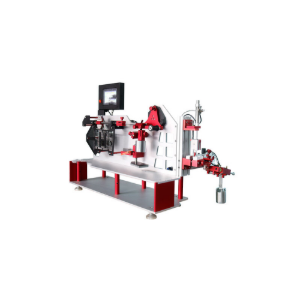
The core principle of the Helmet Webbing Micro-displacement Abrasion Tester is to simulate the slight relative sliding and friction that occur between the helmet webbing and components such as buckles, skin, or clothing during actual helmet use. By applying a constant load and generating reciprocating mechanical motion, the tester evaluates the abrasion resistance of the webbing and determines whether its micro-displacement exceeds specified limits.
Core Operating Principle
Reciprocating Oscillation Drive
The instrument uses a motor-driven mechanical arm or sliding mechanism to move the secured helmet webbing in a horizontal or vertical reciprocating motion. The movement is performed according to preset parameters, including a specified stroke length (such as 50 mm or 100 mm) and frequency (such as 2 Hz), thereby reproducing the repetitive movement experienced during normal helmet use.
Constant Load Application
A standard test load, typically specified by relevant testing standards (commonly 2 kg), is applied to the webbing test area. This load simulates the static pressure exerted on the chin strap by the wearer's head, ensuring that a constant normal force is maintained throughout the friction process.
Micro-displacement Monitoring
During testing, the system continuously measures the displacement of the webbing as it passes through buckles or anchoring points. If abrasion causes fiber breakage, material degradation, or structural loosening, the resulting micro-displacement may exceed the allowable limit specified by the standard. In such cases, the webbing is considered to have failed the test.
Key Testing Elements
Simulation of Real-World Conditions
The tester reproduces the high-frequency micro-sliding movements that occur within buckle assemblies during riding vibrations, sudden braking, or other dynamic conditions. This allows evaluation of whether the webbing may loosen unintentionally after prolonged use.
Precise Parameter Control
The equipment accurately controls critical test parameters, including:
Number of oscillation cycles
Movement speed
Stroke length
Applied load
This ensures that testing is conducted in full compliance with relevant standards and specifications.
Result Evaluation
After completion of the test, the wear condition of the webbing and the accumulated micro-displacement are measured and analyzed. If the recorded micro-displacement exceeds the specified threshold, the helmet retention system may be considered at risk of failure due to insufficient fastening stability.
Integrated Testing Capability
In many cases, the Helmet Webbing Micro-displacement Abrasion Tester is integrated into a comprehensive helmet retention-system testing platform together with:
Webbing abrasion resistance testing
Buckle fatigue testing
Retention-system durability evaluation
This integrated approach enables manufacturers, testing laboratories, and certification bodies to conduct a comprehensive assessment of the durability, reliability, and safety performance of helmet retention systems, ensuring that helmets remain securely fastened throughout their service life.
The Helmet Webbing Micro-displacement Abrasion Tester is primarily used to simulate the slight relative sliding friction that occurs between helmet webbing, buckles, and adjustment devices during actual use. Its core application areas are concentrated in the research and development, quality control, and compliance certification of personal protective equipment (PPE).
Key Application Scenarios
1. Helmet Manufacturers: Product Development and Quality Inspection
The tester is widely used by helmet manufacturers during both the product development and final quality inspection stages.
Verification of Webbing Durability
It evaluates the abrasion resistance of chin straps subjected to repeated wearing, adjustment, and long-term use, helping to prevent safety failures caused by excessive webbing wear or breakage.
Assessment of Micro-displacement Resistance
The system measures the resistance to micro-slippage when the webbing passes through D-rings, buckles, or adjustment mechanisms. This ensures that the retention system remains secure and prevents accidental loosening or slippage caused by riding vibrations and dynamic movements.
Optimization of Webbing Materials and Surface Treatments
Manufacturers can use the test data to improve webbing materials, weaving structures, and surface treatment processes, achieving an optimal balance between wearing comfort and anti-slip safety performance.
2. Third-Party Testing Laboratories and Quality Supervision Agencies
The equipment is an essential tool for independent testing organizations and regulatory authorities responsible for safety certification and product compliance.
Standards Compliance Testing
It performs webbing durability and friction performance tests required by national and international helmet safety standards.
Type Approval and Certification Testing
The tester is commonly used for the certification of:
Motorcycle helmets
Electric bicycle helmets
Bicycle helmets
Ski helmets
Other sports and industrial safety helmets
The resulting test reports can serve as official documentation for product certification and market approval.
Long-Term Reliability Evaluation
By reproducing real-world wear conditions and fatigue cycles, the equipment assesses the long-term reliability of the interaction between buckles and webbings, ensuring that the helmet retention system maintains its performance throughout its service life.
3. Research Institutes and Material Development Laboratories
Research organizations and material scientists use the tester to investigate the friction and wear behavior of various webbing materials under micro-displacement conditions.
Material Performance Studies
The system enables comparative analysis of different fibers and materials, including:
Nylon webbing
Polyester webbing
High-strength synthetic fibers
Advanced coated textile materials
Researchers can evaluate how repeated micro-reciprocating friction affects mechanical properties such as strength retention, wear resistance, and dimensional stability.
Development of Advanced Safety Webbing Materials
The quantitative data generated by the tester support the development of next-generation safety webbings featuring:
Higher tensile strength
Improved abrasion resistance
Lower friction coefficients
Enhanced durability and service life
These findings contribute to the advancement of safer and more reliable helmet retention systems.
The primary importance of the Helmet Webbing Micro-displacement Abrasion Tester lies in its ability to verify the structural integrity of helmet retention systems under dynamic friction conditions. By evaluating the durability and stability of webbings, buckles, and adjustment mechanisms during repeated micro-movements, the tester helps prevent helmet failure caused by webbing wear or buckle slippage during accidents. As a result, it serves as a critical tool for ensuring that the helmet's final line of defense remains effective when it is needed most.
Core Safety Significance
Prevention of Secondary Injuries and Helmet Detachment
The tester simulates the slight relative movements that occur between helmet webbings and adjustment buckles during accidents, sliding impacts, or severe vibrations. If the webbing lacks sufficient abrasion resistance or if the buckle is prone to slipping, the helmet may become detached at the moment of impact, leaving the wearer's head unprotected. By accurately measuring micro-displacement, the equipment ensures that the retention system remains securely fastened even under extreme operating conditions.
Evaluation of Long-Term Durability and Aging Performance
Helmet webbings are continuously exposed to sweat, ultraviolet radiation, environmental factors, and repeated adjustments throughout their service life. These conditions can gradually cause material fatigue and wear. Through high-frequency reciprocating friction testing, the equipment identifies potential material weaknesses and durability issues before products reach the market, reducing the risk of unexpected failures during actual use.
Compliance with Mandatory Safety Standards
According to major international helmet safety standards, the stability and durability of retention systems are mandatory testing requirements. Products that fail micro-displacement and abrasion resistance evaluations cannot obtain the necessary certifications, such as CCC or ECE approval, and therefore cannot be legally marketed or sold. The tester plays an essential role in helping manufacturers demonstrate compliance with these regulatory requirements.
Technical and Engineering Value
Simulation of Real-World Failure Mechanisms
Unlike conventional static tensile tests, the Helmet Webbing Micro-displacement Abrasion Tester reproduces the combined effects of shear forces and friction forces generated by head movements, road vibrations, and impact-related sliding. This enables engineers to identify subtle failure modes that may occur during actual use, including:
Surface fuzzing and abrasion of webbings
Fiber breakage and strength degradation
Buckle slippage
Adjustment mechanism jamming
Progressive loosening of the retention system
By revealing these microscopic failure mechanisms, the tester provides a more realistic assessment of product safety and reliability.
Integrated Evaluation of Retention-System Performance
Modern testing systems often combine multiple evaluation functions within a single platform, including:
Webbing micro-displacement testing
Surface abrasion resistance testing
Buckle fatigue testing
This integrated approach allows manufacturers and testing laboratories to efficiently assess the overall service life and performance of helmet retention systems. The resulting data support material selection, structural optimization, and manufacturing process improvements, ultimately enhancing the overall safety and reliability of helmet products.
When selecting a Helmet Webbing Micro-displacement Abrasion Tester, the most important consideration is whether the equipment fully complies with the reciprocating micro-displacement and friction testing requirements specified in helmet retention-system standards, rather than functioning as a general-purpose material abrasion tester.
Key Selection Criteria
Motion Mode and Stroke Accuracy
The tester should support horizontal reciprocating linear motion and provide a stroke range that meets the requirements of the applicable testing standards. In addition, the displacement control accuracy should be within ±0.1 mm to accurately simulate the micro-displacement wear that occurs between the webbing and buckle during actual use.
Load Control Stability
The system should be capable of applying and maintaining the specified preload force, typically 400 N ± 10 N. A high-precision force sensor is essential to ensure load stability throughout high-frequency reciprocating movements and to prevent measurement errors caused by load fluctuations.
Frequency and Cycle Capacity
The oscillation frequency should be adjustable to accommodate different testing requirements. The equipment should also support a maximum cycle count of at least 10.000 cycles. Advanced models may provide automatic cycle counting, test completion detection, and automatic shutdown functions to improve testing efficiency.
Fixture and Abrasive Material Compatibility
The horizontal guide mechanism should allow quick replacement of standard abrasive materials when required by testing procedures. The fixture design should securely hold the helmet in position without introducing additional deformation that could affect test results.
Recommended Functional Features
Multi-Function Integrated Testing
Priority should be given to systems that integrate multiple testing functions, including:
Webbing micro-displacement testing
Webbing abrasion resistance testing
Buckle fatigue testing
An integrated testing platform reduces laboratory space requirements while ensuring consistency across different test conditions.
Automation and Safety Functions
Modern equipment should include:
PLC-based touchscreen control system
Automatic return-to-home function
Emergency stop protection
Upper and lower limit protection mechanisms
In addition, the software should provide real-time display of displacement-force curves and support automatic generation and export of test reports that meet laboratory accreditation requirements such as CNAS standards.
Headform Compatibility
For laboratories testing multiple helmet types, it is advisable to select equipment featuring a 360° rotatable headform mounting system and quick-adjustment mechanisms. These features enable efficient testing of helmets with different shapes, sizes, and curvature profiles while maintaining proper fit and positioning.
Common Purchasing Mistakes to Avoid
Distinguish Between Different Testing Technologies
A Helmet Webbing Micro-displacement Abrasion Tester should not be confused with a fretting wear tester.
A Helmet Webbing Micro-displacement Abrasion Tester simulates the macroscopic reciprocating sliding motion associated with helmet use and retention-system loosening.
A Fretting Wear Tester is designed for microscopic material wear studies and operates under entirely different principles, displacement ranges, and testing objectives.
Selecting the wrong equipment may result in non-compliant testing and inaccurate evaluations.
Verify Compliance with the Latest Standards
Before purchasing, confirm that the tester's software and testing programs are based on the latest versions of relevant helmet safety standards. Older systems may not satisfy current certification requirements and could lead to costly compliance issues.
Evaluate Calibration and After-Sales Support
Manufacturers should be able to provide:
Calibration certificates from accredited institutions
Periodic calibration services
Customized webbing fixture solutions
Maintenance and technical support
Because webbing materials can be prone to slippage during testing, specialized fixture design and professional adjustment services are essential for obtaining reliable results.
In essence, the Helmet Webbing Micro-displacement Abrasion Tester serves as a critical screening tool for identifying helmets that may appear safe but fail to provide reliable retention performance in real-world accidents. A helmet must not only absorb impact energy during a collision but also remain securely fastened to the wearer's head throughout the entire accident sequence. By ensuring the integrity and durability of the retention system, this equipment directly contributes to user safety and life protection.We warmly welcome you to leave a message or contact us directly for more detailed product information. Our technical team will be pleased to provide comprehensive product documentation, professional consultation, and customized testing solutions tailored to your specific requirements.


