Helmet Projection and Surface Friction Tester is a specialized mechanical testing instrument primarily used to evaluate the shear strength of protruding structures on the surface of motorcycle and electric bicycle helmets under impact conditions, as well as the friction resistance performance of the helmet shell surface, in order to verify whether the helmet complies with relevant safety standards.This article will introduce the equipment from the following aspects, with the aim of providing helpful information and insights.
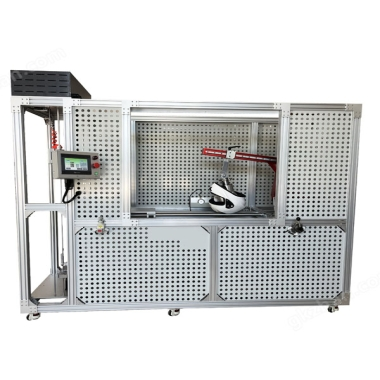
The Helmet Projection and Surface Friction Tester is designed to evaluate the shear strength of protruding structures on the helmet shell surface under lateral force and the friction coefficient of the surface, thereby preventing protrusions from injuring the wearer’s neck or causing abnormal helmet slippage during accidents.
Main Functions
Shear force testing:
Simulates the condition in which protruding helmet components (such as vents or decorative parts) come into contact with obstacles during an impact. It evaluates their ability to resist cutting or tearing forces, ensuring that these structures do not break and form sharp edges that could injure the neck.
Friction force testing:
Measures the coefficient of friction between the helmet shell surface and specified materials (such as simulated road surfaces or fabrics), assessing the helmet’s stability during sliding. This helps prevent excessive friction that could cause neck injury or overly low friction that may lead to uncontrolled head rotation.
Multi-angle adaptability:
Supports 360° rotation and adjustable positioning of the headform, enabling precise testing of protruding structures on different areas of the helmet from multiple orientations.
1. Compliance Testing for Motorcycle and Electric Bicycle Helmets
This is the primary application field of this type of equipment. With the implementation of national standards in China and other regions, stricter requirements have been introduced for the mechanical performance of helmet surface structures.
Surface projection shear force testing:
Helmet shells may contain decorative protrusions, ventilation edges, or mounting points. The tester simulates lateral shear forces acting on these protrusions during collisions to evaluate whether they will fracture and create secondary injury risks. The equipment typically uses a steel cutting blade and a specified preload weight to quantify the shear resistance of protruding structures.
Surface friction testing:
During traffic accidents, a rider’s head may slide and experience friction with the ground. The tester uses standard sandpaper to simulate road surface roughness and measures the coefficient of friction of the helmet shell at different angles. This data is crucial for evaluating energy absorption efficiency during sliding and the resulting neck load, directly impacting wearer safety.
2. Helmet Research and Design Optimization
In the product development stage, engineers use this equipment for material selection and structural validation.
Material wear resistance and surface smoothness evaluation:
Friction testing allows researchers to compare the performance of different shell materials under identical conditions. This helps in selecting coatings or base materials that reduce sliding resistance (thus lowering neck torque) while maintaining sufficient durability.
Structural integrity validation:
Combined with projection or visual tracking systems, the equipment can accurately record deformation of protruding structures before and after loading. This helps designers optimize aerodynamic shapes while ensuring compliance with safety strength requirements.
3. Quality Inspection and Third-Party Certification Laboratories
National inspection centers, customs authorities, and third-party certification laboratories widely use this equipment as part of compliance testing systems.
Batch consistency monitoring:
In production lines, periodic sampling using surface friction testers helps determine whether surface treatment processes remain stable across batches, preventing deviations caused by coating inconsistencies or mold wear.
Accident reconstruction and forensic analysis:
In legal disputes or accident investigations involving helmet failure, high-precision shear and friction testing can reproduce the stress conditions experienced during the incident, providing scientific evidence for liability assessment.
4. Performance Evaluation of Specialized Protective Helmets
Beyond transportation helmets, this testing principle is also applied to other high-risk sports and professional protective equipment.
Ski helmets:
Skiing involves high-speed sliding with significant impact and frictional heat. The system can simulate low-temperature surface friction behavior to evaluate sliding performance on snow and ice, ensuring protection under extreme conditions.
Firefighter helmets:
Although primarily focused on heat and impact resistance, friction between the helmet surface and obstacles in confined spaces is also important. Surface friction testing helps optimize helmet design and reduce snagging risks.
5. Education and Scientific Research Institutions
Universities and safety engineering laboratories use this equipment for fundamental research and teaching purposes.
Biomechanics research:
By accurately measuring helmet surface friction coefficients, researchers can develop more precise dynamic models of head impact behavior, improving the realism of headform simulations.
New material development:
The system is also used to explore applications of self-lubricating materials and biomimetic surface structures in helmets, driving innovation in protective equipment technology.
In summary, the Helmet Projection and Surface Friction Tester is a critical instrument for ensuring the safety, compliance, and comfort of protective headgear. Its applications span the entire lifecycle of helmet development—from material selection and product design to manufacturing, quality control, certification, and final market access.
1. Pre-test Preparation
Environmental check:
Ensure that the laboratory temperature and humidity meet the required standards, and remove any foreign objects from the testing platform.
Sample pre-treatment:
Select an undamaged helmet sample and perform pre-treatment according to the relevant standard requirements. Complete the test within the specified time frame.
Instrument setup:
Install standard 80-mesh alumina-coated sandpaper on the horizontal guide loading platform, and mount the steel cutting blade (6 mm height, 25 mm width).
Parameter setting:
Use the PLC touchscreen interface to set the preload weight, drop height of the weight, and test speed.
2. Sample Installation and Positioning
Helmet fixation:
Securely mount the helmet onto the test fixture, ensuring the test area is facing upward in a horizontal position.
Alignment adjustment:
Rotate the headform or adjust the loading platform so that the cutting edge of the steel blade is precisely aligned with the protruding structure on the helmet surface.
Preloading application:
Start the system to apply a vertical preload of 400N–410N, simulating the contact pressure of a worn helmet. At this stage, the sensor is either zeroed or initial values are recorded.
3. Test Execution
Start operation:
Press “Start” to initiate the test. The system drives the loading platform to perform horizontal reciprocating motion with sandpaper or cutting blade.
Data acquisition:
The instrument simultaneously records maximum shear force and average friction force during the sliding process. In some models, a 15 kg weight drop impact is used to generate instantaneous force before measuring friction resistance.
Multi-point testing:
If the helmet contains multiple protruding structures, repeat the procedure at different positions according to the required number of test points specified in the standard.
4. Data Recording and Completion
Result display:
After testing, the system displays peak force values and friction coefficients directly on the screen and automatically generates a curve report.
Compliance evaluation:
Compare the results with standard limit values to determine whether the sample passes or fails.
Reset and cleanup:
Press the “Return” button to reset the mechanical system, remove the helmet sample, clean sandpaper debris, and power off the equipment.
Precautions
Safety protection:
Do not place hands inside moving mechanical parts during operation. The cutting blade is sharp and may cause injury.
Consumable maintenance:
Replace sandpaper when worn to ensure accurate friction coefficient results. The cutting blade edge must also be recalibrated if it becomes dull.
Standard compliance:
Strictly follow relevant testing standards, as definitions of protruding structures and force limits vary across different regulations.
The core importance of this equipment lies in its ability to simulate real accident sliding scenarios and prevent secondary injuries caused by helmet surface structures, making it a critical safeguard for rider safety during post-impact sliding.
Core Safety Value
Eliminating “snagging” risks (shear force testing):
During an accident, a helmet often continues to slide on the ground. If hard surface protrusions are present, they may act like anchoring points, interrupting smooth sliding and causing neck sprains or violent head rotation. This test ensures that protruding structures will either shear off under force or allow smooth passage, preventing the generation of harmful resistance torque.
Reducing sliding friction resistance:
Excessively high surface friction can increase stopping distance and raise the risk of scalp abrasion and concussion. By using standard sandpaper to simulate road surface conditions, the test ensures that the helmet shell maintains an appropriate low friction coefficient, allowing the head to slide smoothly rather than stopping abruptly.
Compliance and R&D Significance
Meeting mandatory national standards:
In China, surface projection shear force and surface friction performance have been included as mandatory testing items. Products that fail to meet these requirements are not allowed to enter the market.
Guiding structural optimization:
The system provides quantitative data that supports design improvement, encouraging manufacturers to optimize shell geometry, eliminate unnecessary protrusions, or use breakaway materials, thereby enhancing passive safety performance at the source.
In summary, this equipment does not only verify whether a helmet can “withstand impact,” but more importantly ensures that during post-impact sliding, the helmet itself does not worsen injuries due to structural design flaws. It is an essential component in establishing a complete, real-world helmet protection system.We sincerely welcome you to contact us or leave a message at any time. Your valuable feedback and suggestions are extremely important to us. Through your input, we can better understand your needs and provide more detailed and tailored product information and professional support.


