In the fields of materials science and industrial manufacturing, the surface friction characteristics of materials directly determine product processing efficiency, user experience, and safety performance. As a core instrument for quantifying this critical performance indicator, the Friction Sensation Tester is widely used in industries such as packaging, plastics, rubber, textiles, and automotive manufacturing. This article provides an in-depth interpretation of the instrument's working principle, core structure, application scenarios, and key considerations for selection, with the hope of offering valuable insights and practical guidance to readers.
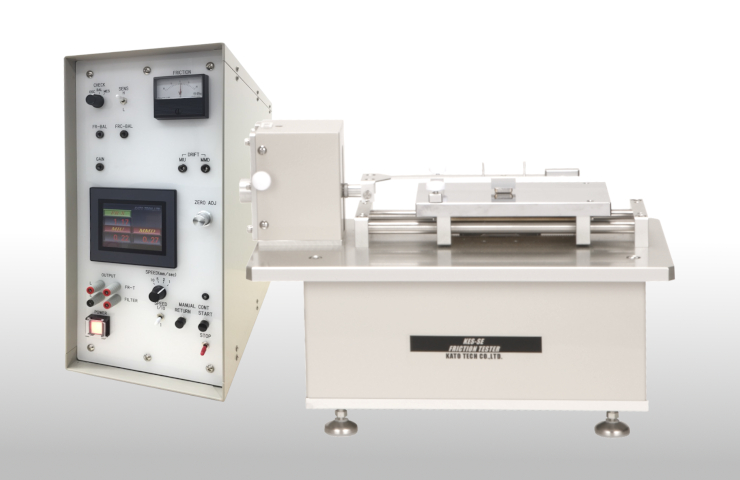
The Friction Sensation Tester simulates the action of a human hand touching or stroking a fabric. By utilizing high-precision sensors to measure changes in frictional force during the sliding process, it converts subjective sensations such as "smoothness" and "roughness" into objective, quantifiable data. Its core working principles are as follows:
Biomimetic Mechanical Simulation:
The instrument drives the test head to perform linear reciprocating motion across the specimen surface at a constant speed, simulating the relative sliding behavior that occurs when fingertips come into contact with a material.
Multi-Dimensional Data Acquisition:
Built-in force sensors continuously record the resistance encountered during sliding. The system primarily obtains the Mean Coefficient of Friction (MIU), which reflects the overall smoothness of the material, and the Mean Deviation of the Coefficient of Friction (MMD), which indicates the roughness or prickling sensation caused by microscopic surface irregularities.
Standardized Load Control:
Testing is conducted under a predefined standard contact pressure to ensure the comparability of data among different materials and to eliminate the influence of pressure fluctuations on friction measurement results.
Signal Processing and Output:
The control system performs filtering and integration on the continuously collected force signals and ultimately outputs key indicators such as MIU and MMD, which are used to evaluate the surface hand-feel characteristics and tactile properties of fabrics.
Structure and Key Technical Features of the Friction Sensation Tester2
A professional Friction Sensation Tester mainly consists of the following four major systems:
Specimen Clamping System:
This system ensures that the test specimen is securely fixed and remains flat throughout the test, preventing displacement or wrinkling that could affect the accuracy of the measurement results.
Loading System:
It provides a standardized normal force during testing. Modern instruments support the replacement of sliders with different masses to accommodate materials with varying hardness levels and thicknesses.
Drive System:
Utilizing precision motors and lead screw transmission mechanisms, the drive system enables smooth, impact-free linear motion. The test speed can be adjusted to simulate different real-world usage conditions.
Data Acquisition and Control System:
This system serves as the "brain" of the instrument and includes the following key components:
High-Precision Sensors:
As the core components of the instrument, these sensors typically offer an accuracy class better than Class 0.5. ensuring highly reliable measurement results.
Microcomputer Control:
Equipped with an LCD display or touchscreen interface, the system supports user-friendly, menu-driven operation for convenient parameter setting and test execution.
Software Analysis Functions:
Advanced software enables real-time curve display, statistical analysis, curve overlay comparison, and automatic report generation. Some high-end models also support RS232 and USB communication interfaces, as well as laboratory data-sharing systems, allowing seamless data management and full traceability.
Technical Highlights:
In high-quality instruments, both the testing platform and sliders undergo demagnetization treatment and residual magnetism inspection. This effectively eliminates system errors caused by electromagnetic interference, ensuring excellent repeatability, long-term stability, and consistency of test results.
The applications of the Friction Sensation Tester extend far beyond simply determining whether a material is "slippery" or not. It is a critical tool for process optimization, product quality improvement, and safety assurance across a wide range of industries.
1. Packaging Industry
Addressing Industry Challenges:
If the coefficient of friction of plastic films such as PE, PET, and BOPP is too high, packaging machines may experience feeding jams and uneven sealing. Conversely, if the coefficient is too low, stacked packages may become unstable and collapse during transportation.
Value and Benefits:
By adjusting the dosage of slip agents, manufacturers can maintain the internal and external coefficients of friction within an optimal range. This ensures the smooth operation of high-speed packaging lines while enhancing the consumer experience, such as improving the performance of easy-tear package designs.
2. Rubber and Tire Industry
Direct Impact on Safety:
The coefficient of friction between tire tread and road surfaces directly influences vehicle braking distance, traction, and cornering stability.
Research, Development, and Quality Control:
The instrument is used to evaluate the static and dynamic coefficients of friction of different rubber formulations and tread patterns under simulated dry and wet road conditions, helping manufacturers enhance driving safety performance.
3. Paper and Printing Industry
Production Optimization:
The friction characteristics of paper affect the feeding speed and stacking performance of printing machines. Excessive friction may cause paper sheets to stick together or result in double-sheet feeding, while insufficient friction can lead to inaccurate positioning.
Finished Product Protection:
The anti-slip performance of stacked cartons also relies on maintaining an appropriate surface coefficient of friction to ensure storage and transportation stability.
4. Textile and Daily Chemical Industries
Enhancing User Comfort:
Underwear fabrics generally require a low coefficient of friction to minimize skin irritation and rubbing sensations, whereas outdoor gloves require a higher coefficient of friction to provide better grip performance.
Evaluating Product Sensory Quality:
The spreadability and smooth application characteristics of daily chemical products, such as cosmetics and eye drops, can also be assessed using specialized fixtures. These tactile properties directly influence consumers' subjective perceptions and overall product satisfaction.
5. Other Specialized Applications
Electronics Industry:
The coefficient of friction of screen protective films and battery separators affects the occurrence of air bubbles during film application and influences the assembly yield of battery manufacturing processes.
Road Surface Assessment:
Pendulum friction testers are specifically designed to measure the skid resistance of airport runways and highway pavements, providing critical data to ensure transportation safety.
When selecting a Friction Sensation Tester, it is essential to strike a balance between performance and cost based on your actual testing requirements. The following recommendations, derived from industry standards and common user concerns, can help you make an informed decision.
Define Your Testing Requirements
Before purchasing an instrument, clearly identify your intended application, whether it involves packaging materials, metals, textiles, rubber products, or other materials. Evaluate the required testing range and confirm that the instrument complies with the relevant testing standards applicable to your industry.
Avoid over-specifying the equipment simply for the sake of additional features, as this can significantly increase investment costs without delivering corresponding practical benefits. Selecting an instrument that precisely matches your testing needs is the most cost-effective approach.
Focus on Accuracy and Repeatability
Measurement accuracy and repeatability are among the most critical performance indicators of a friction tester.
Pay close attention to the accuracy specifications of the force sensors and verify the stability of the MCU (Microcontroller Unit) control system. Instrument consistency should also be validated through repeated testing. A qualified instrument should demonstrate excellent repeatability, with deviations in the measured coefficient of friction typically not exceeding 5% across multiple tests under identical conditions.
Evaluate Software and Hardware Integration
The software interface should be intuitive and user-friendly, enabling operators to quickly configure test parameters and interpret results.
Priority should be given to instruments that offer:
Real-time data visualization;
Automatic statistical analysis;
Customizable report generation;
Historical data storage and retrieval;
Curve overlay and comparative analysis functions.
From a hardware perspective, a modular design is highly desirable, as it facilitates future upgrades and the addition of optional accessories, such as environmental chambers or temperature-control units.
Regarding compatibility, ensure that communication interfaces such as USB or Ethernet support mainstream operating systems and can be easily integrated into existing laboratory information management systems.
Consider Brand Reputation and Manufacturing Quality
A manufacturer's reputation, production experience, and country of origin are often associated with higher levels of engineering expertise and manufacturing standards.
Before making a purchase decision:
Review the product's certification credentials;
Request performance verification reports and calibration records;
Assess the manufacturer's experience within your target industry;
Seek customer references whenever possible.
Equally important is after-sales support. Comprehensive services—including installation assistance, calibration support, technical training, spare parts availability, and clearly defined warranty policies—can significantly reduce long-term operating risks and maintenance costs.
Avoid Common Purchasing Pitfalls
These practical considerations can help users avoid common mistakes, such as selecting instruments with insufficient resolution or unstable control systems that may result in inaccurate or inconsistent data.
Ultimately, a Friction Sensation Tester should be regarded as a long-term investment rather than a short-term expense. When evaluating different options, prioritize reliability, repeatability, regulatory compliance, and lifecycle value over the lowest purchase price. Choosing the right instrument will not only improve testing efficiency and product quality but also provide dependable data support for future research, process optimization, and quality assurance initiatives.
The core significance of the Friction Sensation Tester lies in its ability to transform subjective tactile perceptions into objective, quantifiable data. By overcoming the limitations of traditional sensory evaluations—which often rely heavily on individual experience and lack repeatability and standardization—the instrument has accelerated the transition from experience-based manufacturing to data-driven research and development across multiple industries.
Standardizing and Objectifying Tactile Evaluation
By simulating the contact pressure and contact area of human fingertips and extracting frequency signals to which human touch is particularly sensitive, the Friction Sensation Tester can accurately quantify tactile attributes such as smoothness, softness, and roughness.
As a result, products manufactured in different batches, on different production lines, or even by different suppliers can be evaluated using the same objective criteria. This comparability provides a solid technological foundation for establishing unified quality standards throughout the industry.
Accelerating Product Development and Innovation
In industries such as textiles, cosmetics, and paper manufacturing, researchers no longer need to rely extensively on repetitive human blind testing to evaluate product feel.
Instead, numerical feedback obtained from the instrument allows engineers to rapidly adjust formulations and process parameters. This closed-loop approach of "design–test–optimize" significantly shortens product development cycles, accelerates time-to-market, and reduces the costs associated with trial and error.
Enhancing the Precision of Quality Control
The Friction Sensation Tester is capable of detecting subtle tactile differences that are imperceptible to the naked eye or difficult to distinguish through manual assessment alone.
This capability enables manufacturers to identify and eliminate products with unacceptable tactile characteristics before they reach the market. Such precision is particularly critical for high-value products where touch plays a decisive role in consumer satisfaction, including:
Premium apparel and luxury textiles;
Hygiene products such as diaper top sheets;
Automotive interior materials;
Personal care and cosmetic products.
By ensuring consistent tactile quality, companies can substantially improve the end-user experience and strengthen brand reputation.
Expanding Cross-Industry Applications
The underlying technological principles of friction sensation measurement extend far beyond a single industrial sector.
Today, the technology is widely applied in areas including:
Textiles and apparel;
Cosmetics and personal care products;
Packaging materials;
Automotive interior components;
Paper and hygiene products;
Advanced functional materials.
This cross-disciplinary applicability has encouraged the exchange and integration of tactile evaluation technologies among different industries and has contributed to the development of sensory engineering as an independent field of study.
In summary, the Friction Sensation Tester is not merely a precision instrument used in laboratories; it serves as a vital bridge connecting material research and development, manufacturing process control, and the ultimate user experience.Through the accurate quantification of both static and dynamic friction characteristics, companies can effectively address production challenges such as machine jams, unstable stacking, and inconsistent tactile performance. The resulting data can be used to optimize material formulations, refine manufacturing processes, and enhance overall market competitiveness.
As the demands for intelligent manufacturing, digitalization, and quality traceability continue to increase, high-end friction testing instruments equipped with automation capabilities and networked data management functions are expected to become standard equipment across industries. These advanced systems will provide robust and reliable data support for the continued advancement of materials science and product innovation.We sincerely welcome your comments and inquiries. Please feel free to contact us at any time, and we will be pleased to provide you with more detailed product information and professional technical support.


