In industries such as machining, precision manufacturing, and electronics production, the "smoothness" of a component's surface directly affects the performance and reliability of the final product. Did you know that a part that appears perfectly smooth to the naked eye may still suffer from excessive friction, poor sealing performance, accelerated wear, or reduced service life due to microscopic surface irregularities?This is where the Surface Roughness Tester becomes an indispensable tool for evaluating a product's "microscopic quality." By accurately measuring the tiny peaks and valleys on a material's surface, it provides objective data that cannot be detected through visual inspection alone.Whether used for quality control on the production line, process optimization in manufacturing, or precision verification in research laboratories, the Surface Roughness Tester helps manufacturers ensure that every component meets the required surface finish standards and functional specifications.Today, let's start with the basics and take a closer look at this essential instrument to understand what it is, how it works, where it is used, and why it plays such a critical role in modern industry.
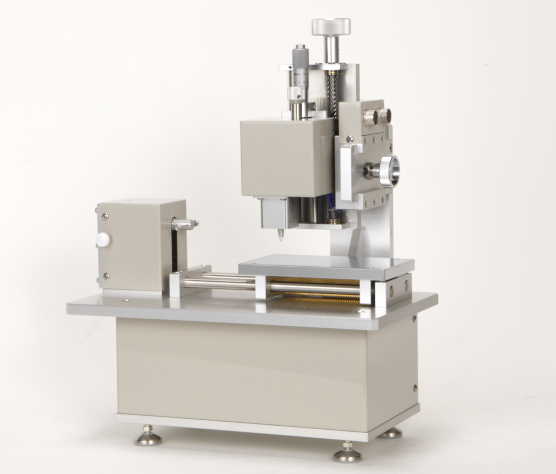
A Surface Roughness Tester is a specialized instrument designed to objectively evaluate and quantify the tactile characteristics of textile surfaces by simulating the hand movements traditionally used by craftsmen and experienced professionals when assessing fabric feel.
When experts evaluate a fabric, they often rely on touch—gently stroking the material to judge whether it feels smooth, slippery, soft, or rough. Although this method reflects years of experience, the results can vary depending on the individual's perception. The Surface Roughness Tester transforms these subjective assessments into objective, measurable numerical data, providing a standardized approach to evaluating surface characteristics.
Using dedicated sensors and analytical techniques, the instrument can obtain key parameters such as:Coefficient of Friction (MIU): Indicates the degree of resistance encountered when the probe moves across the material surface, reflecting its slipperiness.Variation in the Coefficient of Friction (MMD): Represents fluctuations in friction during measurement and is closely related to the uniformity and smoothness of the fabric surface.Surface Roughness (SMD): Quantifies the microscopic unevenness of the material surface and reflects the sensation of roughness experienced by touch.
Based on these characteristic values, users can objectively evaluate and quantify tactile sensations that were previously judged only by human perception, including:Smoothness,Slipperiness,Roughness,Surface uniformity.
In addition to conventional textile testing, the instrument is also suitable for evaluating materials that require extremely gentle contact conditions. It can be applied to the assessment of soft-touch materials, delicate fabrics, pile fabrics, and even hair or fur measurements, making it a valuable tool for textile research, product development, quality control, and sensory performance evaluation.
By converting subjective "hand feel" into reliable scientific data, the Surface Roughness Tester helps manufacturers develop products with consistent tactile quality and enables researchers to better understand the relationship between surface structure and human perception.
Contact Type (Stylus Type):
This is the most traditional and widely used type of surface roughness tester. The instrument is equipped with an extremely fine and highly durable stylus probe, typically made of diamond, with a tip radius generally ranging from 2 μm to 10 μm. Driven by a precision drive mechanism, the stylus traverses the surface being measured at a constant speed. The microscopic peaks and valleys of the surface profile cause the stylus to move vertically relative to the surface. These displacement variations are converted into electrical signals by highly sensitive sensors, such as inductive sensors or piezoelectric sensors. The signals are then amplified, filtered to separate the roughness components from the waviness components of the profile, digitized, and processed by the instrument's software to calculate various surface roughness parameters.
Non-contact Type:
Optical Type:
Optical surface roughness testers utilize optical measurement principles, such as white light interferometry, laser confocal microscopy, laser triangulation, light scattering methods, and phase-shifting interferometry, to scan the specimen surface. By acquiring optical information from the surface, the system reconstructs its three-dimensional topography and subsequently calculates the corresponding roughness parameters. The main advantages of this method include non-contact measurement, prevention of damage or scratching to soft materials, and high measurement speed.
Other Types:
Other measurement methods, such as capacitive and pneumatic techniques, are also available, although their industrial applications are relatively limited compared with contact and optical methods.
The Surface Friction Coefficient Tester is widely used across industries where material surface performance directly affects product quality, production efficiency, and end-use functionality. By accurately measuring the frictional characteristics of materials, the instrument provides critical data for product development, process optimization, and quality assurance.
1. Packaging Industry
The packaging industry represents one of the most important application areas for the Surface Friction Coefficient Tester.
It is commonly used to determine the coefficient of friction of packaging materials such as:
Plastic films,
Laminated films,
Paper,
Aluminum foil,
Flexible packaging materials.
The measured data help manufacturers optimize material performance during:
Bag-making operations,
Filling and sealing processes,
Packaging and stacking,
High-speed conveying and automatic packaging.
Proper friction characteristics can prevent problems such as poor opening performance, material sticking, or excessive slippage, thereby improving packaging efficiency and reducing production losses.
2. Printing and Paper Industries
In printing and paper processing applications, surface slipperiness directly influences production stability.
The instrument is used to evaluate the friction properties of:
Printing paper,
Paperboard,
Cardstock,
Specialty papers.
These measurements ensure smooth transportation through printing presses and subsequent finishing equipment, minimizing issues such as:
Paper jams,
Feeding errors,
Surface scratches,
Damage to printed graphics.
As a result, production efficiency and print quality can be significantly improved.
3. Textiles and Nonwoven Materials
The friction characteristics of textile materials greatly influence both consumer experience and manufacturing performance.
Surface Friction Coefficient Testers are employed to assess the sliding behavior of:
Woven fabrics,
Knitted textiles,
Nonwoven fabrics,
Functional apparel materials,
Upholstery fabrics.
The resulting data are closely related to factors such as:
Wearing comfort,
Softness and hand feel,
Fabric drape,
Ease of movement between fabric layers,
Cutting and sewing efficiency during garment production.
These objective measurements enable textile manufacturers to develop products with more consistent tactile and functional performance.
4. Rubber and Plastic Products
For rubber and plastic products, friction performance is often directly linked to safety, durability, and operational effectiveness.
The instrument can be used to evaluate products including:
Tire tread compounds,
Conveyor belts,
Sealing components,
Plastic sheets,
Industrial rollers,
Engineering plastic parts.
Understanding their frictional behavior helps manufacturers optimize material formulations and ensure that products meet performance requirements under actual service conditions.
5. New Material Research and Development
In the development of advanced materials, the coefficient of friction is an essential parameter for characterizing surface properties.
The Surface Friction Coefficient Tester provides valuable support for the research and optimization of:
Composite materials,
Functional coatings,
Release materials,
Surface-treated products,
Low-friction materials,
High-performance engineering materials.
The objective data generated by the instrument assist researchers in:
Evaluating surface characteristics,
Optimizing formulations,
Improving manufacturing processes,
Accelerating product innovation.
An Essential Tool for Surface Performance Evaluation
From packaging production lines to advanced materials laboratories, the Surface Friction Coefficient Tester has become an indispensable instrument for industries requiring precise control of surface behavior. By transforming friction characteristics into quantifiable data, it enables manufacturers and researchers to improve product quality, enhance production efficiency, reduce defects, and develop materials with superior performance. Its broad applicability and reliable measurement capabilities make it a vital tool in modern industrial quality control and scientific research.
A typical Surface Coefficient of Friction Tester consists of several precision-engineered components working together in coordination:
Drive and Transmission System
This is the "power core" of the instrument, responsible for providing smooth and constant linear motion. It typically utilizes a precision stepper motor or servo motor combined with a high-accuracy ball screw or synchronous belt transmission mechanism to ensure a stable and adjustable testing speed. This enables the instrument to meet the requirements of various testing standards.
Force Measurement System
This serves as the instrument's "sensing nerve center." At its core is a highly sensitive and high-resolution force sensor capable of accurately detecting and converting minute friction force signals. The accuracy and stability of the sensor directly determine the reliability and repeatability of the test results.
Test Platform and Sled Assembly
The test platform provides a flat and stable support surface for the specimen. The sled, also referred to as the friction head, is the key component that comes into direct contact with the sample to generate friction. Its material, dimensions, surface finish, and weight are all strictly specified. Depending on different testing requirements, sleds of various standard configurations and materials can be easily replaced.
Control System and Data Processor
Modern Surface Coefficient of Friction Testers are generally equipped with intelligent microprocessors or computer-based software systems. Users can set testing parameters through the control interface, including testing speed, travel distance, sampling frequency, and other conditions. The system automatically controls the testing procedure while collecting and processing force data in real time. It then calculates and displays the coefficient of friction curves and test results. Some advanced models also offer statistical analysis and automatic report generation functions.
Fixtures and Accessories
To ensure that specimens are secured flat and without tension during testing, the instrument is equipped with dedicated sample fixtures. In addition, optional accessories may include environmental temperature and humidity control systems, allowing researchers to investigate variations in frictional performance under different environmental conditions.
Primary Testing Methods and Standards
The testing methods for determining the coefficient of friction mainly fall into two fundamental categories, each designed to simulate different practical application scenarios.
Horizontal Plane Sliding Method
This is the most widely used and standardized testing method.
One specimen is fixed onto a horizontal testing platform, while another specimen (or a standard sled) is attached to the underside of the sled assembly. The instrument drives either the platform or the sled arm to produce relative motion between the two contacting surfaces, thereby measuring the frictional force generated during sliding.
This method is extensively used for evaluating planar materials such as plastic films, paper, paperboard, metal foils, and similar products.
Inclined Plane Method
This method is relatively simple and intuitive.
One specimen is fixed onto an adjustable inclined plane, while another specimen is placed on top of it. The inclination angle of the plane is gradually increased until the upper specimen just begins to slide. The tangent of the inclination angle (tan θ) at the onset of movement is taken as the static coefficient of friction.
Although this method is suitable for rapid evaluations and certain specific applications, its accuracy and repeatability are generally considered inferior to those of the horizontal plane sliding method.
Essential for Quality Control
In industries such as machinery manufacturing, automotive, aerospace, and semiconductors, surface roughness directly affects component assembly, wear resistance, corrosion resistance, and functional performance. It can influence critical characteristics such as ink adhesion, sealing effectiveness, lubricant retention, and high-frequency signal transmission. Therefore, roughness parameters such as Ra, Rz, and Sq must be strictly monitored and controlled to ensure consistent product quality and compliance with design specifications.
Closing the Loop in Process Optimization
Surface roughness testers provide measurable and traceable feedback for manufacturing processes including machining, grinding, polishing, electroplating, and surface finishing. The data obtained helps engineers optimize processing parameters, improve production efficiency, and achieve the ideal balance between manufacturing cost and product performance.
Basis for Standards Compliance
Surface roughness measurements serve as an important basis for factory quality inspections, third-party certifications, and trade acceptance procedures. Test results are often required to be traceable to national or international roughness standards, ensuring the reliability, comparability, and credibility of the measurement data.
Support for Failure Analysis and Research & Development
Abnormal surface roughness is frequently associated with the initiation of cracks, contact fatigue, coating delamination, and other failure mechanisms. In the development of new materials, advanced coatings, and micro/nanostructured surfaces, nanometer-level roughness data often determines whether a functional design succeeds or fails. Surface roughness testers therefore play a critical role in both failure investigations and innovation-driven research.
Adapting to Technological Advancement
From traditional contact stylus methods to advanced optical interferometry and white-light confocal technologies, surface roughness measurement instruments continue to evolve to address the growing demands for non-destructive testing, three-dimensional characterization, and the measurement of complex surface geometries. Their applications now range from on-site workshop inspections to laboratory environments requiring sub-nanometer measurement capability.
In summary, a surface roughness tester is an indispensable instrument for evaluating and controlling surface quality. Its applications span a wide range of fields, including manufacturing, engineering, and scientific research. As measurement technologies continue to advance, surface roughness testers are expected to play an even more significant role in driving industrial development, enhancing product reliability, and supporting technological innovation across various industries.We sincerely welcome and encourage you to contact us at any time by leaving a message or reaching out directly. Whether you would like to share valuable feedback, discuss your user experience, or seek technical advice on specific applications, our team will respond promptly. By understanding your requirements more accurately, we can provide more comprehensive product information, tailored technical support, and professional guidance to help you make well-informed decisions.


