As is well known, the friction characteristics of a catheter surface are of great importance. They not only help protect tissues from injury, but also reduce wear on the catheter surface itself, thereby significantly extending the service life of the catheter.The Catheter Friction Tester is a specialized instrument designed to evaluate the surface friction and sliding performance of interventional catheters and guidewires, including urinary catheters, endotracheal tubes, balloon catheters, guidewires, and other similar devices. It is also referred to as a Catheter Sliding Performance Tester or a Non-Vascular Catheter Surface Sliding Performance Tester.This article introduces this equipment from the following aspects, with the hope of providing readers with a comprehensive understanding and practical assistance.
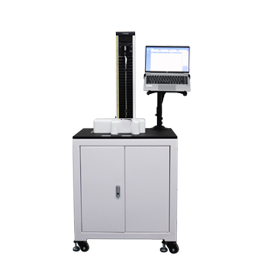
The Catheter Friction Tester is a specialized piece of equipment designed to evaluate the friction performance of catheters. Its primary function is to accurately measure parameters such as the coefficient of friction of catheters under various testing conditions, providing essential data support for catheter research and development, manufacturing, and quality control.
From the perspective of technical characteristics, the instrument is equipped with high-precision sensors capable of accurately detecting even slight variations in frictional force. Its advanced data acquisition and analysis system can rapidly and precisely process test data and generate comprehensive test reports.
In terms of structure, the tester generally consists of a testing platform, a driving mechanism, sensors, and a control system. The testing platform is used to hold and position catheter specimens. The driving mechanism moves the catheter according to the specified test conditions, while the sensors monitor frictional forces in real time. The control system precisely manages and coordinates the entire testing process.
Regarding specifications, the instrument can be adjusted to meet different testing requirements and is capable of accommodating catheters of various sizes and materials. Key components are manufactured from high-strength, wear-resistant materials to ensure the stability, durability, and long-term performance of the equipment.
From a manufacturing standpoint, the Catheter Friction Tester undergoes precision machining and rigorous quality inspection procedures to guarantee the accuracy and performance of each component. Advanced manufacturing technologies further enhance the reliability and repeatability of the testing process, enabling the instrument to provide users with accurate, dependable, and highly reproducible test results.
The Catheter Friction Tester is primarily used to quantitatively evaluate the frictional force and lubricity of catheters during insertion, advancement, movement, or withdrawal. Its practical applications extend throughout the entire lifecycle of medical devices, including research and development optimization, manufacturing quality control, regulatory registration, and clinical safety validation.
1. Core Application Scenarios
A. Medical Device R&D and Process Optimization
Coating Formulation Screening:
By measuring the coefficient of friction of different hydrophilic coatings, silicone lubricants, or polymer surface materials, manufacturers can identify the optimal formulation to ensure that catheters possess superior lubricity and "ultra-slippery" characteristics.
Structural Design Verification:
The tester evaluates the effects of catheter wall thickness, hardness, and surface texture on frictional force, enabling optimization of catheter designs to reduce insertion and advancement resistance.
Environmental Simulation Testing:
By simulating physiological conditions such as human body temperature and body-fluid-moistened environments, the instrument assesses the degradation of catheter friction performance under actual clinical conditions, helping identify potential risks at an early stage.
B. Manufacturing Quality Control
Batch Consistency Monitoring:
Routine sampling inspections conducted during production ensure that friction variations among different catheter batches remain within acceptable limits, preventing product inconsistencies caused by uneven coating thickness or process fluctuations.
Raw Material Acceptance Inspection:
Friction performance testing of catheter substrates and coating materials prior to storage or production establishes a data-driven supplier evaluation and qualification system.
Automated Data Traceability:
The instrument automatically records testing curves and measurement data, meeting GMP requirements and supporting audit trails, thereby assisting manufacturers in successfully passing regulatory quality system inspections.
C. Regulatory Registration and Market Access
Standards Compliance Testing:
Testing can be conducted in accordance with relevant YY/T, GB/T, and other applicable standards to generate reports that satisfy regulatory requirements and serve as essential technical documentation for medical device registration submissions.
Compatibility with International Standards:
Some advanced instruments support internationally recognized standards such as ASTM and ISO, helping export-oriented manufacturers comply with global market access requirements.
D. Clinical Safety and User Experience Evaluation
Reducing the Risk of Tissue Injury:
Through precise measurement of frictional forces, the tester ensures that catheters do not scratch, compress, or irritate blood vessel walls or mucosal tissues during in vivo movement, thereby minimizing patient complications.
Improving Patient Comfort:
Optimized low-friction performance can significantly reduce pain and foreign-body sensation during catheterization, enhancing patient comfort, especially for urinary catheters and endotracheal tubes intended for long-term placement.
Ensuring Smooth Clinical Operation:
Reliable lubricity enables physicians to advance or withdraw catheters smoothly during procedures, improving procedural efficiency and success rates, particularly in demanding interventions such as cardiovascular and neurovascular procedures.
Overall, the Catheter Friction Tester provides critical technical support for improving product performance, ensuring manufacturing consistency, facilitating regulatory compliance, and enhancing clinical safety. It has become an indispensable testing instrument in the development and quality assurance of modern catheter products.
Professional Design
The instrument features a unique reciprocating friction test mode, while also supporting multiple one-way upward and multiple one-way downward testing modes.
The number of friction cycles can be freely preset to satisfy users' requirements for repeated friction testing.
A single test can simultaneously determine:
Static friction force
Dynamic friction force
Coefficient of static friction
Coefficient of dynamic friction
An automatic clamping force device with freely adjustable force settings ensures excellent testing stability and repeatability.
A circulating water bath temperature control system enables testing under different temperature conditions.
Silicone pads with standardized hardness are employed to provide a testing environment that closely simulates human tissue.
The low-capacity measurement design ensures high precision throughout the testing process.
The equipment supports one-touch automatic water filling and drainage, maintaining the cleanliness of the water bath environment.
High-precision testing with an accuracy grade of Class 0.5 effectively guarantees the accuracy and repeatability of test results.
Equipped with an advanced displacement control system, the instrument achieves displacement accuracy of up to 0.1 mm.
Combined with an advanced drive system, the tester offers stepless speed regulation and a wider testing speed range, meeting diverse testing requirements under different operating conditions.
Safety Features
Intelligent safety configurations, including limit protection, overload protection, automatic return, and power-failure memory, effectively safeguard user operation.
The instrument is equipped with an imported Schneider emergency stop button certified by UL, maximizing operator and equipment safety throughout the testing process.
Real-time system status monitoring ensures that the equipment remains in optimal operating condition at all times.
Professional Software
A four-level user password security strategy is implemented to ensure the security and integrity of test data.
The computer software fully complies with GMP requirements and incorporates functions such as:
User management
Access rights management
Data audit trails
A standard serial communication interface is provided for connection with computer software, facilitating convenient data processing and transmission.
Professional customization services are available to satisfy users' personalized requirements for fixtures, software functions, and other configurations.
The software is supplied with lifetime free upgrade services, ensuring continuous optimization and enhanced functionality.
When conducting catheter sliding friction performance tests, it is essential to strictly follow a series of scientific and standardized testing procedures to ensure that the resulting data are highly accurate, repeatable, and reliable. The detailed testing process is outlined below:
1. Pre-Test Preparation
First, securely install and fix the catheter specimen onto the dedicated friction testing platform, ensuring that it is correctly positioned and free from looseness or displacement. Subsequently, carefully adjust the loading system so that a constant initial normal force, compliant with the relevant testing requirements, is applied and maintained between the catheter and the predetermined contact surface, such as a material simulating the inner wall of a blood vessel. This establishes the necessary conditions for subsequent sliding friction testing.
2. Instrument Parameter Configuration
According to the applicable testing standards or specific research objectives, preset all critical operating parameters through the instrument's control interface before commencing the test. These parameters generally include the constant sliding speed of the catheter, the magnitude of the applied vertical load, and the total test stroke or testing duration. Proper parameter configuration ensures consistency and comparability among test results.
3. Test Execution
After all parameters have been configured, initiate the testing procedure. The drive system begins operating and moves the catheter in a stable linear or rotational sliding motion along the contact surface. At the same time, the high-precision measurement system, such as force sensors, continuously and automatically acquires and records real-time data related to the dynamic friction force or coefficient of friction generated throughout the entire sliding process.
4. Data Analysis and Processing
Upon completion of the predetermined testing cycle or sliding stroke, stop the instrument. The data processing system, or dedicated software, subsequently analyzes the recorded raw friction data. This may include signal filtering and noise reduction, calculation of average friction force values, and generation of friction force versus displacement or time curves. Finally, the system extracts, summarizes, and outputs the key quantitative results and comprehensive reports used to evaluate the friction performance of the catheter.
In summary, the Catheter Friction Tester is an essential testing instrument that plays a vital role in various fields of the medical device industry. Through the introduction of its working principles, design features, testing methodologies, and practical applications, readers can gain a deeper understanding of the importance and value of catheter sliding friction performance testing.Looking ahead, with continuous advancements in science, technology, and industrial manufacturing, the Catheter Friction Tester is expected to find even broader applications and deliver greater value to the medical device industry.
We sincerely welcome you to contact us directly or leave a message for further communication. We would be pleased to provide more detailed and comprehensive product information and technical support to better meet your specific requirements.


