In modern medicine and bioengineering, the application of catheters and guidewires has become increasingly widespread. To ensure the safety, effectiveness, and comfort of these devices in clinical use, friction testing between catheters and guidewires has become an indispensable procedure.The Catheter Guidewire Friction Tester is a mechanical testing instrument designed to measure the sliding friction performance between medical catheters and guidewires. It is primarily used to evaluate surface lubricity, coating durability, and the pushability and trackability of these devices during clinical operation.This article aims to comprehensively and systematically explore the relevant aspects of this equipment from multiple dimensions, in order to help readers gain a clearer understanding of its functional characteristics, application scenarios, and potential value. The following sections will provide a detailed discussion, offering practical reference and insight.
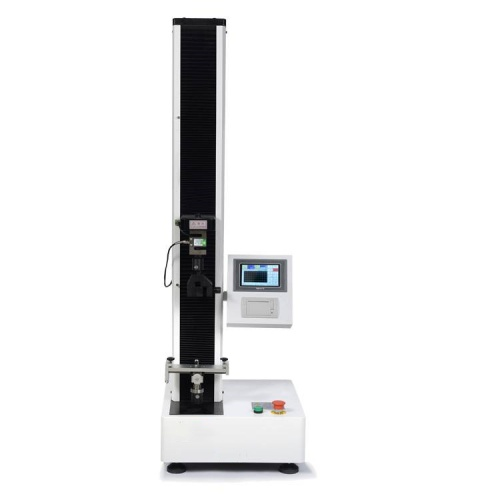
The Catheter Guidewire Friction Tester measures the frictional force between a catheter and a guidewire by simulating their actual interaction during clinical use.
The instrument typically consists of a testing platform, a control system, and a data acquisition system. The testing platform is responsible for fixing the catheter and guidewire and simulating the relative movement of the catheter sliding over the guidewire. The control system regulates the movement speed, direction, and the start and end of the test process. The data acquisition system records friction force data in real time for subsequent analysis.
During the testing process, the equipment gradually increases the pressure applied by the catheter on the guidewire while continuously recording friction force data. By analyzing these data, the frictional performance between the catheter and guidewire under different pressure conditions can be evaluated, thereby assessing their operational performance in real clinical applications.
The Catheter Guidewire Friction Tester is mainly used in the following scenarios within the field of medical devices:
Medical Device Research and Development
During the R&D stage of medical devices, especially for interventional products such as catheters and guidewires, the friction tester plays a crucial role. By evaluating the frictional force of guidewires made from different materials and designs under simulated physiological conditions, researchers can optimize product performance, reduce intraoperative friction, and improve both surgical outcomes and procedural safety.
Production Process Control
In manufacturing production lines, the tester is used to inspect the friction performance of each batch of products, ensuring that every guidewire meets predefined quality standards. This helps identify potential issues in the production process in a timely manner and prevents non-conforming products from entering the market.
Quality Inspection and Compliance Testing
During quality inspection procedures for medical devices, the friction tester is used for sampling finished products to verify whether their friction performance complies with relevant standards and regulatory requirements. This ensures the safety, reliability, and effectiveness of the devices before clinical use.
Education and Scientific Research
In medical schools and research institutions, the tester is used for teaching and experimental research purposes. Through hands-on operation and data analysis, students can gain a deeper understanding of the mechanical behavior of guidewires within the human body, while researchers can explore new materials and design approaches to improve device performance.
1. High-Precision Measurement
The catheter guidewire friction tester adopts advanced sensors and data processing technology to accurately measure the frictional force between catheters and guidewires. Its measurement accuracy can reach the micro-Newton level, providing reliable data support for research and quality control applications.
2. Multi-Mode Testing Capability
The device supports multiple testing modes, including static friction, dynamic friction, and reciprocating friction tests. These modes can simulate the frictional behavior of catheters and guidewires under different clinical usage conditions, enabling a comprehensive evaluation of their performance.
3. Automated Operation
The system is equipped with an automated control mechanism that can complete the entire testing process automatically, reducing operational complexity and human error. It also features automatic calibration and self-diagnostic functions, ensuring the accuracy and reliability of test results.
4. Strong Usability
The instrument is designed for ease of use, allowing operators to complete test setup and data analysis through a touchscreen interface or dedicated computer software. In addition, it offers multiple communication interfaces such as USB and Ethernet, facilitating data transfer and integration with other systems.
The catheter guidewire friction tester is a key instrument for evaluating the frictional performance of catheters during use. Its ability to simulate real-world clinical conditions directly determines the practical value of its test data. From both design and functional perspectives, the device demonstrates strong capability in replicating actual usage scenarios.
From the perspective of contact medium simulation, catheters in clinical applications may interact with human tissues, bodily fluids, or medicinal solutions. The tester can be configured with media such as saline solution or simulated body fluids according to different use scenarios. These media closely match real physiological conditions in terms of viscosity, surface tension, and other properties, enabling accurate reproduction of the frictional interaction between the catheter and its surrounding environment. In addition, the testing platform can simulate the temperature of different human body regions through a built-in temperature control module, adjusting the environment to a range close to normal body temperature. This minimizes the influence of temperature variation on the friction coefficient and further improves the realism of the test conditions.
In terms of motion state simulation, catheters exhibit different speeds and force patterns during insertion, withdrawal, or repositioning. The drive system of the tester allows adjustable motion speeds, enabling simulation of both slow insertion procedures and relatively faster movements in emergency situations. The system can also replicate different force directions, such as linear push-pull and slight rotational motion, thereby reproducing the dynamic friction process encountered in real clinical operations.
Furthermore, for different types of catheters—such as vascular catheters and drainage catheters—the device can be fitted with corresponding simulation channels (e.g., vascular models or cavity simulators). These channels are designed with reference to clinical environments in terms of inner diameter, material hardness, and structural characteristics, ensuring a high degree of realism in friction testing conditions.
Through precise simulation of contact media, temperature, motion behavior, and usage pathways, the catheter guidewire friction tester effectively reproduces real clinical scenarios. The resulting test data provides a reliable scientific basis for catheter design optimization and safe clinical application.
The Catheter Guidewire Friction Tester is equipped with multiple functions:
Firstly, it can accurately measure the frictional force generated during the advancement of catheters and guidewires, providing clinicians with important data regarding the mechanical behavior of these devices inside the human body.
Secondly, by adjusting testing parameters, the instrument can simulate different friction environments and evaluate the performance of catheters and guidewires under various conditions.
In addition, the tester features automatic data recording and analysis functions, making the test results more objective, accurate, and reproducible.
Application Value in the Medical Field
The catheter guidewire friction tester has extensive application value in the medical field.
Firstly, it helps clinicians understand the movement characteristics of catheters and guidewires within the human body, thereby optimizing surgical procedures and improving treatment outcomes. For example, in cardiac interventional procedures, physicians can select catheters and guidewires with lower friction based on test results, reducing procedural difficulty and improving surgical success rates.
Secondly, the device is widely used in the R&D and production stages of medical devices for quality control, ensuring that products meet relevant standards and regulatory requirements.
In addition, it can be used to compare the performance differences between different brands and models of catheters and guidewires, providing physicians with more comprehensive selection criteria.
Importance in the Medical Field
The importance of the catheter guidewire friction tester in healthcare is significant.
Firstly, it contributes to improving surgical safety and effectiveness. By accurately measuring frictional forces, clinicians can control procedures more precisely, reducing tissue damage and complications caused by excessive friction.
Secondly, it enhances patient comfort and acceptance. Lower friction reduces irritation and discomfort during device insertion and movement, thereby improving patient satisfaction and treatment outcomes.
Furthermore, it promotes technological innovation and industrial upgrading in the medical device sector, providing strong support for the advancement of healthcare technologies.
Precautions in Use
Although the catheter guidewire friction tester offers many advantages, proper operation and correct data interpretation are still essential. Operators should fully understand the instrument’s principles and functions and strictly follow standardized procedures to ensure accurate and reliable results.
Moreover, data analysis should be conducted in combination with real-world conditions to avoid misinterpretation or one-sided conclusions.
In summary, the Catheter Guidewire Friction Tester is an essential testing instrument that provides critical data support for medical research, biomedical engineering, and clinical applications. With continuous technological advancement and expanding application areas, it will play an increasingly important role in the future of healthcare.We sincerely welcome you to leave messages or contact us directly at any time, so that we can provide more comprehensive and detailed product information tailored to your needs.


