A Dual-Station Electric Rubbing Color Fastness Tester is a laboratory testing instrument used to evaluate the color fastness of textiles, leather, and other materials under dry or wet rubbing conditions.It features two independent testing stations, allowing simultaneous or alternating testing of two samples, significantly improving testing efficiency. The equipment is driven by an electric motor to ensure stable and standardized rubbing motion, providing consistent test results in accordance with relevant international testing standards (such as ISO and AATCC).This instrument is widely used in textile quality inspection, fabric research and development, and quality control processes to assess the resistance of dyed materials to color transfer or fading during friction.
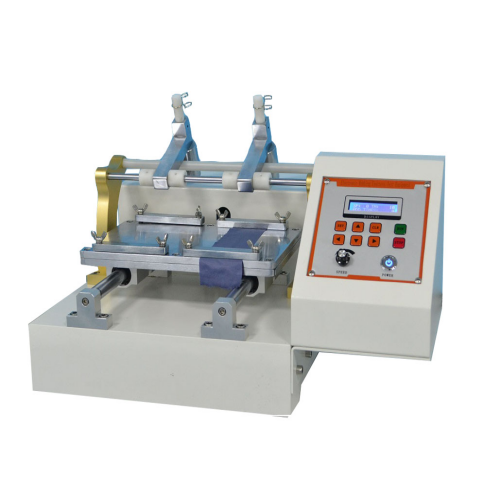
The Dual-Station Motorized Crocking Tester is a specialized instrument used to evaluate the rubbing (color transfer) fastness performance of textiles, coated materials, or printed surfaces. It is equipped with two independent testing stations, enabling simultaneous or alternating dry and wet rubbing tests in accordance with international color fastness standards such as AATCC and ISO.
Function:
The instrument uses a motor-driven rubbing head (typically cylindrical or finger-type) to simulate real-life rubbing or abrasion conditions on the surface of a specimen under a constant load and reciprocating motion. The dual-station design allows dry and wet rubbing tests to be conducted in parallel, improving testing efficiency while enhancing statistical reliability and repeatability of results.
Applications:
It is widely used in the textile, apparel, home textile, automotive interior, and printing industries for quality control, product development, and compliance testing. Based on standards such as AATCC and ISO, it quantitatively evaluates the dry and wet rubbing color fastness grades of materials, ensuring product durability and color performance consistency.
The Dual-Station Motorized Crocking Tester is primarily used in the textile, leather, printing & packaging, and coated material industries to evaluate color transfer and color fastness performance under both dry and wet rubbing conditions.
Textile industry:
Used for testing dry and wet rubbing color fastness of fabrics such as cotton, synthetic fibers, knitted fabrics, printed textiles, and carpets, ensuring product quality and durability.
Leather and footwear & apparel industry:
Evaluates the risk of color fading and staining during friction of genuine leather and synthetic leather, widely applied in quality control of shoes, bags, furniture leather, and other finished leather products.
Printing and packaging industry:
Used to test the rub resistance of paper, plastic films, labels, and printed ink surfaces, ensuring print durability and appearance stability.
Coating and composite materials:
Applied to surface-treated materials such as paints, coatings, decorative papers, and laminated boards to assess their rubbing color fastness and surface durability.
Quality inspection institutions and R&D laboratories:
Third-party testing centers, universities, and corporate quality control departments use this equipment for standardized color fastness evaluation and new material development and verification.
The Dual-Station Motorized Crocking Tester is characterized by the following key technical features:
Dual-station independent testing:
Equipped with two friction testing stations that can operate simultaneously or independently, supporting parallel dry and wet rubbing tests, significantly improving testing throughput and efficiency.
Motorized reciprocating drive system:
Adopts servo or stepper motor control to drive the rubbing head (typically φ16 mm circular or 19×25 mm rectangular). It performs a constant-speed reciprocating motion of 104±3 mm at 60±2 cycles per minute, ensuring high repeatability and compliance with standard test requirements.
Precise constant-pressure loading:
Each station applies an independent vertical load of 9 N (approximately 918 g), controlled via weights or an electronic force sensor closed-loop system, effectively eliminating human operational error.
Intelligent digital control system:
Integrated LED touchscreen or PLC control system allows users to set rubbing cycles (0–99.999 cycles), enables automatic stop, and provides real-time counting. Some advanced models also support data export functions.
Temperature and humidity compatibility design:
Most models are designed for standard laboratory environments, while high-end versions include environmental control modules to simulate specific climatic conditions.
Modular fixture system:
Supports quick replacement of different friction heads and sample holders (such as AATCC standard white cotton crocking cloth fixtures), making it suitable for textiles, leather, coatings, and printed materials.
Safety and compliance features:
Equipped with emergency stop button, protective cover, and overload protection system. The machine complies with CE/ISO safety standards, featuring a robust structure (typically 20–30 kg) and operating at 220V/50Hz power supply.
The operation of the Dual-Station Motorized Crocking Tester generally follows AATCC or ISO standard requirements. The typical procedure is as follows:
Preparation stage:
Ensure the equipment is powered on and preheated for 10–15 minutes. Check that both rubbing arms are properly zeroed and that the rubbing heads (typically 16 mm cylindrical type) are clean and undamaged. Cut the test specimen into 200 × 50 mm strips and condition them in a standard environment (20 ± 2°C, 65 ± 4% RH) for at least 4 hours. Prepare white crocking cloths for both dry and wet tests. For wet rubbing, soak the cloth in distilled water and wring it out to a moisture content of 95–100%, in accordance with standard requirements.
Specimen installation:
Mount the specimen flat and securely on the base clamp (with the non-test surface facing downward), ensuring no wrinkles or tension. Attach dry and wet white cotton cloths to the corresponding rubbing heads for each station. Apply a vertical load of (9 ± 0.2) N using springs or calibrated weights.
Parameter setting:
Set the rubbing cycles, speed, and test mode via the touchscreen or control knob. The dual stations can operate simultaneously under the same or different test conditions.
Start testing:
Close the protective cover and press the “Start” button. The motor drives the rubbing arms in a 100 mm reciprocating motion. The test must not be interrupted or the cover opened during operation. The test is complete when the buzzer sounds or the indicator light turns on.
Evaluation and cleaning:
Remove the specimen and crocking cloth. Under a standard light source, evaluate the staining grade of the white cloth using the grey scale for staining (grade 1–5. with 5 indicating no color transfer). Clean the rubbing heads, base, and fixtures to prevent dye residue from affecting subsequent tests. Record environmental conditions, sample ID, test parameters, and evaluation results.
Calibration and maintenance:
Verify rubbing pressure monthly using standard weights. Inspect track smoothness and counter accuracy quarterly. Perform lubrication and sensor calibration strictly according to the manufacturer’s maintenance manual.
The maintenance of the Dual-Station Motorized Crocking Tester mainly focuses on cleaning, lubrication, calibration, and consumable management. It is recommended to follow a structured schedule of daily, weekly, monthly, quarterly, and semi-annual maintenance procedures.
Daily maintenance (after each use):
Disconnect power and use a soft brush or lint-free cloth to remove fibers and dust from the specimen platform, rubbing heads, and protective cover. After wet rubbing tests, immediately dry the platform to prevent corrosion. Check and clean abrasive paper or stainless steel mesh to ensure they remain flat and undamaged.
Weekly inspection:
Verify that the rubbing heads (16 mm circular or 19×25 mm rectangular) are flat and free of chamfering or grooves. Do not allow direct contact with abrasive surfaces. Check the spring mechanism of the fabric clamps to ensure proper rebound and that the cloth surface remains intact. Inspect transmission belts and linkage systems for looseness or abnormal noise.
Monthly lubrication:
Apply a small amount of high-temperature lithium-based grease (not engine oil) to moving parts such as the base grooves, guide rails, motor shaft ends, and reciprocating arm bearings. Avoid over-lubrication to prevent contamination of test samples.
Every 3–6 months calibration:
Use standard weights to verify the pressure loading system. Check the accuracy of the cycle counter and rubbing speed. Ensure the sample platform remains level and properly aligned.
Every 6 months or after 500 tests:
Inspect motor temperature (should not exceed 60°C) and check internal wiring for aging or damage. Replace worn transmission belts, springs, and other consumable components if they have been in use for more than six months. For frequent wet testing, inspect distilled water or humidification systems for clogging or leakage.
Long-term shutdown storage:
Disconnect power and cover the machine with a dust-proof cover. Apply a thin layer of anti-rust oil to metal parts. Run the machine idle for 5 minutes monthly to prevent moisture accumulation.
Key precautions:
Do not adjust the speed control knob arbitrarily. Do not use corrosive cleaning agents. Do not reach into the protective area during operation. The rubbing heads must not be polished or repaired manually.
The core value of the Dual-Station Motorized Crocking Tester lies in its ability to provide standardized, automated, and highly repeatable dry and wet rubbing tests, enabling precise evaluation of the rubbing color fastness of materials such as textiles and leather. This directly ensures product quality, regulatory compliance, and consumer safety.
Improved testing efficiency and consistency:
The dual-station design allows dry and wet rubbing tests to be conducted simultaneously, saving approximately 50% of testing time compared to single-station systems. The motorized drive system ensures that key parameters such as rubbing stroke, speed, and pressure (e.g., 9N ± 0.2N) fully comply with international standards such as ISO and AATCC. This significantly reduces human error and improves test repeatability and result consistency.
Ensuring compliance and market access:
Global industries including textiles, apparel, baby products, and footwear require mandatory color fastness testing. This equipment is an essential instrument for issuing authoritative test reports from organizations such as SGS and BV. Non-compliance may lead to product returns, recalls, or even legal risks. Dual-station motorized models are also better suited to meet ISO laboratory accreditation requirements.
Quality control and cost reduction:
The tester enables early detection of issues such as poor dye fixation and finishing defects, preventing large-scale color migration problems (e.g., dark fabrics staining light-colored garments) during mass production. This reduces after-sales claims and brand reputation losses. Some models also support automatic data recording, facilitating quality traceability and statistical process control (SPC) analysis.
Support for R&D and standard upgrades:
In the development of eco-friendly dyes and functional textiles (such as antibacterial or waterproof fabrics), the instrument provides quantitative and comparable data for rubbing color fastness, supporting formulation optimization. The dual-station design enables parallel testing under different conditions (e.g., humidity levels, rubbing cycles), accelerating R&D iteration.
Safety and sustainability:
Certain migratory azo dyes may be absorbed through skin contact during friction. Strict color fastness testing helps prevent potential sensitization or toxic risks, especially in infant and child products. In addition, the efficient testing process reduces repeated testing energy consumption, aligning with green manufacturing trends.
In summary, the Dual-Station Motorized Crocking Tester plays a critical role in the field of color fastness testing for textiles and leather materials due to its high efficiency and precision performance. Looking ahead, with the continuous improvement of industry standards and increasingly refined testing requirements, ongoing innovation and technological advancement of this instrument will remain particularly important.We sincerely welcome industry partners, experts, and potential users to leave messages or contact us directly to share insights and requirements, so that we can provide more comprehensive technical information and customized solutions.


