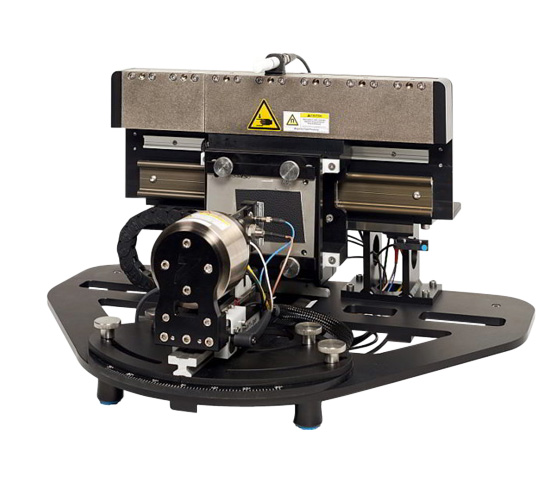
The friction stick–slip noise testing machine is a high-precision testing device specifically designed to simulate and quantify the risk of squeak and other abnormal noises caused by “stick–slip” phenomena during relative sliding between contact materials in automobiles (or other products). Its core function is to test the differences between static and dynamic friction forces, as well as stick–slip vibration frequency and acoustic response.The instrument is capable of simulating various environmental conditions such as water, grease, dust, and temperature fluctuations, in order to investigate how different environmental factors affect material friction performance. It serves as an indispensable core R&D and quality control tool in the design optimization, performance improvement, and quality management of automotive interior materials and functional components.This article will introduce this equipment from the following aspects, and we hope it will be helpful to you.
Principle
The friction stick–slip noise testing machine is a high-precision experimental system specifically designed to quantitatively evaluate friction characteristics between materials, stick–slip behavior, and the tendency for abnormal noise generation.
The system uses a multi-axis servo control mechanism to precisely apply normal loads and tangential motion. Combined with a high-sensitivity acoustic sensor array, it can simultaneously capture friction force–displacement curves, stick–slip vibration signals, and sound pressure level spectrum data.
Its core testing module supports a load resolution of up to 0.01 N and a displacement control accuracy of 0.1 μm, enabling the reproduction of friction conditions across a full velocity spectrum—from low-speed creep to high-speed sliding. This makes it particularly suitable for comprehensive friction noise evaluation in automotive interior NVH optimization, rail transit damping material development, and consumer electronics haptic feedback components.
Applications
The friction stick–slip noise testing machine is widely used in material testing and product quality control across industries such as automotive, machinery, and electronics.
In the automotive industry, it is used to test the friction coefficient and noise behavior of components such as braking systems, steering systems, and suspension systems, helping ensure vehicle safety and NVH performance.
In the machinery industry, it is used to evaluate the surface friction characteristics and noise behavior of mechanical parts, providing performance references for equipment design and optimization.
In the electronics industry, it is used to test the friction performance and noise behavior of components in electronic products, ensuring product quality and user experience.
The friction stick–slip noise testing machine is a high-precision instrument designed to simulate the stick–slip behavior of material interfaces—such as automotive interior components—under relative sliding conditions and to quantitatively evaluate their potential for abnormal noise generation. Its key technical features are as follows:
Precise reproduction of stick–slip phenomena
The system uses a linear motor drive to perform reciprocating friction under controlled normal loads. It synchronously collects static and dynamic friction forces, peak friction acceleration, vibration frequency, and friction coefficient data, enabling accurate identification of “squeak” noise tendencies.
Multi-condition environmental simulation
It supports temperature control ranging from –30°C to 80°C and allows the introduction of contaminants such as water, grease, and dust. This enables evaluation of noise risk under realistic service conditions.
High-precision closed-loop control system
The equipment adopts dual-mode force and displacement control, with a force resolution of 0.01 N and a displacement accuracy of 0.1 μm. Combined with acoustic and accelerometer sensors, it captures stick–slip pulse characteristics and generates RPN (Risk Priority Number) values for noise prediction.
Haptic perception correlation evaluation
Beyond mechanical parameters, the system can also quantify subjective tactile sensations such as “froggy feel,” supporting NVH (Noise, Vibration, and Harshness) and perceived quality development for automotive interiors.
Standardized yet customizable testing capability
It includes built-in test protocols from major automotive OEMs while also supporting customizable speed–load–temperature curves, making it suitable for material R&D, quality control, and stick–slip mechanism research.
1. Preparation Stage
First, confirm that the testing equipment is properly powered on and that the laboratory environment maintains stable temperature and humidity conditions to avoid interference from environmental variables.
Next, thoroughly clean the specimens and friction pairs to remove any surface contaminants. Cut and condition the specimens precisely according to relevant standards to ensure that their dimensions and moisture content meet experimental requirements.
At the same time, inspect all components of the testing system, including the force sensors, displacement sensors, acoustic vibration probes, and linear motor system, to ensure that all parts are functioning properly and securely connected, laying the foundation for a successful test.
2. Installation and Calibration
Mount the prepared fixed specimen securely onto the linear stage, ensuring it is firmly positioned without any looseness.
Then install the counterface material onto a dedicated loading head equipped with high-precision force and acceleration sensors.
After installation, perform zero-point calibration and full-scale verification to eliminate system errors and ensure accurate measurement baselines. Through closed-loop feedback adjustment, confirm that the force–displacement response meets expected performance requirements, ensuring measurement accuracy and system reliability.
3. Parameter Setup
Using the control software interface, select either a pre-set standard test mode or enter the custom configuration mode to define key parameters, including normal load, sliding speed, reciprocating stroke (typically 100 mm), number of cycles, and environmental conditions such as temperature and humidity.
Simultaneously enable acoustic and vibration signal acquisition functions to ensure complete recording of the dynamic behavior of the friction pair during testing.
4. Test Start and Monitoring
Activate the linear motor drive system to initiate the programmed reciprocating motion.
During operation, monitor in real time the friction force–displacement curves, stick–slip pulse frequency characteristics, acceleration signals (typically in the range of 0–25 g), and environmental parameter variations.
If abnormal noise, motion deviation, or any parameter exceeding safety limits occurs, immediately trigger the emergency stop procedure to prevent equipment damage or data distortion.
5. Data Acquisition and RPN Analysis
The testing software automatically collects key data throughout the experiment, including average friction coefficient, the difference between static and dynamic friction forces, and the frequency of stick–slip events.
Based on built-in algorithms, the system calculates and outputs a Risk Priority Number (RPN), which quantitatively evaluates the likelihood of abnormal noise generation in the friction system, providing a critical basis for material or component performance assessment.
6. Completion and Maintenance
After the test is completed, remove the specimens and carefully clean the friction interfaces and sensor surfaces to prevent residue from affecting subsequent tests.
Export both time-domain and frequency-domain data collected during the experiment and generate a structured automated test report.
For long-term stable operation of the equipment, regular maintenance should be performed, including sensor calibration, guide rail lubrication, and inspection of the linear motor drive coils.
To ensure the normal operation of the friction stick–slip noise testing machine and the accuracy of test results, the following key aspects should be carefully observed:
First, the testing machine should be regularly and thoroughly inspected and systematically maintained to ensure that all components remain in good working condition, thereby guaranteeing long-term stable operation of the equipment.
Second, appropriate load levels and operating speeds should be reasonably selected according to different testing requirements and specific conditions, ensuring that the test parameters are scientifically sound and suitable for the intended evaluation.
In addition, before formal testing begins, sufficient specimen preparation must be carried out, including cleaning, installation, and pre-adjustment, so as to ensure the reliability and accuracy of subsequent test data.
During the entire testing process, strict adherence to established operating procedures and protocols is required to avoid any operational errors or improper actions that may affect the authenticity of the test results.
Finally, after the test is completed, the obtained data and results should be carefully analyzed and evaluated, and any abnormalities or issues identified during the testing process should be addressed in a timely manner, so as to continuously optimize the testing procedure and improve equipment performance.
The core importance of the friction stick–slip noise testing machine lies in its ability to accurately predict and quantitatively evaluate squeak noise caused by “stick–slip” behavior during low-speed relative sliding of materials. This is directly related to NVH performance, tactile quality, and safety compliance in automotive, mechanical, and electronic products.
Ensuring ride comfort and safety
In automotive interiors and control components, stick–slip noise not only degrades perceived quality, but abnormal static friction coefficients may also lead to passenger slipping during sudden braking or steering, or cause operational sticking, potentially compromising safety.
Revealing noise mechanisms and guiding material selection
By simultaneously measuring static/dynamic friction forces, friction coefficient differences, stick–slip pulse frequency, and acoustic signals, the system can identify high-risk material pairings and prevent abnormal noise issues triggered by temperature, humidity, or contamination during mass production.
Shifting R&D and quality control upstream
The equipment simulates real-world conditions such as –30°C to 80°C temperatures, oil contamination, and dust exposure at the design stage, replacing costly post-production vehicle-level corrections. It also provides quantitative acceptance criteria for supplier incoming quality inspection.
Improving tactile perception consistency
Stick–slip behavior directly affects subjective tactile sensations such as “smoothness” and “soft warmth.” This equipment converts these subjective perceptions into objective data, supporting premium product texture development and brand quality enhancement.
In summary, the friction stick–slip noise testing machine is a specialized and highly valuable instrument for evaluating material friction performance and stick–slip behavior. It plays an indispensable role in both scientific research and industrial quality control. It is therefore well worth deeper attention and understanding. We sincerely welcome you to leave a message or contact us directly, so that we can provide more detailed technical documentation and customized solutions tailored to your specific needs.


