A Non-woven Fabric Friction Tester is a specialized testing instrument used to determine the surface friction properties of non-woven materials. By simulating the relative motion between the non-woven fabric and a standard friction surface under controlled load, speed, and contact conditions, it measures the static and dynamic coefficients of friction or the abrasion resistance of the material. It is widely used in the quality control of products such as medical non-woven fabrics, hygiene products, and packaging materials, where tactile feel and durability are critical requirements. This article will introduce the equipment from the following aspects, with the aim of providing readers with a useful reference.
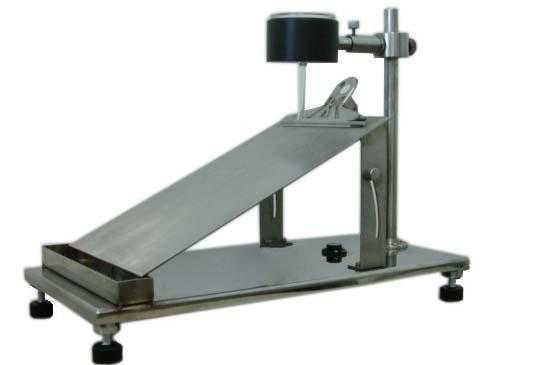
A Non-woven Fabric Friction Tester is used to determine the friction characteristics of non-woven material surfaces. It mainly measures the Static Friction Coefficient (SFC) and Dynamic Kinetic Coefficient (DKC) between the non-woven fabric and a standard friction surface, in order to evaluate tactile feel, slip performance, processing compatibility, and user comfort.
Functions
Under controlled load, speed, and contact conditions, the tester simulates the relative sliding motion between the non-woven fabric and other surfaces, such as skin, metal, plastic, or between layers of the material itself. Through force sensors or torque sensors, the instrument quantitatively measures friction resistance and outputs friction coefficient curves for analysis.
Applications
The tester is widely used in the quality control and research & development of products such as medical non-woven fabrics (including surgical gowns and mask ear loops), packaging materials, luggage linings, and hygiene products. It helps ensure that the materials possess suitable anti-slip properties, softness, or low adhesion characteristics. In addition, it can perform friction performance testing in accordance with relevant ASTM, ISO, and other international testing standards.
A Non-woven Fabric Friction Tester is mainly used to evaluate the surface friction performance of non-woven materials when they come into contact with skin, other materials, or equipment. Its core application industries include:
Medical and Hygiene Products
Used for products such as surgical gowns, face masks, cotton tissues, and wet wipes to ensure comfortable touch, minimize skin irritation, and control sliding or adhesion behavior during wearing and removal.
Personal Care and Wiping Materials
Applied to cotton tissues, facial towels, cosmetic pads, and similar products to optimize friction characteristics for a better user experience, such as gentle cleaning and reduced lint shedding.
Automotive Interior and Industrial Non-woven Materials
Used to test the friction durability as well as the static and dynamic friction coefficients of non-woven materials in human-contact components, such as seat covers and sunshades, or in mechanical transmission applications.
Apparel and Home Textiles
Suitable for testing non-woven linings, wall coverings, tablecloths, and related materials to evaluate slip behavior and wrinkling tendency when in contact with adjacent fabrics or substrates.
Material Research and Quality Control
Used to compare the effects of different manufacturing processes (such as spunlace, spunbond, and needle punching), fiber compositions, or finishing treatments on surface friction properties. It also supports compliance verification with ASTM, ISO, and other international standards.
Non-woven Materials for Polishing and Abrasives
Although wear resistance testing is the primary focus in this field, friction characteristics indirectly affect cutting efficiency and surface finish quality. Some testing standards also include friction coefficient measurements as part of the evaluation criteria.
The Non-woven Fabric Friction Tester is designed based on classical tribology principles and the horizontal plane sliding method. Its core principle follows the Amontons–Coulomb friction law: when two contacting surfaces slide relative to each other under a certain normal force, the sliding friction force is proportional to the applied normal force, and the ratio between them is defined as the coefficient of friction.
By controlling contact pressure, sliding speed, sliding distance, and test environment, the instrument precisely measures the maximum static friction force at the moment of movement initiation and the average dynamic friction force during constant-speed motion. It then automatically calculates the Static Coefficient of Friction (COFs) and Dynamic Coefficient of Friction (COFk).
The static coefficient of friction represents the friction resistance required to overcome the initial stationary state, reflecting how easily the material begins to slide. The dynamic coefficient of friction represents the friction resistance during stable sliding, reflecting the material’s continuous smoothness or slipperiness. Together, these parameters characterize the anti-slip performance, softness, and skin-contact comfort of the non-woven fabric surface.
During testing, the specimen is fixed respectively on the horizontal test platform and the standard sled surface. The sled is dragged smoothly at a constant speed, while a high-precision force sensor continuously records the friction force signal in real time. The data processing system then outputs friction curves and numerical results, meeting the requirements of GB, ISO, ASTM, and other relevant testing standards.
1. Main Drive System
The main drive system consists of a servo motor or stepper motor, precision guide rails, synchronous belts, and a reduction mechanism. It provides stable and uniform sliding motion, with the speed typically set at 100–150 mm/min and the travel distance ranging from 50–100 mm. This ensures a vibration-free and impact-free sliding process.
2. Force Measurement Unit
The instrument uses a high-precision tension/compression force sensor, commonly with a measuring range of 0–5 N and a resolution up to 0.001 N. It offers excellent linearity and repeatability, enabling accurate detection of very small friction forces.
3. Test Platform and Clamping Fixtures
The horizontal rigid test platform is specially demagnetized and surface-leveled to ensure testing stability. The clamping fixtures allow quick specimen installation while effectively preventing wrinkling, slipping, and edge stress concentration.
4. Standard Sled Assembly
The tester is equipped with standard sled weights such as 200 g and 500 g. The sled base is flat and can be covered with the test non-woven fabric or standard friction media, providing a stable normal force during testing.
5. Control System and Display
Parameters can be set through a touchscreen or button control panel. The system features automatic timing and automatic zero-reset functions. It can display force–displacement curves in real time, automatically calculate and store test results, and support data export and printing.
6. Auxiliary Components
Additional accessories include leveling feet, a dust cover, standard calibration weights, and specimen cutting tools.
The friction performance of non-woven fabrics directly affects product usability and functional performance. Hygiene materials require a balance between anti-slip properties and smooth softness; medical surgical drapes require reliable anti-slip and anti-displacement characteristics; packaging materials must meet friction requirements during conveying processes; and geotextile materials require stable friction and anti-sliding performance.
This tester provides objective data support for research and development, manufacturing, and quality control processes, helping manufacturers improve materials, optimize production techniques, reduce costs, and enhance product competitiveness and compliance.
The core technical features of a Non-woven Fabric Friction Tester are as follows:
Clear Measurement Principle
The instrument is based on the horizontal sled method. A standard sled (such as 200 g or 1300 g) is pulled across the non-woven fabric surface at a constant speed, while a high-precision force sensor continuously captures the static and dynamic friction forces in real time. The system then calculates the Static and Dynamic Coefficients of Friction (COF).
High-Precision Measurement and Control System
The tester is equipped with imported load sensors, typically offering an accuracy of ±0.5% or higher. Combined with a servo motor drive system, it enables stepless speed adjustment from 0–800 mm/min, ensuring smooth operation and excellent repeatability. Most models are also equipped with a 7-inch or larger touchscreen that supports real-time force–displacement curve display and automatic result calculation.
Standardization and Compatibility
The instrument supports multiple testing standards, including GB, ISO, ASTM, and TAPPI. It is compatible with different sled weights and contact materials such as stainless steel, polyethylene, or artificial skin materials. Some models are specially optimized for non-woven fabric testing with enhanced clamping and anti-slip designs to prevent specimen displacement during testing.
Intelligent Operation and Compliance
The system features automatic identification of static and dynamic friction peaks, automatic data statistics (including average value and standard deviation), result printing, and USB/RS232 data export functions. High-end models comply with GMP requirements, offering features such as three-level user authority management, audit trails, and tamper-proof data storage. Some models also support cloud connectivity or LIMS system integration.
Optimized Structural Design
The test platform and sled are demagnetized to minimize static interference, which is especially important for non-woven fabric testing. The guide rail system uses linear bearings or air-floating structures to ensure low-friction movement. Additional safety and environmental features include overload protection, emergency stop switches, and temperature/humidity monitoring under standard testing conditions of 23 ± 2°C and 50% ± 5% RH.
A Non-woven Fabric Friction Tester is extremely important because it quantifies the friction behavior between the material surface and skin, other materials, or equipment. This directly affects product comfort, safety, processing performance, and functional reliability.
Evaluation of Touch and Comfort
In medical protective clothing, hygiene products (such as diapers and sanitary napkins), and garment linings, the coefficient of friction determines the material’s tactile feel. Excessive friction may cause discomfort or skin irritation, while overly low friction may lead to slipping or displacement, reducing fit and protective performance.
Production and Processing Control
During high-speed spunbond, meltblown, or slitting processes, excessive friction may cause fiber breakage, fuzzing, or roller wrapping. Friction testing helps manufacturers optimize process parameters such as tension settings and guide roller coatings, thereby improving production yield and operational stability.
Assurance of Medical and Protective Performance
Products such as surgical gowns and isolation garments must remain stable during body movement without slipping, while also avoiding fiber shedding or barrier damage caused by friction. Friction data can help verify the dynamic protective reliability of these materials.
Standardization and Quality Consistency
International standards identify the coefficient of friction as a critical physical property of non-woven materials. Friction testing ensures consistency between production batches and provides support for product export and compliance certifications such as FDA and CE requirements.
Development of Innovative Materials
By comparing the friction performance of different fibers and bonding technologies, including thermal bonding, needle punching, and spunlace processing, manufacturers can develop advanced materials such as low-friction antibacterial surfaces or high-grip industrial non-woven fabrics.
The Non-woven Fabric Friction Coefficient Tester is one of the essential testing instruments in the textile industry, offering significant application value and industrial importance. By accurately measuring the friction coefficient of non-woven materials, it helps manufacturers optimize production processes, improve product quality, and support the development of new products. In addition, the instrument plays a critical role in quality control and failure analysis. Therefore, the application and promotion of Non-woven Fabric Friction Testers in the textile industry have broad prospects and long-term significance.We sincerely welcome you to leave a message or contact us directly for more detailed product information.


