Traditional simple friction testing methods often fail to standardize friction force, speed, and contact conditions, resulting in large deviations in test results and an inability to meet industry standard evaluation requirements.The Fabric Friction Charge Tester uses standardized friction methods to simulate the actual electrostatic charging process and can accurately determine key parameters such as electrostatic voltage generated by fabric friction and charge half-life. It quantitatively evaluates the electrostatic generation and dissipation performance of fabrics, making it an indispensable specialized testing device for antistatic textile research and development, finished product quality inspection, and safety certification.This article will introduce the equipment from several aspects, with the aim of providing useful reference information for related professionals and industries.
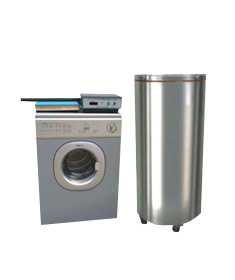
The Fabric Friction Charge Tester is used under controlled laboratory conditions to electrically charge fabrics through standardized friction methods and accurately measure the generated electrostatic charge quantity or charge density, thereby evaluating the antistatic performance or electrostatic risk of textile materials.
Core Function
The tester simulates mechanical friction between the fabric specimen and specified friction materials, such as standard friction rods or friction pads. After the specimen becomes electrically charged, it is placed into a Faraday cage, where a high-precision electrostatic voltmeter measures the induced charge. The system then converts the measurement into surface charge density (μC/m²) or total charge quantity (μC). The typical measurement range is 0–2 μC, with an accuracy of up to ±0.001 μC.
Main Applications
According to standards such as GB/T and FZ/T, the equipment is widely used to test the frictional electrostatic properties of antistatic workwear, medical textiles, and industrial fabrics. It evaluates electrostatic decay performance and charge retention characteristics to ensure products meet safety and protective requirements for applications such as flammable and explosive environments or electronic cleanroom facilities.
Structural Components
The system mainly consists of:
Friction device: including friction rods, friction pads, and driving mechanisms
Potential measurement system: including a Faraday cage, electrostatic voltmeter, and charge amplification circuit
Some advanced models also support automatic timing, peak value holding, and charge half-life calculation functions.
1. Textile and Blended Fabric Manufacturing
Manufacturers of synthetic fiber and blended fabrics use this instrument as a routine quality inspection device to conduct sampling tests on greige fabrics and finished textiles. Based on electrostatic test results, they can optimize fiber blending ratios, antistatic additive dosage, weaving methods, and finishing processes. The tester helps identify products with excessive static charge, ensuring finished product quality and reducing issues such as static cling and dust attraction during use.
2. Antistatic Protective Clothing for Power, Oil & Gas, and Chemical Industries
Fabrics used for antistatic workwear in power generation, petroleum, gas, and chemical industries must undergo electrostatic performance testing. The instrument evaluates the frictional charging behavior of protective fabrics to ensure compliance with safety standards. This helps prevent electrostatic discharge generated by clothing during operation, reducing fire and explosion hazards in flammable and explosive environments and ensuring worker safety.
3. Electronics Manufacturing and Cleanroom Applications
In cleanrooms used for semiconductor, circuit board, and precision electronics manufacturing, static electricity generated by workwear, cleanroom wipes, and partition fabrics can damage sensitive electronic components. The Fabric Friction Charge Tester is used to screen low-static materials, establish fabric selection standards for cleanrooms, stabilize electrostatic conditions in production environments, and reduce product defects and scrap rates.
4. Automotive Interior Materials
Knitted fabrics used in automotive headliners, seats, and door panels can generate static electricity due to friction during vehicle operation. This not only affects passenger comfort but may also interfere with onboard electronic systems. The tester is used to evaluate the electrostatic properties of interior fabrics, helping manufacturers optimize antistatic finishing processes and improve both riding comfort and electronic system stability.
5. Medical and Healthcare Textiles
Medical garments, isolation protective fabrics, and hospital bedding materials must meet both hygiene and electrostatic safety requirements. By testing frictional charging performance, the instrument helps prevent static electricity from attracting bacteria and dust while also avoiding electrostatic interference with sensitive medical equipment, ensuring safe use in healthcare environments.
6. Research and Development of Functional Textiles
Universities and textile research institutes use the tester to develop new functional textile materials. The equipment allows comparison of the electrostatic properties of different conductive fibers, antistatic coatings, and textile structures, as well as analysis of how processing parameters affect charge generation and dissipation. This supports the development of advanced low-static and fast-discharge functional fabrics.
7. Textile Testing and Certification Organizations
Professional textile testing laboratories use the equipment for commissioned testing, market supervision inspections, and product certification. The tester provides legally recognized test reports that serve as important references for market access approval, engineering procurement bidding, and quality dispute resolution, helping standardize electrostatic safety requirements within the textile industry.
The charge measurement system consists of a Faraday cup and an electrostatic voltmeter, which are connected via data cables.
The electrostatic voltmeter is equipped with both a zeroing system and a fine-adjustment calibration system, effectively improving measurement accuracy.
It adopts a large-screen LCD display, ensuring clear and easy-to-read test results.
The Faraday cup is made of brushed stainless steel, featuring an aesthetically refined appearance as well as strong oxidation resistance and corrosion resistance.
The inlet and outlet of the Faraday cup are wrapped with polyethylene insulating tape, which helps reduce interference during testing and improves measurement stability.
Friction Charging Method Principle
The sample to be tested is brought into relative motion with a standard friction material such as nylon under controlled conditions of constant speed (190 ± 10 m/min) and constant pressure (500 cN), simulating real-world friction conditions during use.
During contact and friction between the fabric and the friction material, charge transfer occurs, generating static electricity on the fabric surface. The transferred charge is then accurately collected by a Faraday cup, and the total charge is measured precisely. Finally, the system converts the measured value into surface charge density (μC/m²).
Step 1: Specimen Preparation
Cut test specimens into dimensions of 80 mm × 80 mm. Prepare three samples in both warp and weft directions, ensuring that the surface is flat, wrinkle-free, and undamaged. Condition the specimens in an environment with a relative humidity (RH) of 65% ± 2% for 24 hours to eliminate the influence of temperature and humidity on test results.
Step 2: Equipment Calibration
After powering on the equipment each day, perform zero-point calibration and linearity verification to ensure a calibration error within ±1%. At the same time, check and adjust the distance between the friction head and the specimen, fixing it at 15 ± 1 mm to ensure consistent friction contact during testing.
Step 3: Testing Execution
Set the required parameters according to test requirements, including friction cycles (adjustable from 1 to 100.000 cycles), and environmental conditions such as temperature (e.g., 23°C) and relative humidity (e.g., 30%). Once the settings are completed, start the test. The system will automatically collect and record key parameters including peak voltage, half-life time, and charge density (a total of 12 core parameters).
Step 4: Data Analysis
After the test is completed, the system automatically generates a 3D electrostatic profile, visually showing the influence of variables such as fiber composition and finishing processes on electrostatic performance. The test data can be stored in the cloud, enabling multi-terminal access and historical data traceability for comparative analysis.
The core value of the Fabric Friction Charge Tester lies in objectively evaluating a textile’s ability to generate and accumulate static electricity during friction. This is directly related to antistatic safety compliance, wearing comfort, and industrial regulatory requirements.
Antistatic Safety Compliance
The tester is used to verify whether antistatic workwear—such as garments used in electronics manufacturing, chemical plants, and fuel stations—meets standards like GB/T and FZ/T. It ensures that the electrostatic charge level (typically within ±2 μC, with an accuracy of ±0.001 μC) remains within a safe range, preventing electrostatic sparks that could cause explosions or damage sensitive electronic components.
Product Performance and Comfort Control
The level of frictional charging affects garment comfort, including issues such as static cling to the skin or dust adsorption, as well as discomfort caused by electrostatic discharge. These problems are particularly prominent in synthetic fibers. The test provides quantitative data for optimizing antistatic finishing processes and adjusting fiber blending ratios.
Quality Control and R&D Support
In production, this test is a mandatory quality inspection item, especially for Class A/B antistatic garments, and serves as an objective replacement for subjective evaluation. In research and development, it enables comparison of different fibers and antistatic finishing agents (such as hydrophilic antistatic treatments), supporting material innovation and product improvement.
Standardization and Reproducibility
By combining a standard friction mechanism (such as a friction roller) with a Faraday cage and electrostatic voltmeter, the tester simulates controlled friction methods defined in standards like GB/T (e.g., rolling friction method). This ensures high repeatability and comparability of results across different laboratories, supporting trade, certification, and quality control.
Overall, with the continuous improvement of safety production standards across industries, requirements for clothing comfort, electrostatic protection in industrial environments, and precision control in manufacturing have become increasingly strict. The antistatic performance of textiles has therefore become a key indicator of functional fabric quality. We sincerely welcome you to leave a message or contact us directly for more detailed product information and technical support.


