In the fields of engineering and materials science, friction and wear testing is an important method for evaluating material performance, especially under lubricated conditions, since most mechanical moving components operate in lubricated environments.The Moisture Friction and Wear Testing Machine is specifically designed to simulate the friction and wear behavior of materials under water-lubricated conditions. It is also a precision mechanical testing device used to evaluate the friction and wear performance of materials within a controllable humidity environment. This article will introduce the equipment from the following aspects in order to provide useful reference information for readers.
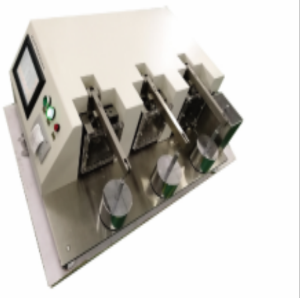
The Moisture Friction and Wear Testing Machine is a specialized testing system designed to evaluate the friction coefficient and wear behavior of materials under water-containing, liquid-media, or high-humidity environments. Its core function is to simulate real wet operating conditions such as skin-to-fabric contact, artificial joint interaction with body fluids, and seal-to-coolant contact, thereby quantitatively measuring tribological performance under wet conditions.
Core Functions
Under controlled humidity, liquid immersion (such as water, body fluids, lubricating oil, or seawater), or spray conditions, the machine simultaneously measures:
Wet-state friction coefficient (COF)
Wear rate
The system commonly uses standard friction pair configurations such as:
Pin-on-disk
Ball-on-disk
Reciprocating motion systems
Some advanced models also integrate:
Online wear scar morphology analysis
Temperature monitoring
pH monitoring functions
Typical Applications
The equipment is widely used in the following fields:
Biomedical Materials
Wear testing of artificial joints under simulated body fluid environments
Evaluation of implant material tribological performance
Textile and Personal Care Industries
Wet friction comfort evaluation between skin and fabrics
Assessment of cosmetic and hygiene material interaction performance
Automotive Industry
Wet braking stability testing
Seal and gasket wear evaluation under coolant or lubricated conditions
Marine Engineering
Corrosion and wear resistance testing of marine coatings and materials
Lubricant Performance Evaluation
Assessment of lubricant effectiveness under high-humidity or liquid-contact conditions
The equipment is designed to comply with relevant ASTM and ISO wet-friction testing standards.
Key Differences Compared with Conventional Dry Friction Testers
Unlike standard room-temperature or dry friction testing machines, the Moisture Friction and Wear Testing Machine is equipped with:
Liquid circulation systems
Sealed testing chambers
Humidity control systems (up to 100% RH)
Corrosive media compatibility modules
These features effectively prevent evaporation interference and ensure the long-term stability of wet testing environments.
The Moisture Friction and Wear Testing Machine is mainly used in industries that require evaluation of tribological performance under water, humidity, or liquid-media environments. Typical application fields include:
Automotive Industry
Used to test the friction stability and wear resistance of:
Brake pads
Sealing components
Clutch materials
under wet or water-exposed operating conditions.
Biomedical Industry
Applied to evaluate:
Wear behavior and biocompatibility of artificial joints (such as hip and knee implants)
Medical catheters and related polymer components
under simulated physiological fluid environments.
Oil, Chemical, and Energy Industry
Used for testing the anti-wear and corrosion resistance of:
Drilling equipment seals
Hydraulic system components
in water, oil, or slurry-containing media.
Rail Transit Industry
Used to simulate wet and slippery conditions such as rain and snow, and to evaluate:
Wheel–rail friction behavior
Brake system wear characteristics
Marine Engineering and Shipbuilding Industry
Used to test durability of:
Underwater components
Anti-corrosion coatings
Lubricating greases and oils
in seawater or salt spray environments.
Materials Research and Quality Control
Applied to evaluate:
Friction coefficient and wear rate of polymers and composite materials
Coatings such as waterproof layers and wear-resistant films
under controlled humidity or wet conditions.
Consumer Products and Packaging Industry
Used to assess wet-state performance of:
Plastics and rubber materials
Textile products (e.g., non-slip shoe soles)
Wet-contact packaging materials
in terms of friction behavior and durability.
The core technical features of the Moisture Friction and Wear Testing Machine lie in its ability to accurately simulate friction and wear behavior under humid or liquid-containing environments.
Environmental Humidity Control
The system integrates a sealed temperature and humidity chamber capable of precise regulation of relative humidity, typically ranging from 10% to 95% RH, with high-end models achieving accuracy of ±2% RH.
It supports:
Constant humidity testing
Dynamic humidity cycling modes
These functions enable simulation of humid, condensation, or wet-heat operating conditions.
Multi-Motion Mode Compatibility
The equipment supports multiple friction modes, including:
Rotational motion (0.1–5000 rpm)
Reciprocating linear motion (0.001–10 mm/s, frequency up to 60–70 Hz)
Ring-on-block configuration
Four-ball testing mode
A modular design allows rapid switching between different test configurations.
High-Precision Load and Friction Measurement
The system adopts a closed-loop servo loading mechanism, with a load measurement range from millinewton to kilonewton levels (e.g., 1 mN–1000 N), and measurement accuracy within ±1%.
It enables real-time acquisition of:
Friction coefficient (COF)
Wear volume (via 3D surface profilometry or mass-loss method)
In-Situ Multi-Signal Monitoring
Advanced models may integrate:
Real-time wear depth measurement
Frictional temperature thermocouples
Electrochemical corrosion modules (for tribo-corrosion studies under wet conditions)
Optical surface morphology analysis systems
These enable in-situ characterization of the coupled “friction–wear–environment” behavior.
Thermal–Humidity Coupled Control
Optional modules extend temperature control from low temperature (–30°C) to high temperature (up to 1200°C), synchronized with humidity control systems.
This enables testing under extreme conditions, such as:
Hot and humid environments
Condensation wear conditions
Suitable for materials including rubber, coatings, biomaterials, and lubricants.
Intelligent Control and Standards Compliance
The system supports PLC/PC dual-control architecture with touchscreen or software-based programming (e.g., Standard Group™ control systems).
It complies with ASTM, ISO, and other wet friction testing standards, with data sampling rates up to 1–200 kHz.
Corrosion-Resistant and Sealing Design
The liquid cell or humidity chamber is constructed using corrosion-resistant materials and equipped with:
Condensation reflux systems
Gas purging systems
These features ensure testing stability and minimize environmental interference during operation.
Preparation Stage
Ensure the equipment is placed on a stable, vibration-free, and clean bench. If the test requires a controlled environment (e.g., 25 ± 2°C / 50 ± 5% RH), perform system calibration in advance.
Connect the power supply, compressed air (if applicable), and cooling/humidification systems. Wear appropriate personal protective equipment such as safety goggles and gloves.
Check the emergency stop button, sensors, environmental chamber sealing condition, and whether the lubrication/media pipelines are free from leakage.
Specimen Preparation
Cut and polish specimens according to relevant standards, typically in the form of:
Cylindrical samples (Φ5–10 mm)
Flat plates
Clean the specimens using ultrasonic cleaning and dry them at 80°C for 2 hours. Record the initial mass and surface roughness.
For wet friction tests, pre-wet the specimens or ensure the environmental chamber reaches the required humidity level.
Installation and Calibration
Mount the upper and lower specimens securely. Under no-load conditions, zero the load and torque sensors.
Set environmental parameters including:
Temperature and humidity
Atmospheric condition (e.g., N₂ or humid air)
Lubrication medium (if applicable)
Maintain stabilization for at least 30 minutes. Verify that the friction pair (ball/plate/block) is properly matched and that fastening torque meets requirements.
Parameter Setting
Set the following parameters via touchscreen or control software:
Normal load (e.g., 5–100 N)
Sliding speed
Test duration or number of cycles
Target temperature and humidity
Overload threshold
For reciprocating motion, define:
Stroke length
Frequency
Enable real-time data acquisition for:
Friction coefficient (COF)
Wear volume
Temperature
Humidity
Test Operation
Start the machine and gradually apply load until reaching the preset value. Once stable contact between friction pairs is confirmed, press “Start.”
During the entire test process, continuously monitor:
COF curve stability (fluctuation should generally be <10% of the average value)
Environmental stability
Equipment operating status
If abnormal conditions occur (e.g., sudden COF change, alarm, smoke), immediately press the emergency stop button.
Completion and Measurement
After automatic shutdown:
Unload the force and reset the mechanism.
Wait until the environment returns to ambient temperature and humidity.
Open the chamber and remove the specimen.
Mark the wear area and perform post-test analysis:
Dry and weigh the specimen to calculate wear rate (Δm = mass loss)
Measure wear scar width and volume using optical or 3D surface profilometry
Export raw data including force, displacement, time, temperature, and humidity
Maintenance
After testing:
Clean debris from fixtures and friction components (do not use solvents on sensors or guide rails)
Drain condensate from the humidity system
Inspect belts and bearings
Calibrate load and environmental sensors weekly
Turn off power and cover the equipment with a dust-proof cover when not in use
The core value of the Moisture Friction and Wear Testing Machine lies in its ability to simulate frictional behavior under real humid, liquid, or moisture-containing environments, providing indispensable quantitative evaluation of material reliability, service life, and safety under complex working conditions such as humidity, lubrication, corrosion, or biological fluids.
Realistic Working Condition Simulation
Many engineering components—such as artificial joints, seals, brake pads, marine machinery, and textile materials—operate in environments involving moisture, lubricants, or liquid media. Dry friction testing alone can significantly overestimate wear resistance.
This equipment enables precise control of:
Humidity environments
Immersion or liquid media conditions
Electrolyte or corrosive environments
It reveals how water, oil, or biological fluids influence friction coefficients and wear mechanisms, including:
Corrosive wear
Hydrolytic wear
Accelerated or inhibited tribological degradation
Critical Role in Material Development and Selection
In fields such as:
Biomedical engineering (e.g., Co-Cr alloy / UHMWPE artificial hip joints)
Automotive engineering (wet braking performance)
Energy systems (lubrication failure in wind turbine gears)
Wet friction and wear data directly determine:
Material compliance
Product service life
Risk of sudden failure
Verification of Lubricants and Coatings
The system is widely used to evaluate:
Lubricating oils and greases
Solid lubrication coatings (e.g., diamond-like carbon films)
under humid or water-containing conditions, providing technical support for low-friction design and long-life component development.
Standards Compliance and Quality Control
Many international and national standards (such as ASTM, ISO, and GB/T) require friction and wear testing under controlled humidity or liquid media conditions.
This equipment serves as an essential tool for:
Quality certification
Failure analysis
Regulatory compliance
in industries including medical devices, automotive engineering, aerospace, and more.
Mechanism Research Support
When combined with in-situ monitoring techniques such as:
Electrochemical noise analysis
Infrared thermal imaging
Surface morphology evolution tracking
the system enables in-depth analysis of tribocorrosion mechanisms and promotes the rational design of advanced materials such as:
High-entropy alloys
Hydrogel composite coatings
The Moisture Friction and Wear Testing Machine is a critical tribological testing instrument that simulates lubricated or humid friction processes, providing essential data for material performance evaluation and product design.With continuous technological advancement, this equipment will play an increasingly important role in supporting industrial development and environmental sustainability.We sincerely welcome your inquiries or messages, and we are pleased to provide more detailed product information and technical solutions.


