In the field of sports facility and site construction, artificial turf has become a highly preferred solution due to its excellent durability, low maintenance requirements, and natural appearance. However, with the increasing frequency of use and the diversification of application scenarios, ensuring the wear resistance performance of artificial turf has gradually become a core concern within the industry.The Artificial Turf Wear Tester is a specialized testing device designed to evaluate the wear resistance, durability, and fiber shedding performance of artificial turf—covering applications such as sports fields and landscape landscaping—under simulated usage conditions.This article will provide a detailed introduction to an advanced artificial turf wear testing machine and discuss its critical role in improving turf quality and performance.
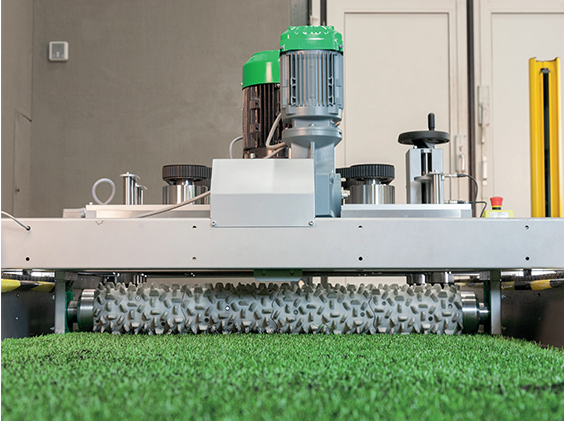
The core design concept of the Artificial Turf Wear Tester is to simulate the surface wear mechanisms experienced by artificial turf during actual use. Through precisely controlled friction wheels—such as rubber wheels or abrasive wheels—the system performs repeated cyclic friction movements on the specimen surface, thereby reproducing wear conditions caused by long-term use or specific environmental conditions.
Its working principle mainly includes the following aspects:
Friction Mechanism
The tester applies constant pressure and frictional force to the artificial turf specimen through rotating friction wheels, simulating wear scenarios encountered during daily use.
This design enables accurate reproduction of various wear conditions that artificial turf may experience in real applications.
Load Adjustment
The tester allows flexible adjustment of load weight according to different testing requirements, typically within a range from 0.2 kg to several kilograms.
Through this function, the wear resistance performance of artificial turf under different pressure conditions can be accurately evaluated.
Speed Control
The rotational speed of the friction wheel is adjustable, enabling the system to match the requirements of different usage scenarios.
For example:
for high-intensity sports fields, the rotational speed can be increased,
allowing the turf’s wear resistance limit to be evaluated under more severe testing conditions.
Counting System
The tester is equipped with an automatic stop function. Once the preset number of friction cycles is reached, the machine automatically stops operation.
This feature effectively ensures the consistency and repeatability of the testing process.
Data Analysis
By collecting and analyzing test data, the system can accurately determine wear resistance indicators of artificial turf, including:
wear amount,
wear rate,
and related durability parameters.
These data provide a scientific basis for:
turf material selection,
and optimization of manufacturing processes.
The core function of the Artificial Turf Wear Tester is to simulate real usage conditions—such as friction, impact, and loading—in order to evaluate the wear resistance, fiber pull-out resistance, and overall structural durability of artificial turf materials.
Its primary purpose is to provide objective and repeatable wear performance data for:
sports field construction,
landscape engineering projects,
and product quality control,
thereby ensuring that products comply with international standards such as FIFA, ASTM, and ISO, while accurately predicting service life.
Simulation of Dynamic Wear
Through methods such as:
reciprocating motion,
rotational friction,
or abrasive wheel friction,
the tester applies controlled friction to turf fibers and backing layers.
This allows evaluation of:
fiber fuzzing,
fiber breakage,
granule loss,
and backing delamination.
Evaluation of Infill Stability
Some advanced systems can simultaneously evaluate the behavior of rubber or silica sand infill materials during wear testing, including:
displacement,
compaction,
and material loss.
Quality Control and R&D Support
The equipment is widely used by manufacturers to compare the wear resistance performance of different:
yarn materials (such as PE, PP, and PET),
weaving processes,
and coating treatments.
It also provides technical support for product certification programs such as FIFA Quality Pro.
Safety and Compliance Verification
The tester helps ensure that sports artificial turf maintains:
surface flatness,
cushioning performance,
and structural integrity
even after long-term use, thereby effectively reducing the risk of athlete injuries.
In addition to the artificial turf industry, wear testing machines are also widely used in the following industries:
Building Materials Industry
Used to test the surface wear resistance of flooring materials such as:
floor panels,
ceramic tiles,
and other paving materials.
Textile Industry
Used to evaluate the abrasion resistance and rubbing color fastness of textile materials.
Automotive Industry
Used to assess the wear resistance performance of automotive interior materials, including:
seat fabrics,
decorative surfaces,
and trim components.
Coating Industry
Used to evaluate the wear resistance performance of various coating materials, such as:
paints,
varnishes,
and protective surface coatings.
1. Precise Wear Simulation with Flexible Roller Adjustment
The core wear component adopts a specially designed studded cylindrical abrasion roller. The quantity, arrangement, and hardness of the studs are strictly matched to the characteristics of actual sports shoe studs, such as football FG/AG cleats, ensuring that the wear mechanism closely reproduces real usage conditions.
The system is also equipped with a dedicated adjustment mechanism, allowing the roller to be finely adjusted left or right to accommodate artificial turf samples of different widths and thicknesses, thereby preventing uneven wear caused by dimensional variations in the specimens.
2. Comprehensive Safety Protection with Excellent Noise Reduction
The equipment adopts a transparent sealed frame-type enclosure structure. The frame is welded from 40 × 60 × 1.5 mm steel tubing, while the outer enclosure is made of acrylic material.
This design not only allows operators to clearly observe the wear condition of the sample during testing, but also effectively reduces operating noise.
In addition, the machine is equipped with a safety door interlock protection system:
all safety doors must remain closed during testing,
and if a safety door is accidentally opened during operation, all mechanical movements stop immediately,
thereby fundamentally ensuring operator safety.
3. Intelligent Control for Convenient and Efficient Operation
The entire machine adopts an intelligent control system, with all operations completed through the control panel.
Operators only need to input parameters such as:
test cycles,
testing speed,
and travel distance,
after which the equipment automatically enters cyclic testing mode without requiring continuous manual supervision.
During the test, the system supports:
pause-at-any-time operation,
and opening the enclosure for sample inspection,
allowing real-time observation of sample wear while balancing testing efficiency and operational flexibility, significantly reducing manual workload.
4. Multi-Mode Testing Capability to Avoid Patterned Wear Errors
The equipment supports multiple simulation modes, including transverse motion wear testing and other expandable testing methods based on different standards.
Since different test modes involve varying:
motion trajectories,
and force application angles,
the system effectively avoids testing errors caused by single repetitive wear patterns.
As a result, the test results more accurately reflect the complex wear conditions encountered during actual artificial turf usage, improving the reliability and credibility of the data.
Sample Preparation
Cut the artificial turf specimen to the standard dimensions (for example, 20.3 × 20.3 cm), ensuring that the complete structure—including turf fibers, backing adhesive, and base layer—is included.
Condition the specimen for at least 24 hours in a controlled environment of:
21 ± 1°C
65 ± 2% RH
Ensure that the sample surface is clean and free from debris.
Equipment Calibration and Installation
Confirm that the wear tester—such as a studded roller type or reciprocating friction platform type—has been properly calibrated.
Install the appropriate abrasion head, such as:
a standardized studded roller,
or a foam-weight loading platform.
Adjust the load to the specified standard value (for example, 9.072 kg) and set:
travel distance (such as 45.7 cm),
and testing speed (8–12 seconds per stroke).
Initial Weighing
If the test uses a friction medium (such as a closed-cell foam block), accurately measure its initial weight with a precision of ±0.05 g.
If directly measuring turf fiber mass loss, record the initial weight of the entire specimen before testing.
Specimen Fixing
Secure the artificial turf specimen flat onto the clamping platform, ensuring:
no wrinkles,
no displacement,
and uniform fixation.
Close the safety protective enclosure, as most systems are equipped with safety-door interlock stop functions.
Wear Cycle Execution
Start the equipment and perform the specified number of reciprocating or rolling wear cycles according to the relevant standard.
Examples include:
ASTM F1015: four complete closed-square movement paths,
FIFA testing: typically 500–2000 roller cycles.
During testing, the system automatically controls and records the operating parameters.
Completion and Sample Recovery
After the test is completed, the equipment automatically stops.
Remove the specimen (and friction medium, if applicable), then immediately measure:
final weight,
thickness change,
or surface deformation
under the same environmental conditions used during conditioning.
Data Calculation
Wear amount is calculated as:
Wear Loss = Initial Mass − Final Mass
Alternatively, image analysis or thickness measurements may be used to evaluate:
fiber breakage rate,
fiber flattening rate,
and surface deformation.
Wear resistance indicators—such as:
mass loss rate,
and thickness retention rate—
are then calculated based on the total number of test cycles.
Cleaning and Maintenance
Clean the abrasion head, testing platform, and residual debris after testing.
Inspect:
transmission components,
and sensor conditions,
and lubricate guide rails when necessary.
The core importance of the Artificial Turf Wear Tester lies in its ability to scientifically evaluate the durability of artificial turf under simulated real-use conditions, which directly affects:
athlete safety,
product service life,
and compliance certification.
Ensuring Athlete Safety
Artificial turf with poor wear resistance may develop issues such as:
fiber breakage,
exposed backing materials,
and uneven infill distribution,
which can increase the risk of:
slipping,
skin abrasions,
and joint injuries.
Wear testing enables these potential hazards to be identified in advance.
Predicting Actual Service Life
Through simulation methods such as:
studded rollers,
abrasive wheels,
and reciprocating friction,
the tester reproduces the wear conditions caused by cleated sports shoes in practical applications, in accordance with standards such as FIFA and EN specifications.
By quantifying wear indicators such as:
mass loss,
and fiber shedding,
the system helps guide:
field material selection,
and maintenance scheduling.
Supporting Quality Control and R&D
The tester provides manufacturers with repeatable and comparable wear resistance data based on standards such as:ASTM,ISO and GB/T.
This supports optimization of:
fiber formulations,
production technologies,
and advanced wear-resistant material development,
such as incorporating nanomaterials to improve abrasion resistance.
Meeting International Certification Requirements
Wear resistance testing is a mandatory requirement for certification of sports fields used for:football,rugby and other athletic applications,
particularly under certification systems such as FIFA Quality standards.
Failure to meet the required wear resistance performance may prevent:venue certification,event approval and commercial operation.
Reducing Life-Cycle Costs
Although highly wear-resistant turf systems may involve higher initial investment costs, they can significantly reduce:
repair frequency,
replacement costs,
and long-term maintenance expenses.
Wear testing also helps prevent:product failure claims and safety liability risks caused by premature turf degradation.
With the advancement of technology and material science, future artificial turf wear testers are expected to become increasingly intelligent and efficient.
Potential development trends include:
Automation Upgrades
Achieving higher levels of automated testing processes while reducing manual intervention requirements.
Enhanced Data Analysis Capabilities
Using big data analysis and machine learning algorithms to perform deeper analysis of test results, enabling more accurate:
performance prediction,
and maintenance recommendations.
Improved Environmental Simulation
More realistically simulating complex operating environments to improve:
applicability,
and reliability of testing results.
Cross-Platform Integration
Integrating with other testing equipment and quality management systems to establish comprehensive material performance evaluation platforms.
As a specialized testing device for evaluating the wear resistance performance of artificial turf materials, the Artificial Turf Wear Tester plays an indispensable role in:product research and innovation,manufacturing quality control and industry standard development.It not only provides scientific and objective evaluation of artificial turf durability and service life, but also offers strong technical support and reliable data for product optimization and quality improvement.We sincerely welcome industry professionals, partners, and potential users to leave messages or contact us directly. According to your specific requirements, we will be pleased to provide:comprehensive technical product information,application case studies and professional consulting services.


