Most people are likely already familiar with it. The Deval Abrasion Testing Machine is a dual-drum rotary device used to determine the abrasion resistance of aggregate materials. By means of friction and impact between steel balls and the test sample under wet or dry conditions, the equipment measures the abrasion loss rate, thereby evaluating the quality and durability of the aggregate.This article will introduce the equipment from the following aspects, with the aim of providing a useful reference for readers.
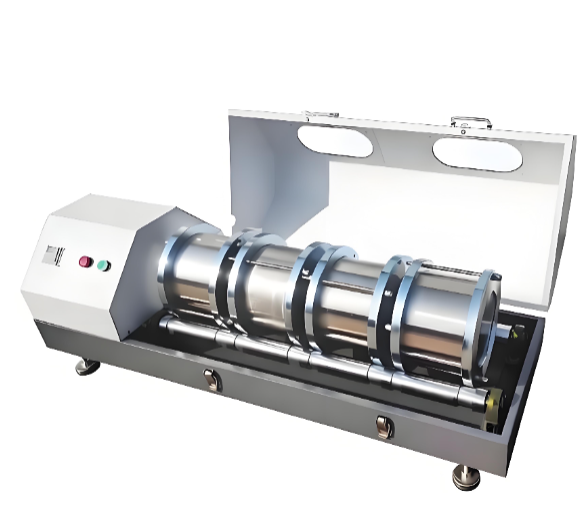
The core structure of the Deval Abrasion Testing Machine typically consists of four stainless-steel hollow cylindrical drums, each sealed at one end, along with a stainless-steel steel ball abrasive system.
Working Principle
The device operates by placing a specified gradation of aggregate samples together with steel balls and water (or in dry condition) into the rotating cylinders.
During long-term rotation, the aggregates are subjected to continuous friction and impact caused by the steel balls and cylinder walls, simulating the wear process experienced in real-world service conditions.
Finally, the abrasion loss rate is calculated based on the mass loss of the sample, which is used to evaluate the wear resistance and overall quality of the aggregate.
The Deval Abrasion Testing Machine is used to determine the abrasion rate of aggregates (such as stone and mineral aggregates) under the combined action of rolling friction and steel ball impact. It evaluates the material’s resistance to wear, impact, and fragmentation, making it a key instrument for assessing aggregate quality in highway engineering.
Core Functions
The machine simulates mechanical wear conditions by rotating a test drum under standard parameters, typically including a speed of 100 ± 5 r/min, stainless-steel steel balls as abrasive media, and aggregate samples sized 4–14 mm, tested under either dry or water-saturated conditions.
Through continuous rotation, the samples undergo controlled abrasion, and the mass loss is measured to calculate the abrasion rate. This value reflects the durability of aggregates under dynamic loading conditions.
Main Applications
The equipment is widely used for evaluating the wear resistance of coarse and fine aggregates in construction projects such as highways, railways, and airports. It complies with various international standards, including JTG, NF, EN, and ASTM.
It is also suitable for testing recycled aggregates, slag materials, railway ballast, and mineral-based granular materials to assess their abrasion resistance.
Output Parameters
Abrasion loss rate (%)
Fines generation content
Gradation change
Particle morphology degradation
These results provide essential data for material selection, mix design, and long-term durability prediction.
The Deval Abrasion Testing Machine is mainly used to determine the abrasion rate of stone aggregates. Its applications span multiple industries, as follows:
1. Highway and Railway Construction
It is used to evaluate the wear resistance of crushed stone, gravel, and other aggregates under traffic loading conditions. The results provide a basis for mix design of road base layers and asphalt concrete.
2. Building Materials and Quality Inspection
Applied to quality control and compliance testing of natural stone, manufactured sand, and slag materials. Testing is typically conducted in accordance with standards such as JTG and NF.
3. Mining and Aggregate Production
Used to optimize crushing and screening processes and to select aggregates with acceptable wear resistance for final product output.
4. Research Institutions and Standard Laboratories
Supports research on mechanical properties of aggregates and contributes to the development of industry standards in highway engineering, civil engineering, and related fields.
5. Special Applications (Limited Use)
In some cases, it may also be used to test abrasion resistance of non-metallic granular materials such as fibrous mineral aggregates, although this is not a primary application area.
The Deval Abrasion Testing Machine is a dual-drum rotary device used to evaluate the abrasion resistance of stone aggregates. Its main features are as follows:
1. Dual Drum Structure
The machine is typically equipped with two stainless-steel test drums (with some single-drum variants also available). During rotation, the samples interact with steel balls (or steel blocks), generating combined friction, impact, and shear forces. This simulates the actual wear conditions of aggregates in road applications.
2. Standard Compliance
The equipment is designed in accordance with standards such as JTG and NF, and is suitable for testing aggregate abrasion under both dry and moist conditions, including crushed stone and gravel materials.
3. Speed and Cycle Control
The typical rotational speed is 30–33 rpm. The machine allows preset test cycles (commonly 500 or 1000 revolutions) or time-based operation, and is equipped with an automatic digital counter for precise control.
4. Wide Material Applicability
It is mainly used for highway engineering aggregates, and in some cases for fibrous mineral materials. However, it is not suitable for flexible materials such as rubber or plastics.
5. No Environmental Simulation Function
The test is conducted under normal temperature and atmospheric pressure conditions. It does not include temperature, humidity, or gas environment control, distinguishing it from advanced tribology testing systems.
6. Clear Output Index
The test result is expressed as an abrasion loss rate (%), calculated from the percentage of mass loss of the sample. This directly reflects the material’s resistance to impact and friction wear.
The Deval Abrasion Testing Machine is used to measure the wear resistance of stone aggregates. Some aggregates exhibit different abrasion resistance under dry and water-saturated conditions. This equipment is primarily used for determining aggregate abrasion loss, which reflects resistance to friction and impact and serves as an important indicator for aggregate quality evaluation.
Operating Method
Sample Preparation
Weigh 500 ± 2 g of aggregate with a particle size of 4–14 mm.
Loading the Drum
Place the cylindrical drum with the opening facing upward. First add the abrasive steel balls, then pour in the weighed sample, and finally add 2.5 L of water.
Test Setup and Start
Set the test duration to 2 hours and press the start button to begin operation.
Sample Recovery
After the machine stops, collect the aggregates and abrasive media into a container, taking care to avoid sample loss. Rinse the inner wall of the drum thoroughly using a wash bottle and collect all rinse water and residual particles.
Sieving and Drying
Wash the collected material through a 1.6 mm sieve. Steel balls are retained by an 8 mm sieve. Dry the retained material in an oven at 105°C until constant mass is achieved.
Weighing
Weigh the dried retained material. Record the mass as m.
Precautions
Before operation, carefully read the technical manual provided by the manufacturer (e.g., Hebei Dahong), and fully understand the technical specifications, performance, operating procedures, and safety requirements. Operate strictly according to the instructions.
First-time operators must work under the guidance of experienced personnel and are only allowed to operate independently after full proficiency is achieved.
During testing, equipment and instruments should be arranged in a reasonable and orderly manner to facilitate operation, observation, and data recording.
Before powering electronic instruments, ensure that the supply voltage matches the required input voltage. For equipment with a three-wire plug, it must be connected to a properly grounded socket to ensure electrical safety.
Input signals and external loads must remain within specified ranges. Overloading operation is strictly prohibited.
The maintenance of the Deval Abrasion Testing Machine is essential to ensure stable operation, accurate test results, and extended service life. The recommended practices are as follows:
1. Thorough Cleaning After Each Use
After each test, remove the stainless-steel drum and sample container. Clean stone dust, residual steel balls, and moisture using a soft brush or damp cloth to prevent corrosion or buildup that may affect abrasion uniformity in subsequent tests.
Do not directly rinse the motor or electrical control box with water.
2. Regular Lubrication of Moving Parts
According to the manufacturer’s manual (typically every 10–20 tests or monthly), apply high-temperature lithium-based grease or dedicated mechanical oil to the main shaft bearings, transmission gears, and drum support shafts.
Avoid excessive lubrication buildup. If a belt system is used, check belt tension and wear regularly and replace if necessary.
3. Inspection of Drum and Steel Balls
Ensure that the inner wall of the drum is free from significant scratches or deformation.
Check steel balls for severe wear or adhesion. If wear exceeds the standard limit (e.g., according to JTG specifications), replace them with qualified steel balls such as Φ10–16 mm high-carbon steel balls.
4. Maintain a Stable and Dry Environment
The equipment should be placed in a laboratory environment with:
Temperature: 10–35°C
Humidity: ≤80%
No vibration, dust, or corrosive gases
When not in use for long periods, cover the machine with a dust-proof cover and disconnect power. Run the machine idle for 30 minutes every quarter to prevent moisture and mechanical sticking.
5. Calibration and Verification
Every 6–12 months, calibrate the rotation speed (commonly 60 rpm or specified standard speed) and timing/counting system using a tachometer or reference counter.
Perform intermediate verification using standard aggregates (e.g., basalt) to ensure repeatability of abrasion results within ≤2% variation.
6. Electrical and Control System Maintenance
Clean the control panel and sensor connectors regularly to prevent oxidation.
Ensure reliable grounding and inspect wiring for aging or damage.
Do not disassemble the electrical control box or modify motor parameters without authorization. Immediately stop the machine if abnormal noise or overheating occurs and contact the manufacturer.
7. Maintenance Record Keeping
Maintain detailed logs of operation time, sample types, cleaning and lubrication activities, abnormal conditions, and calibration dates.
This ensures traceability and supports compliance with quality management systems such as ISO/IEC standards.
The core value of the Deval Abrasion Testing Machine lies in its ability to quantitatively evaluate the abrasion resistance of aggregates—such as stone, ballast, and recycled materials—through standardized rolling friction and impact simulation. It is a key instrument for assessing material durability in road and construction engineering, as well as for material selection and quality control.
1. Key Indicator for Aggregate Quality Evaluation
The measured abrasion loss rate reflects the material’s ability to resist combined impact, shear, and friction forces. This performance is directly related to the long-term resistance of pavement layers, sub-bases, or railway ballast against breakage and powdering, ultimately influencing structural service life and safety.
2. Support for National and International Standards
The equipment is designed in compliance with standards such as JTG, NF, EN, and ASTM, ensuring that test results are comparable, standardized, and traceable across engineering applications and regions.
3. Guidance for Engineering Material Selection and Process Optimization
Through comparative tests under dry, wet, or even freeze–thaw conditions, the machine reveals durability degradation behavior of materials in real service environments such as humidity and low temperature.
This provides a scientific basis for selecting high-wear-resistance aggregates and optimizing crushing and screening processes.
4. Quality Control and Batch Consistency Verification
The machine is widely used for raw material acceptance, factory inspection, and recycled material evaluation. It helps identify variations in abrasion performance caused by weathering, weak layers, or processing defects, preventing inferior materials from being used in engineering projects.
5. Applicability to Multiple Granular Materials
In addition to basalt and granite used in highway construction, the equipment is also suitable for railway ballast, mining materials, recycled aggregates, and even fibrous mineral materials. It can further be extended to evaluate the durability of asphalt pavement functional layers.
As a precision material testing device, the Deval Abrasion Testing Machine provides scientists and engineers with a reliable platform for studying material wear behavior under simulated working conditions.By accurately evaluating abrasion resistance, durability trends, and performance changes, it offers scientific guidance for material selection, process optimization, and product design.We sincerely welcome your inquiries regarding technical specifications or equipment requirements. Please feel free to leave a message or contact us directly through official channels. We are committed to providing detailed product information, application cases, and customized solutions in a timely manner.


