In the fields of oil, natural gas, and various industrial gas transmission systems, line pipes serve as critical pressure-bearing components, and the integrity of their internal coatings is of vital importance. Therefore, systematic testing of the internal coatings of line pipes used for non-corrosive gas transport is a key process to ensure the long-term safety, stability, and economic operation of pipeline systems.A Pipe Coating Scratch Tester is a mechanical testing device specifically designed to evaluate the adhesion strength and scratch resistance of anti-corrosion or functional coatings applied to pipeline substrates. This article introduces the equipment from the following aspects, aiming to provide a useful reference for relevant professionals.
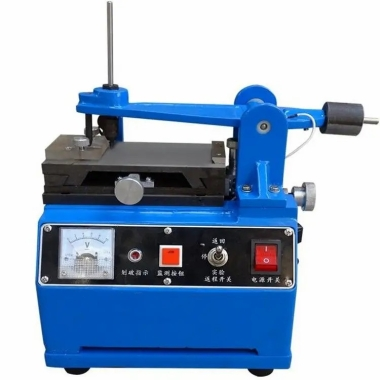
A Pipe Coating Scratch Tester is used for the quantitative evaluation of the adhesion strength between pipeline anti-corrosion or functional coatings and the metal substrate, as well as the scratch resistance performance of the coating. By applying a controlled scratch load to simulate mechanical damage, it determines critical load values (such as Lc1 and Lc2) to assess coating failure risk.
Core Function:
Under a constant or progressively increasing load, a diamond indenter is used to scratch along the coating surface. The system monitors friction force, acoustic emission, or displacement changes in real time to identify the critical point at which the coating transitions from adhesion to cracking or delamination.
Main Applications:
It is widely used in industries such as oil & gas, chemical engineering, and water supply systems for the development and quality control of pipeline anti-corrosion coatings (such as FBE, 3PE, and epoxy coatings). It verifies the coating’s resistance to construction damage, soil stress, or scraper (pigging) abrasion, and complies with standards such as ASTM and ISO.
Output Results:
The test provides adhesion strength values (in N or MPa), scratch morphology (observed via optical or microscopic analysis), and failure modes (cohesive or adhesive failure). It should be noted that this device is not used for measuring coating thickness or detecting pinholes, which are instead tested using coating thickness gauges or holiday detectors.
A Pipe Coating Scratch Tester is mainly used in the following industries:
Oil and Gas Industry:
It is used to evaluate the adhesion strength and scratch resistance of anti-corrosion coatings (such as 3PE, FBE, and epoxy coatings) applied to buried or offshore steel pipelines, ensuring coating integrity during transportation, installation, and service life.
Power and Energy Industry:
It is used to test the mechanical damage resistance of coatings on pipelines for oil, gas, and heating systems, meeting requirements of standards such as ASME, API, and DIN.
Chemical and Offshore Engineering:
It is used for quality control of internal and external pipeline coatings in corrosive environments, particularly for evaluating scratch resistance under conditions involving acids, alkalis, salt spray, or mechanical abrasion.
Pipeline Manufacturing and Anti-Corrosion Contractors:
It is used for factory inspection, pre-installation sampling, and on-site repair coating evaluation, supporting different pipe diameters and coating structures.
Research Institutions and Standards Testing Laboratories:
It supports the development of new anti-corrosion coatings and compliance verification with national and international standards.
The technical features of a Pipe Coating Scratch Tester focus on quantitative evaluation of coating–substrate adhesion strength and scratch failure analysis. The main characteristics are as follows:
Precisely Controlled Normal Load with High Resolution:
Typical load ranges from a few millinewtons (mN) to several tens of newtons (N), with resolution down to 10 mN or even higher. In nano-scale systems, resolution can reach 10 nN. This enables simulation of various conditions from micro-scratching to full coating delamination.
In-situ Monitoring of Scratch Depth and Adhesion Strength:
Using piezoelectric sensors, optical systems, or acoustic emission (AE) detection, the system monitors the critical load (Lc) in real time. It identifies coating failure points such as adhesion loss, brittle fracture, or plastic deformation. Adhesion strength is quantitatively expressed in N or MPa.
Precise Control of Scratch Trajectory:
Scratch length typically ranges from 10–100 mm, with scratch speeds from 0.1–60 mm/min. The system supports constant-load or progressively increasing load modes (e.g., ramp-load until coating failure). Some models also feature forward/back scanning to minimize systematic errors.
Specialized Fixture System for Curved Pipe Samples:
Dedicated fixtures can hold pipe specimens ranging from Φ10 mm to over Φ500 mm, ensuring scratches are applied along radial or axial directions while compensating for curvature to avoid load deviation.
High Precision and Environmental Adaptability:
Most systems are laboratory-based benchtop instruments (such as Anton Paar Stresstester or KLA Nanoindenter series). Some portable versions are available for field use, though with lower accuracy. Surface morphology analysis typically requires optical microscopy, laser microscopy, or scanning electron microscopy .
Test Principle:
The Pipe Coating Scratch Tester operates by dragging a hard stylus (such as a diamond indenter) across the coating surface under a controlled constant or progressively increasing normal load. The system continuously monitors the critical load (e.g., Lc1. Lc2) at which coating cracking or delamination occurs, thereby quantitatively evaluating the adhesion strength between the coating and the substrate as well as its scratch resistance performance.
Scratching Mode:
The stylus moves in a straight line at a constant speed under servo control. The applied load can be constant (for comparative evaluation) or linearly increasing (for precise determination of critical failure load).
Signal Monitoring:
The system synchronously records normal force, lateral friction force, acoustic emission signals, and scratch depth (measured by high-precision displacement sensors or optical systems). Coating failure is identified through signals such as sudden friction drop, acoustic emission spikes, or abrupt depth changes.
Standards Compliance:
Testing is typically conducted in accordance with standards such as ISO and ASTM scratch test methods. It is suitable for evaluating adhesion strength and scratch resistance of anti-corrosion coatings on metal or composite pipelines, including FBE, 3PE, and thermoplastic coatings.
Key Output:
The primary result is the critical load (Lc)—the minimum normal force at which coating cracking or delamination begins, reflecting adhesion strength. Scratch morphology (edge pile-up, brittle fracture, plastic deformation) is also analyzed.
Operating Procedure of the Pipe Coating Scratch Tester
The core operation involves scratching the coating surface under a controlled load to evaluate adhesion strength and failure behavior. The standard procedure is as follows:
1. Sample Preparation:
Fix the pipe coating specimen (usually a flat panel or cross-section of pipe) onto the sample stage. Ensure the surface is clean, flat, and free of oil or contaminants. For curved pipe samples, use dedicated fixtures or flattening preparation methods.
2. Instrument Calibration:
Power on the system and calibrate the diamond indenter (commonly a 120° conical diamond or Berkovich tip), the normal load sensor, and the optical alignment system. Set scratch parameters such as scratch length (typically 1–5 mm), scratch speed (1–100 μm/s), and load mode (constant or linearly increasing load up to failure).
3. Environment and Parameter Setup:
Operate under room temperature or controlled environmental conditions. According to coating type (e.g., epoxy, FBE, polyethylene), set the maximum load (typically 1–50 N). Enable real-time monitoring systems such as acoustic emission, friction coefficient tracking, and optical imaging (side or top view microscopy).
4. Scratch Execution:
Start the test program. The indenter moves across the coating surface at a constant speed while the load gradually increases until coating cracking, delamination, or substrate exposure occurs. Record critical loads such as Lc1 (initial crack) and Lc2 (significant delamination).
5. Result Analysis:
Analyze scratch morphology using in-situ microscopy to identify adhesion failure, shear failure, or plastic deformation. The system software automatically outputs key parameters such as critical load and energy dissipation. SEM/EDS analysis may be used for further failure mechanism verification if required.
6. Cleaning and Reset:
After testing, remove the specimen. Clean the indenter and stage using compressed air or a lint-free cloth to prevent cross-contamination and ensure accuracy for subsequent tests.
The core value of a Pipe Coating Scratch Tester lies in the quantitative evaluation of the adhesion strength between anti-corrosion/protective coatings and metallic pipe substrates, as well as their scratch resistance performance. This directly determines the durability and safety of pipelines during transportation, installation, and long-term service.
Quantification of Adhesion Strength:
By determining critical load values (such as Lc1 and Lc2), the tester evaluates whether the coating is prone to delamination. This helps prevent coating failure caused by mechanical damage during lifting, backfilling, or installation, which could otherwise lead to corrosion and leakage.
Simulation of Real Service Conditions:
The test reproduces potential mechanical impacts such as scratching, abrasion, and collision that pipelines may experience during construction or operation. This is particularly important for anti-corrosion coatings such as epoxy, FBE, and polyethylene systems, enabling accurate prediction of their resistance to mechanical damage.
Ensuring Structural Integrity:
Once a coating is scratched or delaminated, the exposed substrate (e.g., steel pipe) is vulnerable to soil, seawater, or chemical media, accelerating localized corrosion or cathodic disbondment. The scratch tester helps identify coatings with weak adhesion in advance, thereby preventing failures and accidents.
Support for Standards Compliance and R&D:
Compliant with international standards such as ASTM and ISO, the equipment is widely used for factory inspection, new material selection, and process optimization, ensuring coating systems meet the stringent requirements of high-risk industries such as oil & gas and water supply engineering.
High-Precision, Non-Destructive Comparative Evaluation:
Compared with cross-cut or pull-off tests, the scratch tester enables continuous scanning and provides load–displacement curves, offering more detailed insights into adhesion and fracture mechanisms and significantly improving quality control accuracy.
In summary, the Pipe Coating Scratch Tester is a critical instrument for evaluating pipeline coating performance. It plays an essential role in ensuring pipeline safety and reliability and is highly valuable for in-depth study and application. We sincerely welcome your inquiries or messages so that we can provide more detailed technical information and support tailored to your needs, contributing jointly to the advancement of related applications.


