In advanced fields such as chemical catalysis, pharmaceutical granulation, and new energy materials, the abrasion resistance of particles—though seemingly subtle—directly determines product quality, production efficiency, and cost control. The Particle Abrasion Tester, as a core instrument for accurately capturing this critical parameter, is becoming an “invisible tool” for enterprises to ensure quality control and optimize processes.A Particle Abrasion Tester is a specialized device used to evaluate the wear resistance of materials under the action of abrasive particle media (such as sand, dust, or slurry). It simulates abrasive particle wear conditions in real operating environments caused by erosion or friction, thereby quantifying the material’s resistance to wear.This article will introduce the equipment from the following aspects, hoping to provide useful insights and assistance.
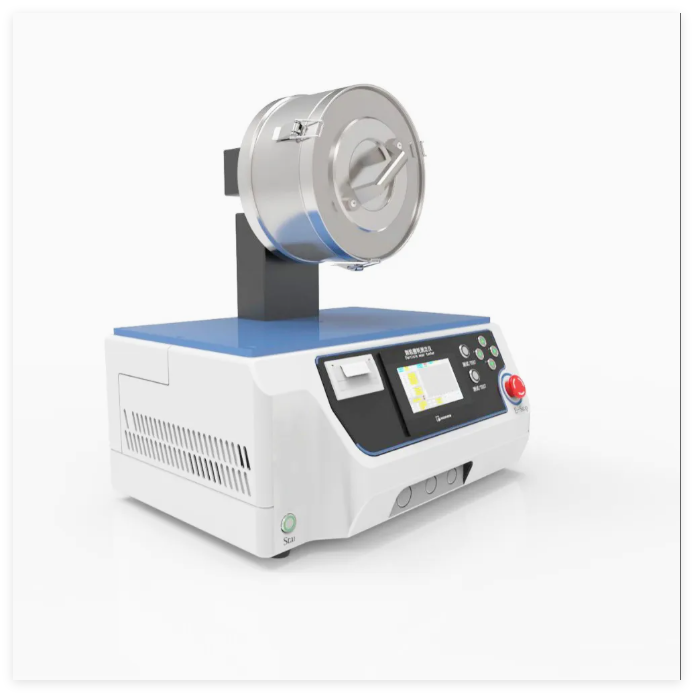
The Particle Abrasion Tester is an instrument used to measure the wear behavior of material particles during abrasion processes. It is primarily designed to evaluate material wear performance and to study wear mechanisms. Its specific applications include:
Material Research:
The Particle Abrasion Tester can be used to evaluate the wear resistance of different materials, helping researchers select suitable materials for specific application fields.
Lubricant Research:
The Particle Abrasion Tester can assess the effectiveness of various lubricants during wear processes, assisting in optimizing lubricant formulations and performance.
Surface Treatment Research:
The Particle Abrasion Tester can evaluate the impact of different surface treatment technologies on material wear resistance, helping optimize surface engineering processes.
Coating Research:
The Particle Abrasion Tester can be used to assess how different coating materials and coating processes affect wear performance, thereby supporting the optimization of coating selection and application.
Materials Science:
The Particle Abrasion Tester is used to evaluate the wear resistance of different materials, helping researchers select suitable materials for specific application fields. For example, during the material development stage, it can be used to screen formulations with excellent wear resistance and optimize material structures.
Chemical Industry and Catalysts:
It is used to measure the abrasion resistance of catalyst particles and evaluate their service life and performance stability in reactors. It can also test the abrasion rate of molecular sieves, adsorbents, and similar materials to ensure their durability in practical applications.
Environmental Engineering:
In the field of environmental protection, accurate evaluation of particle abrasion characteristics is of great importance.
Lubricant Research:
The instrument evaluates the performance of different lubricants during wear processes, helping optimize lubricant formulations and overall performance.
Surface Treatment Research:
It assesses the impact of various surface treatment technologies on material wear resistance, supporting the optimization of surface engineering processes.
Coating Research:
The Particle Abrasion Tester is used to evaluate how different coating materials and coating processes affect wear performance, thereby improving coating selection and application strategies.
Emerging Fields:
In emerging industries such as new energy and environmentally friendly materials, the role of the Particle Abrasion Tester is becoming increasingly prominent. For example, in the development of lithium-ion battery cathode materials, reducing particle wear during charge–discharge cycles is crucial for improving battery cycle stability and safety.
Exquisite Structural Design:
The instrument typically consists of core components such as the main structure, weighing system, rotation system, and feeding system. The main structure serves as a supporting frame, securing the sample and transmitting force. The weighing system uses a high-precision electronic balance to accurately measure the mass of particle samples. The rotation system is driven by a motor, enabling friction plates or wear specimens to contact the particle samples and generate abrasion. The feeding system controls the feed rate of particle samples, ensuring testing stability and reliability.
Multi-Station Design:
A four-station configuration allows simultaneous testing of four sample groups, significantly improving experimental efficiency, especially suitable for batch testing or comparative experiments.
High-Precision Control:
Equipped with a PLC control system, it enables precise adjustment of parameters such as rotation speed, test duration, and vibration frequency, ensuring consistency and repeatability of experimental conditions.
User-Friendly Operation:
A color touchscreen interface allows intuitive operation, supporting parameter setting, data recording, and result export in a simple and efficient manner.
Modular Design:
The abrasion drum is typically made of stainless steel for durability and wear resistance. Sieves are standardized (national standard sieve series) and interchangeable, meeting different particle size requirements.
Data Management:
The system supports USB data export for convenient analysis and archiving. Some models also support editable printing of results, with adjustable time settings, enhancing flexibility in data processing.
Testing Process of the Particle Abrasion Tester
Measurement Principle of the Particle Abrasion Tester
The core function of the Particle Abrasion Tester is to accurately replicate the stress conditions that particles experience in real-world applications, ensuring that laboratory data closely corresponds to actual production performance.
The instrument applies controlled frictional and impact forces to particles through specific mechanical structures. Common working principles include rotary friction, airflow impact, and vibrational friction, each corresponding to different industrial particle characteristics.
Rotary friction type: The rotating drum drives particles to rub and collide with each other, simulating wear conditions in pipelines and silos during material flow.
Airflow impact type: High-speed airflow carries particles to impact a target plate, replicating wear in pneumatic conveying processes.
Vibrational friction type: A vibration platform causes particles to rub against each other within a sieve, simulating conditions in vibration screening and material transfer.
During the simulation process, the instrument is equipped with high-precision weighing modules and particle size analysis modules to monitor changes in mass and morphology in real time. The entire process is precisely controlled by an intelligent system, regulating parameters such as friction intensity, time, and rotation speed, ensuring repeatability and comparability of each test. This allows the wear resistance of particles from different batches and processes to be objectively compared under a unified standard.
1. Equipment Preparation and Sample Handling
Before using the Particle Abrasion Tester, proper preparation is required:
Equipment inspection: Ensure the instrument is placed on a level surface, all components are securely connected, and the power supply meets the required voltage.
Sample preparation: Sieve the particle material to be tested, remove impurities, and ensure uniform particle size distribution.
Parameter setting: Select appropriate testing conditions such as rotation speed, test duration, and load according to material properties.
2. Testing Procedure
Correct operation is essential for obtaining reliable data:
Loading samples: Evenly place the prepared sample into the testing chamber, avoiding excessive accumulation or large voids.
Start-up: Run the machine without load for 1 minute to ensure stable operation before starting formal testing.
Monitoring: Observe the operating condition during testing and record any abnormal vibration or noise.
Sample removal: After testing, wait until the equipment has completely stopped before removing samples to avoid injury.
3. Routine Maintenance and Data Interpretation
Scientific maintenance extends equipment service life:
Cleaning and maintenance: Clean the testing chamber after each use and regularly lubricate moving components.
Calibration checks: Perform no-load tests monthly to ensure accurate speed and timing.
Data recording: Record all test conditions in detail and establish a material wear database for reference.
Fault handling: Immediately stop the machine if abnormalities are detected, and resume operation only after troubleshooting.
The Particle Abrasion Tester is widely used in materials science and engineering fields, and its importance cannot be overlooked.
1. Studying Particle Wear Mechanisms:
The Particle Abrasion Tester can simulate the wear process between particles. By measuring parameters such as abrasion loss and wear rate, it enables the study of wear mechanisms and governing laws of particle abrasion. This is of great significance for material design and selection.
2. Evaluating Material Wear Resistance:
Using the Particle Abrasion Tester, the wear resistance of different materials can be evaluated. By comparing abrasion loss among materials, those with superior wear resistance can be selected to meet the requirements of service life and reliability in engineering applications.
3. Guiding Engineering Practice:
The Particle Abrasion Tester can simulate particle wear conditions in real engineering applications. By analyzing changes in various parameters, it provides guidance for material selection and usage in engineering practice. This helps optimize engineering design and improve system efficiency and service life.
4. Promoting Material Innovation:
The Particle Abrasion Tester provides important support for material innovation. By evaluating and comparing the wear performance of different materials, it offers scientific evidence for the development and application of new materials, thereby promoting the advancement of materials science.
In summary, the structure of the Particle Abrasion Tester plays a crucial role in ensuring accurate measurement of particle wear. It not only helps study wear mechanisms and evaluate material durability, but also guides engineering applications and promotes material innovation. Therefore, the development and application of the Particle Abrasion Tester are of great significance.We sincerely welcome your inquiries or direct contact, so that we can provide you with more detailed product information.


