Today, we are going to talk about a tool that plays an important role in industrial production and scientific research, yet is not widely known to the general public — the Universal Online Particle Size Analyzer. Simply put, it is a device capable of measuring the particle size distribution of powders, suspensions, emulsions, and other materials in real time and continuously. Imagine this: on a production line, the particle size of raw materials directly affects the quality of the final product. If particle size could be monitored in real time just like temperature and pressure, production control would become far more precise. This is exactly the value of an online particle size analyzer. In this article, we will introduce this equipment from several aspects, hoping to provide helpful insights for everyone.
Core Working Principles
Laser Diffraction / Static Laser Scattering:
The mainstream technology is based on Mie scattering theory or Fraunhofer diffraction theory, where particle size distribution is determined by analyzing scattered light at different angles.
Ultrasonic Attenuation Spectroscopy:
Suitable for high-concentration and nanoscale systems, enabling in-situ measurement without dilution.
AI-Integrated High-End Models:
Some advanced models, such as the Malvern Panalytical Mastersizer series, support intelligent functions like “Size Sure” transient steady-state detection and Smart Manager health monitoring.
Key Technical Features
Real-Time Online Measurement
The analyzer can be directly installed in process pipelines or reaction systems to achieve continuous, automatic, and unattended particle size monitoring.
Wide Measurement Range
It covers a measurement range from 5 nm to 3000 μm, making it suitable for various samples ranging from nanoparticles to coarse particles.
Compatibility with High-Concentration Samples
Capable of measuring suspensions with concentrations up to 50% vol/vol without dilution, thereby avoiding sampling errors.
Strong Environmental Adaptability
Equipped with optical windows or probes resistant to high temperature, high pressure, and corrosion, making it suitable for harsh industrial environments such as chemical and pharmaceutical industries.
Dynamic Background Correction
Uses PLS (Partial Least Squares) or multivariate analysis techniques to eliminate interference caused by temperature, pressure, and matrix variations in real time, ensuring data accuracy.
Intelligence and Automation
Features built-in SOP (Standard Operating Procedure) architecture, automatic sampling and cleaning, data quality feedback, multilingual interfaces, and multiple report export formats such as Excel and PDF.
Modular and Flexible Deployment
Supports both split-type designs for easier maintenance and integrated compact designs that help prevent material deposition. Some models also support mobile operation.
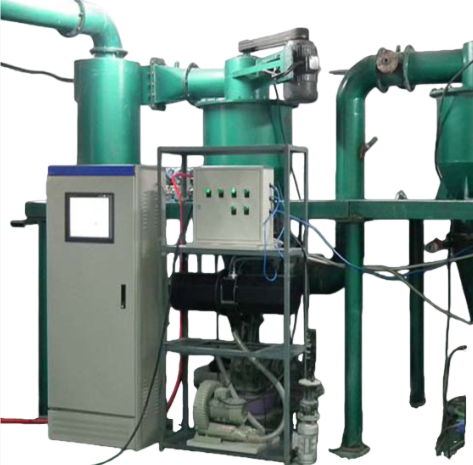
The Universal Online Particle Size Analyzer is an analytical instrument designed for the real-time and in-situ monitoring of particle size and particle size distribution. It is widely used in industrial process control and scientific research.
Main Functions
Real-Time Online Monitoring:
Continuously obtains data such as particle size, particle size distribution, and concentration without interrupting the production or reaction process.
In-Situ Measurement:
Performs measurements directly inside reactors, pipelines, or process streams, avoiding errors or particle state changes caused by sampling.
Suitable for Multiple Applications:
Capable of handling complex media such as suspensions, emulsions, slurries, and high-concentration systems (up to 70% volume concentration).
Automated Operation:
Integrates functions such as automatic sampling, ultrasonic dispersion, circulation cleaning, and data output, supporting one-click operation.
High Sensitivity and Fast Response:
With millisecond-level scanning speed, it can capture transient particle behaviors such as crystallization, flocculation, and emulsification processes.
Strong Anti-Interference Capability:
Equipped with optical probes resistant to high temperature, high pressure, and corrosion, while dynamic background subtraction algorithms help correct environmental interference.
Typical Applications
Pharmaceutical Industry:
Monitors drug crystallization, precipitation, and granulation processes to ensure product uniformity and stability.
Food and Cosmetics Industry:
Analyzes the particle size and dispersion stability of emulsions and liposomes, such as anthocyanin liposomes.
Battery Material Research:
Accurately measures electrode material particle size to optimize battery performance.
Chemical Process Control:
Monitors operations such as flocculation, homogenization, and mixing to improve process efficiency.
Environmental Protection and Water Treatment:
Evaluates particulate content in water online to ensure water quality and safety.
Its applications cover nearly all industrial sectors involving powders or liquid droplets.
1. Chemical and Materials Industry
In the production of catalysts, battery materials, pigments, coatings, polymer resins, and other products, particle size directly affects product activity, tinting strength, covering power, strength, and flowability. Online particle size analysis enables real-time monitoring of critical processes such as grinding, precipitation, crystallization, and emulsification, ensuring consistency between production batches.
2. Pharmaceutical Industry
The particle size of pharmaceutical products influences dissolution rate, bioavailability, and the stability of the final drug efficacy. During processes such as active pharmaceutical ingredient (API) synthesis, micronization, and suspension preparation, online monitoring helps strictly ensure that product quality meets industry standards.
3. Energy and Mining Industry
In coal-water slurry preparation, mineral flotation, and metallurgical slurry transportation, particle size is a key parameter for optimizing combustion efficiency, improving mineral recovery rates, and ensuring safe pipeline transportation. Online analysis contributes to innovative resource utilization and process safety.
4. Food and Beverage Industry
The particle size of cocoa powder in chocolate affects texture, the fat globule size in dairy products influences stability and flavor, and pulp particle size in juice affects visual appearance. Online particle size analyzers help manufacturers precisely control these details to improve product quality.
In addition, this type of equipment usually features in-situ measurement, maintenance-free operation, remote data transmission, and compatibility with Industry 4.0 systems. It is especially suitable for modern manufacturing industries requiring continuous production, Process Analytical Technology (PAT), and Quality by Design (QbD).
As a core monitoring device for modern industrial process control and quality management, the Universal Online Particle Size Analyzer plays a vital role in real-time process monitoring, precise regulation, and data-driven manufacturing. Using technologies such as laser diffraction, light blockage methods, or dynamic light scattering, the instrument continuously acquires particle size distribution data without manual intervention, providing critical support for the intelligent upgrading of manufacturing processes. Its core value is mainly reflected in the following aspects:
1. Enabling Closed-Loop Process Control and Real-Time Optimization
The online particle size analyzer can output key particle size parameters such as D10. D50. and D90 at second-level or minute-level intervals, allowing the control system to instantly understand the production status. Real-time data can be directly connected to Distributed Control Systems (DCS) or Programmable Logic Controllers (PLC) to automatically adjust process parameters such as mill load, classifier speed, and dispersant dosage, forming a closed-loop control mechanism of “monitoring–feedback–adjustment.”
This mechanism effectively overcomes process fluctuations caused by the delay of traditional offline testing and significantly improves process stability and controllability.
2. Ensuring Product Quality Consistency and Regulatory Compliance
Particle size distribution directly determines the physical and chemical properties, reaction activity, and final functional performance of materials. Through continuous monitoring of particle size indicators, the analyzer ensures that products from different batches meet predefined particle distribution standards, eliminating batch-to-batch variations.
In industries such as pharmaceuticals, food, semiconductors, and new energy materials, strict particle size control is essential for meeting pharmacopeia requirements, ISO international standards, and industry cleanliness regulations. The instrument’s high-precision detection capability and multi-channel particle size classification functions provide reliable support for product compliance verification and quality traceability.
3. Improving Production Efficiency and Reducing Overall Operating Costs
The fully automated operating mode replaces traditional laboratory procedures such as manual sampling, sample preparation, and testing, completely eliminating issues related to poor sample representativeness, transportation contamination, and human operational errors.
The equipment supports automatic cleaning, self-calibration, and continuous measurement, greatly shortening testing cycles and reducing labor requirements. In hydraulic systems, wind power generation, and industrial fluid management, real-time monitoring of medium cleanliness helps prevent equipment failures caused by particle wear, thereby extending the service life of key components.
Practical industrial applications have shown that deploying online particle size monitoring can significantly reduce system failure rates and maintenance costs.
4. Strengthening Risk Warning and Equipment Health Management
The analyzer is equipped with an intelligent threshold alarm module. When particle concentration exceeds limits or abnormal shifts in particle size distribution occur, the system can automatically trigger audible and visual alarms or activate purification systems to prevent contamination spread and process loss of control.
Trends in particle size data can also provide early indications of equipment wear, screen blockage, reduced dispersion efficiency, or abnormal raw material batches, offering strong data support for predictive maintenance. Early intervention helps enterprises avoid large-scale defective product output and unplanned downtime losses.
5. Promoting Data-Driven Decision-Making and Digital Transformation
The online particle size analyzer features large-capacity data storage and remote transmission interfaces, supporting RS232. 4–20 mA analog signals, and wireless communication protocols. It can be seamlessly integrated into Industrial Internet of Things (IIoT) platforms or Manufacturing Execution Systems (MES).
The accumulation of historical data and trend curve generation provide a quantitative foundation for process optimization, formulation development, and production capacity evaluation. Combined with artificial intelligence and big data analytics, particle monitoring data can further support the creation of digital twin models, enabling predictive process control and intelligent production scheduling.
6. Broad Cross-Industry Applicability and Technical Scalability
Its universal design allows compatibility with dry powders, wet slurries, aerosols, and high-viscosity fluids, with a measurement range spanning from nanometer to millimeter scales.
The instrument plays a crucial role in industries such as chemical catalysis, ceramic sintering, coating manufacturing, cement production, and environmental monitoring. With continuous advancements in measurement algorithms and anti-contamination protection technologies, the long-term operational stability and data reliability of the equipment under complex working conditions continue to improve, further expanding its applications in high-end manufacturing and green production.
In summary, the Universal Online Particle Size Analyzer is not merely a tool for measuring particle size parameters, but also an essential infrastructure for achieving refined process control, zero-defect quality management, and intelligent manufacturing transformation in modern industry.By connecting process workflows with decision-making systems through real-time data streams, it provides indispensable technical support for enterprises to build efficient, stable, and sustainable production systems.We sincerely welcome you to leave a message or contact us directly for more detailed product information.


