The Universal Multifunction Tribology Test Machine is a precision testing device used to study the tribological behavior of materials under conditions such as friction, wear, and lubrication. It is widely applied in the performance evaluation of metals, ceramics, polymers, coatings, lubricants, and other materials, and is especially suitable for simulating surface interactions under real working conditions. This article will introduce the equipment from the following aspects, with the aim of providing readers with useful reference information.
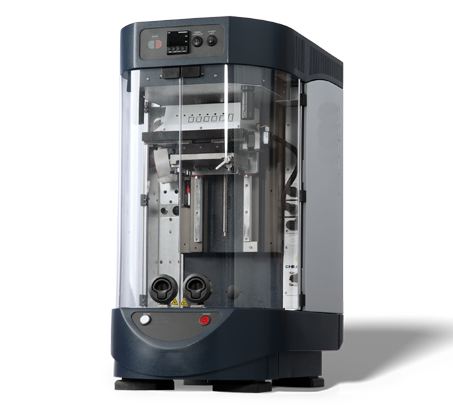
Main Functions
Multi-Mode Friction and Wear Testing:
Supports multiple counterpart contact configurations, including ball-on-disk, pin-on-disk, four-ball, reciprocating, disk-on-disk, and block-on-ring tests. It can simulate different motion forms encountered in actual working conditions.
Wide-Range Loading Capability:
The load range typically covers from 1 mN to 1000 N, while some models, such as the MFT-5000. can reach up to 12.000 N, meeting testing requirements from micro/nano scale to macro scale.
High-Speed and Low-Speed Rotation Control:
The spindle speed range can reach from 0.001 rpm to 5000 rpm, making it suitable for low-speed sliding applications involving lubricants and soft materials, as well as simulations of high-speed rotating components.
Linear Reciprocating Motion:
Provides both low-speed (0.001–10 mm/s) and high-speed (up to 60 Hz) reciprocating modules for simulating reciprocating motion scenarios such as engine components and joint prostheses.
Multi-Environment Simulation Capability:
The temperature range is typically from -25°C to 1000°C, with some models supporting as low as -30°C. Humidity control ranges from 10% to 95% RH. Optional vacuum and corrosive media functions are also available, such as the integrated electrochemical corrosion module in the UMT-2EC model.
Additional Mechanical Performance Testing:
Includes scratch testing for evaluating coating adhesion strength, microhardness and indentation testing, adhesion force measurement, and contact resistance monitoring for conductive material research.
The Universal Multifunction Tribology Test Machine is a high-precision instrument used to study the performance of materials under friction, wear, lubrication, and environmental coupling conditions. It is widely applied across multiple industries, mainly including the following fields:
Core Application Industries
Aerospace Industry:
Used to test the tribological behavior of critical components such as high-temperature alloys, coatings, and bearings under extreme temperature, vacuum, or corrosive environments.
Automotive Manufacturing:
Evaluates the wear resistance and service life of engine components, transmission systems, brake pads, and other parts under different conditions such as dry friction, oil lubrication, and water lubrication.
Energy and Power Industry:
Verifies the material reliability of high-temperature and high-pressure components, including gas turbines, nuclear power equipment, and wind power gears.
Biomedical Industry:
Simulates the sliding friction characteristics of artificial joints, such as hip implants, and tests the compatibility of implant materials with body fluid environments.
Electronics and Semiconductor Industry:
Studies the friction and stick-slip behavior of microelectronic packaging materials, MEMS devices, and ultra-thin coatings at the micro- and nano-scale.
Metal Processing and Tool Manufacturing:
Evaluates the wear resistance and scratch resistance performance of tool coatings, such as TiN and DLC coatings, as well as mold materials.
Rail Transit Industry:
Conducts durability and safety testing of key friction pairs, including wheel-rail systems and brake pads.
Scientific Research and Education:
Supports universities and national laboratories in friction mechanism research, new material development, and standard method verification.
The Universal Multifunction Tribology Test Machine is currently one of the mainstream platforms in the global tribology research field, featuring a highly integrated, modular, and multifunctional design.
Core Technical Features
Wide Loading Range:
Supports normal force loading from 1 mN to 2000 N, covering testing requirements from micro-Newton to kilo-Newton levels.
Compatibility with Multiple Motion Modes:
Rotational motion: 0.001 rpm to 5000 rpm
Linear reciprocating motion: frequency up to 60 Hz with a stroke length of 120 mm
Supports multiple counterpart configurations, including ball-on-disk, pin-on-disk, disk-on-disk, block-on-ring, four-ball, and reciprocating test modes.
Flexible Optional Environmental Control Modules:
Temperature range: -30°C to +1000°C (with optional heating/cooling chamber)
Humidity control: 10%–95% RH
Can integrate liquid lubrication circulation systems and corrosive environment chambers, such as the UMT-2EC electrochemical corrosion module.
High-Precision Sensing and Measurement:
Force sensor noise as low as 0.02% of the full measurement range (“Gold” series sensors)
Displacement resolution: 0.25–1 μm
Capable of synchronous acquisition of multiple parameters, including contact resistance (5 mΩ–1 MΩ), friction force, torque, and temperature.
Intelligent System Configuration:
TriboID™ technology: Automatically identifies connected components, loads corresponding calibration data, and configures the user interface automatically.
Tool-free quick replacement of drive modules, with switching completed within only a few minutes.
Advanced Software Control:
Uses TriboScript™ software to build testing procedures through modular scripts without requiring programming knowledge.
Preloaded with international standard test methods such as ASTM, DIN, and JIS.
Supports multi-channel synchronized data recording and real-time analysis.
I. Preparation Before Startup
Safety Protection:
Wear safety goggles, tie up long hair, and avoid wearing loose clothing or jewelry. Ensure the testing area is free of debris and become familiar with the location of the emergency stop button.
Power Supply and Connections:
Connect the equipment to a 220V/50Hz AC power supply, connect the computer and data cables, and ensure proper grounding.
Specimen Installation:
Select and clean the appropriate fixture according to the test type, such as pin-on-disk, ball-on-disk, or reciprocating sliding tests. Securely install the upper and lower specimens and ensure proper alignment.
Parameter Setting:
Define the test conditions, including load, speed, duration, temperature, and environmental medium, and preset them according to relevant standards such as ASTM, ISO, or GB.
II. Startup and System Initialization
Turn On the Main Power:
Press the main power switch located at the rear of the equipment.
Start the Control System:
Turn on the computer and launch the control software, such as LabVIEW or VectorPro.
System Self-Check:
Wait for the system to complete self-diagnosis, usually taking about 5 seconds, and confirm that there are no alarms from the sensors, drivers, or loading system.
Zero Calibration:
Perform load zeroing, displacement zeroing, and friction force zeroing in the software while ensuring the specimen is in an unloaded state.
III. Test Setup and Execution
Select the Test Mode:
Choose the required mode, such as fretting friction, reciprocating sliding, or rotational wear testing.
Input Test Parameters:
Load Range:
Typically 5 N–200 N (such as the ZDDR-MF model) or 10 N–1000 N (such as the VMT-1 model).
Frequency/Rotational Speed:
1–50 Hz for fretting tests or 1–3000 r/min for macro wear tests.
Displacement Amplitude:
For example, 5 μm–500 μm for fretting tests or 0.5 mm–10 mm for reciprocating tests.
Temperature Control (if applicable):
Set the heating range, such as room temperature to 150°C.
Start the Test:
Click the “Start” or “Run” button in the software and immediately move to a safe distance.
Process Monitoring:
Monitor parameters such as the force-displacement (F-D) curve, friction coefficient, and dissipated energy in real time to ensure stable equipment operation.
IV. Test Completion and Shutdown
Automatic Unloading:
When the preset conditions are reached, such as test duration, cycle count, or specimen fracture, the system will automatically stop and unload.
Specimen Removal:
After all moving parts have completely stopped, carefully remove the specimen and record fracture morphology or wear volume.
Data Saving:
Export the test data in formats such as Excel, Word, or CSV.
Shutdown Procedure:
Close the control software.
Shut down the computer.
Turn off the rear power switch of the equipment.
Unplug the power cord.
V. Precautions
Do Not Operate Under Load:
During specimen clamping, adjustment, or removal, the equipment must be powered off or completely stopped.
Emergency Stop Usage:
In the event of abnormal conditions such as unusual noise, loss of control, or overheating, immediately press the emergency stop button.
Regular Calibration:
Calibrate the force sensors and displacement encoders periodically according to the manufacturer’s recommendations.
Environmental Requirements:
Keep the laboratory dry, free from strong electromagnetic interference, and maintain minimal temperature fluctuations.
The Universal Multifunction Tribology Test Machine is an indispensable core analytical instrument in modern materials science and engineering. Its importance is mainly reflected in the following aspects:
I. Versatility in Technical Capability and Testing Range
The core value of this type of equipment lies in its high degree of versatility and modular design. By simply changing modules, a single machine can cover a wide force measurement range from micro-Newtons to kilo-Newtons and support multiple motion modes, including rotational, reciprocating, linear, and block-on-ring movements. It can perform various standardized friction and wear tests such as ball-on-disk, pin-on-disk, scratch, and wear testing.
This design eliminates the need to purchase multiple single-function instruments for different tests, greatly improving equipment utilization and laboratory space efficiency.
II. Simulation of Complex Working Conditions and Enhanced Research Depth
By integrating diversified environmental control modules, this type of tribology tester can accurately simulate the complex working conditions encountered by materials in real applications.
For example, optional temperature control modules can extend the testing temperature range from -30°C to 1000°C, while humidity control modules can provide environments with relative humidity levels up to 99%. Some models also integrate electrochemical corrosion testing units or liquid circulation chambers for studying the tribological behavior of materials in corrosive media or lubricating liquid immersion conditions.
This high level of real-environment simulation makes the research results more valuable for practical engineering applications.
III. Ensuring High Precision and High Repeatability of Data
The importance of this professional testing instrument is also reflected in the quality of its data. The equipment adopts high-performance sensors and precision mechanical structures to achieve industry-leading low-noise and high-accuracy force measurement, ensuring that test results are highly accurate and repeatable.
Standardized drive modules and automatic calibration systems further reduce human operational errors, providing a reliable basis for objective evaluation and comparison of material performance.
IV. Driving Standardization and Accelerating R&D Processes
Such equipment is generally designed in accordance with major international testing standards, including ASTM G99. G133. and G174. ensuring comparability of research data among different institutions and promoting industry-wide technical exchange and standard development.
At the same time, the intelligent software system can automatically identify hardware configurations, simplify testing procedures, and integrate real-time data acquisition and analysis functions, significantly improving experimental efficiency and accelerating new material development, quality control, and failure analysis processes.
In conclusion, the importance of the Universal Multifunction Tribology Test Machine lies in its integrated, modular, and high-precision design, which provides a powerful and flexible research platform. It not only greatly expands the boundaries of tribological testing and provides critical data for understanding material surface and interface behavior, but also plays an irreplaceable role in reducing research and development costs, ensuring product quality, and promoting technological innovation.We sincerely welcome you to leave a message or contact us directly so that we can provide you with more detailed product information.


