The Automatic Clutch Friction Tester is a specialized testing machine designed to simulate the actual working conditions of automotive clutches (or clutch discs) in order to evaluate their friction performance, wear characteristics, thermal stability, and durability. This equipment is widely used in the fields of automotive research and development, quality control, and material testing, aiming to ensure the reliability and safety of clutches under operating conditions such as vehicle starting, gear shifting, and slipping friction. This article will introduce the equipment from the following aspects, with the hope of providing useful information and assistance to readers.
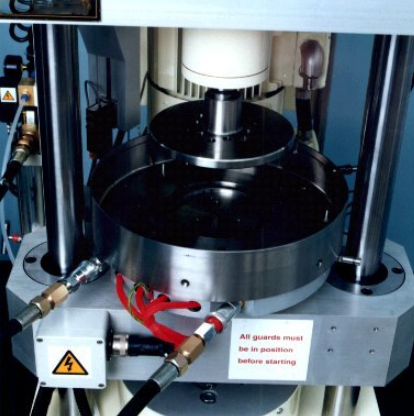
The Automatic Clutch Friction Tester is mainly applicable to the following industries:
Automotive Manufacturing Industry:
Used to test the friction performance of key transmission system components such as wet clutches, dry clutches, synchronizers, and torque converters, ensuring smooth gear shifting and long-term durability.
Transmission and Drivetrain R&D:
Supports compatibility verification between friction materials and transmission fluids (ATF) used in automatic transmissions such as AT, CVT, and DCT systems, in compliance with international standards such as JASO and ASTM.
Friction Material and Clutch Disc Manufacturers:
Used to evaluate the friction stability and anti-shudder performance of different friction material formulations under varying temperatures, pressures, and rotational speeds.
Lubricant and Transmission Fluid Development:
Applied to test the anti-shudder friction characteristics of automatic transmission fluids, helping optimize their performance during wet clutch engagement.
Construction Machinery and Heavy-Duty Vehicle Industry:
Suitable for reliability testing of high-torque clutches used in mining equipment, agricultural machinery, and construction vehicles.
Research Institutes and University Laboratories:
Used for fundamental tribology research and to support the development of new materials and innovative clutch system structures.
The Automated Clutch Friction Test Machine is a specialized testing system designed to simulate and evaluate the friction performance, durability, and thermal load characteristics of automotive or industrial clutches under actual operating conditions. Its main functions and applications are as follows:
Clutch Friction Performance Testing:
Measures key parameters such as static friction torque and dynamic/sliding friction torque.
Thermal Load and Thermal Shock Testing:
Simulates temperature rise and thermal stress under high-load or frequent engagement conditions to evaluate the thermal fade resistance of friction materials.
Wear Performance Testing:
Quantifies the wear rate of friction linings through repeated engagement cycles, helping evaluate service life and durability.
Multi-Specification Compatibility:
Compatible with clutch discs from manufacturers in North America, Europe, Japan, and other regions, with a maximum outer diameter of up to 286 mm (11.25 inches).
Automated Control System:
Supports programmable rotational speed (up to 3.000 rpm), loading force (low load: 50–1.000 N; high load: 250–10.000 N), and temperature range (40–200°C), enabling standardized and repeatable testing.
Compliance with International Standards:
Some models comply with industry standards such as JASO and other internationally recognized testing specifications.
Product Development:
Used to validate the performance of new clutch materials, structural designs, and manufacturing processes.
Quality Control:
Performs consistency inspections on clutch assemblies during production before product release.
Failure Analysis:
Simulates extreme operating conditions to identify the root causes of thermal failure, slipping, abnormal wear, and other clutch-related issues.
Standards Compliance Testing:
Ensures products meet national and international friction performance and safety standards.
The Automated Clutch Friction Test Machine is widely used by automotive component manufacturers, research institutes, and third-party testing laboratories, making it one of the essential tools for clutch system development, validation, and certification.
Core Technical Features
High-Precision Dynamic Loading and Speed Control
The system can accurately simulate clutch engagement, slipping, and lock-up processes. It supports a wide rotational speed adjustment range from 0–6000 rpm and allows programmable acceleration curves to reproduce speed variations during actual gear shifting conditions.
Wide-Range and Highly Stable Temperature Control System
Equipped with a high-precision temperature control unit, the typical operating temperature range is 20°C–180°C (some models can reach 40–200°C). This ensures stable oil temperature and satisfies the temperature-sensitive testing requirements of ATF friction performance evaluation.
Multi-Channel Real-Time Data Acquisition
Integrated with sensors for torque, rotational speed, oil pressure, temperature, and vibration acceleration, with a sampling frequency exceeding 10 kHz. Combined with signal processing technologies such as FFT analysis, the system can detect weak shudder signals and quantitatively evaluate “Shudder Intensity.”
Standardized and Customizable Testing Procedures
Supports automatic testing according to international or enterprise standards such as JASO, ASTM, and GM specifications. Some systems adopt a modular design, enabling adaptation to different transmission types such as AT, CVT, and DCT through replacement of friction pairs.
Large Specimen Compatibility and Multi-Purpose Expansion
Capable of testing clutch discs with a maximum diameter of 286 mm (11.25 inches). With customized adapters, the system can also test limited-slip differentials, synchronizers, and torque converters.
Automation and Data Management
Controlled by PLC or industrial computer systems, enabling fully automated test cycles and reducing human error. The equipment features power-failure protection, data storage, and automatic report generation functions, significantly improving testing repeatability and comparability.
1. Preparation Before Startup
Ensure that the equipment power supply (typically 220V/50Hz) is properly connected, and check whether all cables, sensors, and braking systems are functioning normally. Clean and install the clutch disc, pressure plate, and other test specimens, ensuring that the fixtures are firmly aligned and secured. Verify that all safety protection devices are in place and confirm that no personnel are present within the testing area.
2. System Initialization
Start the control computer and testing software. Perform zero-point calibration for the load sensor, torque sensor, displacement sensor, and other measurement components. Set the testing parameters, including:
Axial load (such as 10 N–1000 N)
Spindle rotational speed (such as 1–3000 r/min)
Test duration or cycle count
Friction coefficient calculation mode (for example, based on the ratio of torque to normal force)
3. Automatic Test Operation
Start the drive motor and gradually accelerate to the preset rotational speed. Apply the preset normal force through the servo or hydraulic loading system. During the test, the system automatically records:
Friction torque
Real-time friction coefficient
Temperature variation (if equipped with a temperature control module)
Wear amount (measured through displacement sensors or optical measurement systems)
During operation, the operator monitors the testing data remotely from the control room to avoid manual intervention near rotating components.
4. Test Completion and Data Processing
After the test is completed, the system automatically unloads and stops operation. Remove the test specimen manually using knurled screws or an electric lowering mechanism. Save the original testing data, which can typically be exported in formats such as Excel or Word. The system then generates a test report containing:
Friction characteristic curves
Average friction coefficient
Wear rate
Other related performance data
Manual braking of the rotating shaft is strictly prohibited.
Traditional braking methods pose serious safety risks. Modern systems use disc braking systems to achieve remote-controlled stopping.
Lockout/Tagout (LOTO) procedures must be performed before testing, especially when working near engine test benches or power systems.
For high-temperature testing (>100°C), operators must wear appropriate protective equipment and ensure that the temperature control system is functioning properly.
The importance of the Automated Clutch Friction Test Machine is reflected in its critical role in clutch product development, quality control, performance validation, and industry standardization. Through high-precision and automated testing, the equipment ensures the reliability, safety, and durability of clutches under complex operating conditions, making it a core tool for the technological advancement and industrial upgrading of automotive transmission systems.
1. Improving Testing Safety and Data Accuracy
Traditional clutch drag friction testing relies on manual operation of rotating shafts, which not only presents mechanical injury risks but also makes test results highly dependent on operator technique. The Automated Clutch Friction Test Machine adopts fully computerized and remote-controlled operation, allowing technicians to conduct tests without entering the testing chamber, fundamentally eliminating safety hazards. At the same time, the system integrates precision measurement units such as axial load sensors to ensure the objectivity and repeatability of key data acquisition, including friction torque, thereby providing reliable support for research and development.
2. Accelerating Product Development and Performance Optimization
During the development stage, the equipment enables precise testing of clutch friction materials in their original manufactured condition. By simulating actual operating conditions involving speed, load, and temperature variations, engineers can efficiently verify the friction characteristics, wear life, and thermal stability of new materials and innovative designs. This significantly shortens product development cycles and accelerates the optimization and iteration of high-performance clutches, such as high torque-density clutches used in hybrid powertrain systems.
3. Ensuring Production Quality and Consistency
In manufacturing and quality control processes, the Automated Clutch Friction Test Machine serves as a key device for batch sampling inspection and process verification. It strictly evaluates whether each batch of clutch friction assemblies meets design specifications, enabling early detection of defects caused by material fluctuations or process deviations, such as unstable friction coefficients or excessive wear. This ensures the consistency of delivered products and helps prevent large-scale quality risks caused by component fatigue failure.
4. Supporting Industry Standardization and Advanced Applications
The equipment is generally designed in compliance with major industry testing standards such as JASO, making it an essential requirement for product certification and market access. Its highly customizable capability also allows it to adapt to clutch specifications from North America, Europe, Japan, and other regions. In addition, it can be expanded for testing other transmission components such as limited-slip differentials and synchronizers, promoting the global standardization of testing methods and the upgrading of quality systems.
5. Reducing Life-Cycle Costs and Risks
Through comprehensive pre-market testing, potential friction performance and durability issues can be identified and resolved before product launch, effectively reducing the high after-sales costs associated with premature clutch failure, vehicle recalls, and warranty claims. Furthermore, optimization based on testing data helps avoid excessive material usage, achieving the best balance between cost and performance.
In conclusion, the Automated Clutch Friction Test Machine is not only a core testing device for ensuring the performance and safety of clutch systems, but also a fundamental technological support tool driving automotive transmission systems toward greater efficiency, reliability, and intelligence.We sincerely welcome you to leave a message or contact us directly for more detailed product information and professional technical support.


