A Rolling Bearing Tribometer is a precision experimental instrument specifically designed to test and evaluate the tribological performance of rolling bearings and their related materials. This equipment can accurately simulate the various complex operating conditions experienced by bearings during actual operation, including but not limited to contact stress, operating speed, and different lubrication states, as well as other critical environmental conditions. Through such simulations, researchers are able to systematically evaluate a series of crucial performance parameters, such as variations in the coefficient of friction, material wear behavior and mechanisms, bearing fatigue life prediction, and the actual effectiveness of different lubricants or lubrication schemes. This article aims to provide a detailed introduction to this equipment from multiple perspectives, with the hope of offering valuable assistance to readers.
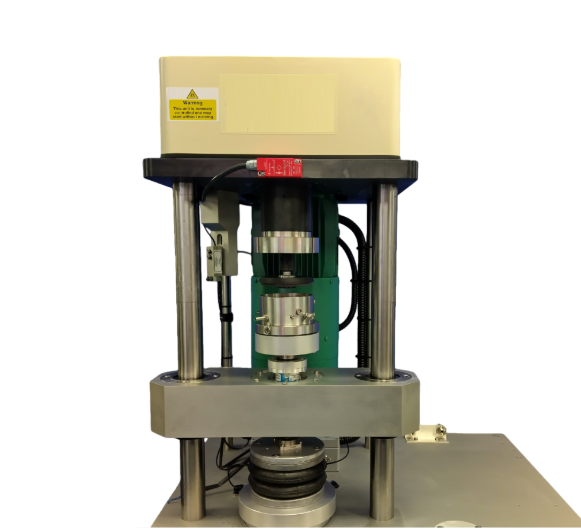
A Rolling Bearing Tribometer is a specialized testing device used to evaluate the tribological performance of rolling bearings and related materials under simulated real-world operating conditions. Its main functions and applications are as follows:
Life Testing:
By applying cyclic loading to simulate long-term operating conditions, the equipment evaluates the fatigue life and reliability of bearings.
Performance Evaluation:
Under different load, speed, and temperature conditions, the tester measures key performance indicators such as load-carrying capacity, wear resistance, and thermal stability.
Failure Simulation:
The system can intentionally simulate typical bearing faults involving the inner ring, outer ring, rolling elements, and cage, enabling the study of failure mechanisms and life prediction models.
Friction and Wear Measurement:
It provides real-time monitoring of critical parameters including friction force, coefficient of friction, wear amount, and temperature rise.
Multi-Condition Simulation:
The equipment supports the simulation of special operating environments such as oil lubrication, grease lubrication, electrical current carrying (shaft current), high temperature, and vacuum conditions.
Product Development and Optimization:
It serves as a performance verification platform for new bearing materials, coatings, and lubricants.
Quality Control:
Used as a quality inspection tool during manufacturing processes to ensure bearings meet design and performance standards.
Academic Research:
It supports universities and research institutions in conducting fundamental studies on tribology, wear mechanisms, and life prediction.
Industry Standard Development:
The testing data generated by this equipment can be used in the formulation of national or industry standards. For example, such equipment is widely used by national bearing quality supervision and inspection centers.
Automotive Industry
Rolling Bearing Tribometers are used to evaluate the friction and wear performance of engine components, transmission bearings, wheel hubs, and other automotive parts under lubricated conditions. They support the development of advanced materials and lubricants.
Aerospace Industry
These instruments are used to test bearing and lubricant performance under vacuum or extreme temperature environments. For example, rolling bearing tribometers developed by NASA are widely applied in spacecraft bearing system research.
Metallurgy and Heavy Industry
The equipment can simulate harsh operating conditions such as high temperature, heavy loads, and dusty environments to verify the suitability of high-temperature-resistant bearings used in steel plants, rolling mills, and continuous casting machines.
Energy Equipment Industry
Rolling Bearing Tribometers are applied in the testing of bearing life and lubrication reliability for thermal energy equipment such as boilers, kilns, and wind turbine gearboxes.
Precision Manufacturing and Semiconductor Industry
They are suitable for high-cleanliness and vacuum environments, including vacuum pumps and precision transmission components, where low-wear and non-volatile lubrication solutions must be validated.
New Energy and Electric Vehicle Industry
The equipment is used to study the performance of motor bearings under electrical erosion and heavy-load conditions, as well as to evaluate lubrication additives such as graphene composite materials.
Railway Transportation Industry
Rolling Bearing Tribometers support non-destructive testing and tribological performance evaluation of railway rollers and wheelset bearings, meeting standards and quality requirements such as IATF standards.
Other Application Fields
In addition, this type of equipment is widely used in lubricant research and development, including bio-based oils and nano-additives, material science research involving alloys and ceramic bearings, as well as university and scientific research in tribology and surface engineering.
A Rolling Bearing Tribometer is a specialized device designed to simulate the friction, wear, lubrication, and contact mechanics behavior of rolling bearings under actual operating conditions. Its technical features can be summarized as follows:
Core Functions and Testing Capabilities
Simulation of Real Rolling Contact Conditions
The equipment can reproduce the contact behavior of rolling bearings under complex operating conditions, including pure rolling, rolling combined with sliding (with different slide-roll ratios), variable loads, and variable rotational speeds.
Adaptability to Multiple Testing Environments
It supports testing in environments ranging from room temperature to high temperatures (up to 150°C for some models), as well as vacuum and controlled atmosphere conditions, making it suitable for aerospace, deep-sea, and other extreme environment research applications.
Evaluation Under Multiple Lubrication States
The tribometer can perform tribological performance tests under various lubrication modes, including dry friction, boundary lubrication, mixed lubrication, and hydrodynamic lubrication.
Key Structural and Control Characteristics
High-Precision Motion Control
The system is typically driven by servo motors, offering a rotational speed range of approximately 0.1–6000 rpm. The Slide-Roll Ratio (SRR) can generally be adjusted within a range of 0–200%.
Accurate Load Application
The maximum applied load can reach up to 21 kN, while the contact pressure may reach as high as 2.0 GPa based on calculations using Hertz Contact Theory.
Real-Time Multi-Parameter Monitoring
The equipment simultaneously acquires key parameters such as normal force, friction torque, temperature, displacement, and rotational speed. Some systems are also equipped with infrared temperature sensors or K-type thermocouples for real-time temperature rise monitoring.
Non-Contact Sealing Design
Labyrinth sealing and similar non-contact sealing structures are adopted to eliminate friction interference caused by shaft seals, ensuring that the test data accurately reflects only the friction characteristics of the rolling contact pair.
Core Operating Procedures
Specimen Installation and Alignment
Install the bearing or simulated rolling contact pair (such as roller-on-disc or ball-on-ring configurations) onto the testing platform according to the equipment requirements.
Proper shaft alignment must be ensured to avoid introducing additional eccentric loads or vibration. Some advanced systems are equipped with automatic alignment or fine adjustment mechanisms.
Environment and Lubrication Setup
Select either dry friction or lubricated testing conditions according to the test requirements.
If lubricants are used, connect the lubrication supply system and ensure appropriate filtration accuracy.
Set the oil bath temperature as required, typically ranging from ambient temperature up to 150°C.
Loading System Configuration
Apply axial or radial loads through a servo-controlled pneumatic or electric loading system. For example, certain models such as RCF 4 can apply loads up to 21 kN.
The load can be controlled in a closed-loop system through force sensor feedback to ensure loading stability and accuracy.
Motion Parameter Settings
Set the spindle rotational speed according to the testing requirements. For example, RCF 2 can reach speeds up to 3.600 rpm, while TE 73 can operate at speeds up to 6.000 rpm.
For rolling-sliding combined operating conditions, the Slide-Roll Ratio (SRR) can also be configured, typically within a range of 0–200%.
Test Start and Data Acquisition
Use the host computer and dedicated control software to start the preset testing sequence.
During the test, the system continuously acquires and stores critical parameters, including:
Friction torque (measured by torque sensors)
Contact temperature (measured using K-type thermocouples)
Vibration signals (supported by some advanced systems)
Load, rotational speed, displacement, and other operational parameters
Test Termination and Post-Processing
The test can be terminated automatically based on preset criteria such as testing time, number of cycles, or failure conditions (for example, pitting occurrence or sudden changes in the coefficient of friction).
The collected data is typically exported in .csv or .tsv formats for further analysis, including fatigue life evaluation and friction characteristic curve plotting.
The importance of a Rolling Bearing Tribometer is mainly reflected in its critical role in bearing performance evaluation, lubrication technology research, and failure prediction. The details are explained below.
Simulation of Real Operating Conditions
A Rolling Bearing Tribometer can simulate alternating loads, rotational speeds, lubrication states, and environmental factors such as dust and temperature under laboratory conditions. This enables accurate evaluation of bearing friction, wear, and fatigue characteristics under real operating environments.
Lubricant Performance Verification
The equipment is widely used to evaluate the performance of new lubricants, including bio-based oils and nano-additive lubricants, under rolling contact conditions, providing essential data support for environmentally friendly lubrication solutions.
For example, researchers have used this equipment to compare the anti-friction and anti-wear performance of FMWCNT-enhanced palm oil with conventional mineral oils.
Early Failure Mechanism Research
By simultaneously monitoring parameters such as vibration, surface morphology, and coefficient of friction, the tribometer can identify early failure characteristics including pitting, spalling, and cracking. This helps establish predictive maintenance strategies based on condition monitoring technologies.
Supporting Intelligent Maintenance and Design Optimization
The test data generated by the equipment can be used to calibrate simulation models such as finite element analysis (FEA) and can also be integrated into AI databases for optimizing bearing structural design. This contributes to improved equipment reliability, longer service life, and reduced unplanned downtime.
Promoting Green Manufacturing
Under the global “dual carbon” and sustainability initiatives, Rolling Bearing Tribometers help verify the engineering applicability of biodegradable lubricants, thereby promoting the transition of industrial equipment toward environmentally friendly manufacturing practices.
In short, the Rolling Bearing Tribometer serves as a core tool and bridge connecting the four critical areas of material science, lubrication technology, structural design, and equipment maintenance. It plays an irreplaceable role in improving the overall reliability of rotating machinery, extending equipment service life, and significantly reducing total life-cycle costs.We sincerely welcome experts, industry professionals, and potential partners to contact us for more detailed technical information, application cases, and customized solutions, and to explore future cooperation opportunities together.


