The Twist Compression Tester is a high-precision experimental device specifically designed to investigate the mechanical behavior and tribological properties of materials under complex loading conditions. It is capable of accurately simulating and applying both axial compressive loads and torsional loads simultaneously to a test specimen, thereby enabling a comprehensive evaluation of the material’s overall mechanical response, deformation mechanisms, failure modes, and related friction and wear characteristics under combined stress states. This equipment provides a critical experimental tool for the field of materials science and engineering.This article will provide a systematic introduction from key aspects such as testing principles, operational procedures, and typical application scenarios. The aim is to offer comprehensive technical reference and practical guidance for professionals in related industries, quality inspection personnel, and product R&D engineers, helping them gain a deeper understanding of and efficiently utilize this important testing instrument.
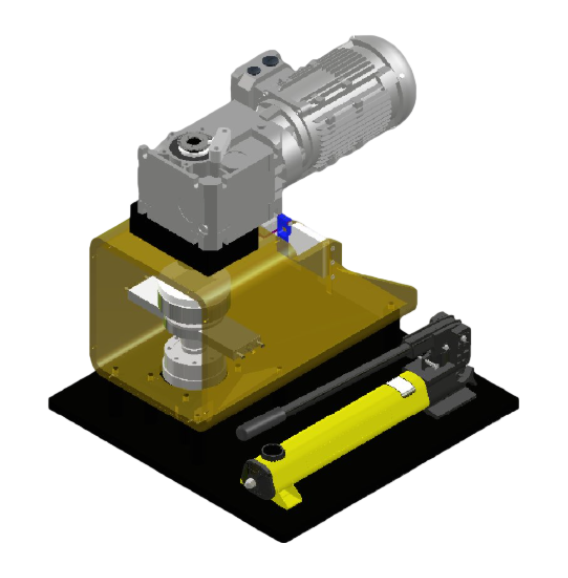
The Twist Compression Tester is a specialized device used to study the mechanical behavior of materials under combined axial compression and torsional loading conditions. It is particularly suitable for research in tribology, plastic deformation, and surface performance of materials.
High-rigidity structural design:
Ensures system stability under high loads and minimizes deformation interference during testing.
Precise alignment system:
Guarantees coaxial alignment between the specimen (such as an aluminum ring) and the upper and lower compression platens, preventing eccentric loading.
Independent axial loading system:
Allows precise application and control of compressive force.
Rotational drive mechanism:
Enables controlled rotation of the upper platen or specimen while under compression, achieving the “twist” motion required for testing.
High-precision torque measurement sensor:
Accurately measures the friction-induced torsional moment generated during testing.
Compatibility with multiple fixtures and lubrication conditions:
Supports different specimen geometries and testing under various lubrication environments.
Reproduces actual industrial contact scenarios such as metal forming, bearings, and gear systems where compression and sliding friction occur simultaneously.
Friction characteristic measurement:
Evaluates lubrication performance by recording friction torque under different lubricant conditions.
Study of plastic deformation behavior:
Combined with finite element analysis (FEM), it helps reveal material deformation mechanisms under complex stress states.
Multiple testing modes supported:
Pure compression
Combined twist-compression testing
Dynamic tests with variable speed, angle, and load combinations
The equipment is widely used in materials science, tribology, metal processing, and packaging materials research, especially in scenarios where material performance under combined stress conditions needs to be evaluated.
The Twist Compression Tester is primarily used to evaluate the anti-wear and extreme pressure performance of lubricants under boundary lubrication conditions, especially in simulating severe working conditions such as high contact pressure, low-speed sliding, or micro-motion.
Metal Processing and Forming Industry
Used to evaluate lubricant performance in processes such as stamping, forging, and deep drawing. It helps assess the lubricant’s ability to prevent galling, scuffing, and surface damage during metal forming operations.
Lubricant R&D and Quality Control
Widely applied in the evaluation of extreme pressure (EP) additives such as ZDDP and chlorinated paraffin in mineral oils or bio-based oils (e.g., soybean oil). It provides critical data for formulation optimization and performance verification.
Green / Bio-based Lubricant Development
Used to compare the performance of different base oils (such as vegetable oils versus mineral oils) under identical test conditions, supporting the development and application of environmentally friendly lubricants.
Tribology and Surface Engineering Research
Applied in studying lubricant film formation mechanisms, wear mechanisms, and the interactions between additives and substrate materials.
Overall Application Characteristics
The equipment typically uses a steel-on-steel contact configuration and operates under contact pressures up to 200 MPa. Lubrication performance is evaluated by measuring failure time or analyzing surface wear morphology. Therefore, it is particularly suitable for industries involving high-load and boundary lubrication conditions.
The Twist Compression Tester is a specialized instrument used to study the mechanical behavior of materials under the simultaneous action of torsional and axial compressive loads. Its testing principle combines both torsion and compression testing, making it particularly suitable for evaluating material performance under complex stress states such as friction behavior, plastic deformation, and interfacial bonding characteristics.
Composite Loading Mechanism
During testing, the specimen (such as a metal ring or nonwoven fabric sample) is subjected to both axial compressive force and torsional moment. For example, in an aluminum-on-steel friction test, the specimen is fixed on the lower platen while the upper platen applies a controlled compressive load and simultaneously rotates. This setup simulates real-world service conditions involving combined stress environments.
High-precision Parameter Measurement
Using high-precision torque and axial force sensors, the system records in real time the relationship between torque and twist angle (M–φ curve) as well as force and displacement (F–δ curve). These curves provide essential data for analyzing mechanical response and deformation behavior.
Friction and Deformation Analysis
The device is widely used to investigate interfacial friction behavior. By controlling lubrication conditions, loading rate, and compression level, it enables quantitative analysis of plastic flow, frictional heat generation, and surface wear under coupled torsion-compression loading.
Typical Application Scenarios
Study of friction characteristics in metal forming processes such as forging and extrusion
Evaluation of fiber bonding strength and linting behavior in nonwoven materials through simulated twist-compression actions
Assessment of elastic recovery and residual deformation in packaging materials, gaskets, and sealing components under complex stress conditions
In summary, the Twist Compression Tester simulates real-world multi-axial mechanical environments by precisely controlling and measuring the coupling of axial compression and torsion. This allows for the acquisition of key mechanical parameters of materials under complex stress states, providing valuable insight for materials research and engineering applications.
The Twist Compression Tester is a precision mechanical testing instrument designed for accurately evaluating the combined torsional and compressive performance of packaging components, bottle caps, and various materials. The standard operating procedure generally includes the following key steps:
1. Preparation and Calibration
Before testing, carefully inspect the main components of the tester to ensure it has been properly calibrated and is in good working condition.
Connect the digital display unit or data acquisition system correctly to ensure the equipment is fully ready for operation.
2. Specimen Installation and Fixation
According to the shape and size of the specimen (e.g., a champagne cork), select the appropriate fixture and securely mount the sample onto the testing platform.
This step is critical: ensure that the specimen’s central axis is precisely aligned with the loading axis of the tester to avoid lateral forces that could affect test accuracy.
3. Application of Axial Compressive Load
Lower the sensor or compression head smoothly until it makes full contact with the specimen surface.
Then apply a predefined constant compressive force according to test requirements. This step simulates the real service or sealing condition of the product under compression, establishing a realistic test environment for the subsequent torsion phase.
4. Torsional Performance Testing
While maintaining the constant compressive load, activate the torsion function of the device.
The rotating component (such as a torque driver) applies rotational motion to the specimen, measuring opening or tightening torque (e.g., bottle cap removal torque or cork insertion/removal torque), simulating real manual operation conditions.
5. Data Acquisition and Recording
During the test, integrated sensors and the digital system continuously monitor and record changes in torque and rotational angle.
The system ultimately captures the peak torque value during the process, typically expressed in N·m (Newton-meters) or lbf·in (pound-force inch). This peak value is a key indicator for evaluating torque performance, sealing reliability, and overall product quality control.
The importance of the Twist Compression Tester is primarily reflected in its unique role in materials tribology, lubricant performance evaluation, and metal forming process research. Its core value can be summarized as follows:
Precise Simulation of Boundary Lubrication Conditions
This device can simulate friction and wear behavior under poor lubrication conditions at high contact pressures (up to approximately 200 MPa). It is particularly suitable for evaluating the effectiveness of extreme pressure (EP) additives in lubricating oils under severe operating environments.
Quantification of Friction Torque and Failure Time
By precisely controlling axial load while applying torsional motion, the tester can accurately measure friction torque, lubricant film failure time, and wear characteristics. These results provide critical data for optimizing lubricant formulations.
Support for Green Lubricant Development
Research has shown that the Twist Compression Tester can validate the performance of bio-based lubricants (such as soybean oil), reducing reliance on traditional EP additives and supporting the development of environmentally friendly lubrication technologies.
Correlation with Industrial Standard Test Methods
The results obtained from this tester show good correlation with conventional methods such as the four-ball test. It can therefore serve as a complementary or alternative evaluation method in fields such as metal forming and gear transmission.
Improvement of Metal Forming Process Reliability
In studies involving plastic deformation processes such as aluminum ring upsetting, the equipment helps analyze the influence of lubricants on friction behavior, thereby optimizing die design and processing parameters.
In summary, the Twist Compression Tester is far more than a device for evaluating lubricant performance. It is an essential tool in lubricant research and development, providing reliable data support for new material formulation and validation.At the same time, in the field of metal processing, it helps screen and verify efficient lubrication solutions, thereby improving processing efficiency, reducing energy consumption and tool wear, and playing an irreplaceable role in ensuring dimensional accuracy, surface quality, and overall product reliability.We sincerely welcome industry professionals and interested users to leave messages with questions or requirements. We also look forward to your direct contact so that we can provide more detailed technical documentation, application cases, or customized solution support based on your specific application needs.


