The Gas Jet Erosion Rig is an experimental device used to study the erosion resistance of materials under the action of high-speed gas flow or particle-laden gas streams. It operates by ejecting high-pressure gas (often carrying solid particles) through a nozzle at high velocity onto the surface of the test specimen, thereby simulating erosion conditions encountered in real-world operating environments. This allows evaluation of material wear behavior, coating durability, and structural design optimization. This article will introduce the equipment from several aspects, providing readers with a useful reference.
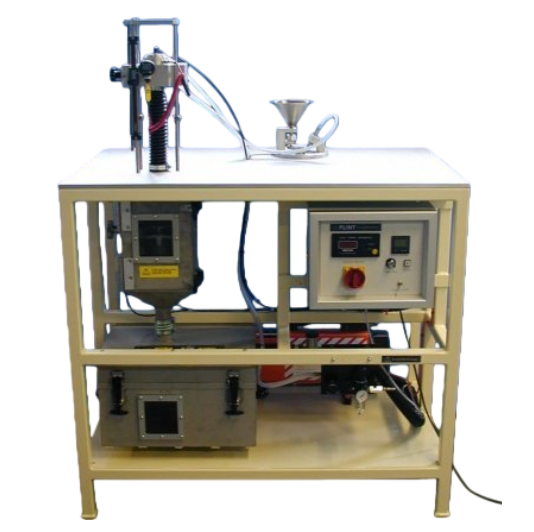
The Gas Jet Erosion Rig is an experimental system used to investigate the erosion resistance of materials under high-speed particle-laden gas flow. Its core function is to simulate erosion and wear conditions experienced in real operating environments, enabling evaluation of material durability and optimization of erosion-resistant designs.
Generation of High-Speed Particle-Laden Gas Flow:
Compressed gas (such as air or nitrogen) is used to accelerate solid particles (e.g., quartz sand, silicon carbide, aluminum oxide) to high velocities, forming a high-speed jet stream.
Precise Control of Impact Parameters:
The system allows adjustment of gas pressure, particle type, particle size, concentration, and impact angle to study their effects on erosion behavior.
Measurement of Particle Velocity and Erosion Rate:
Optical, photoelectric, or mechanical methods (such as the dual-disc method) are used to determine particle impact velocity and correlate it with material wear loss.
Standardized Testing:
Some systems comply with international standards (such as ASTM), enabling material comparison and quality evaluation under consistent test conditions.
Material Selection and Development:
Used to evaluate the erosion resistance of metals, ceramics, and polymer matrix composites (PMCs), especially for high-performance components in aerospace engines and gas turbines.
Coating Performance Evaluation:
Assesses the adhesion strength and durability of erosion-resistant coatings under simulated service conditions.
Fundamental Mechanism Research:
Investigates how factors such as particle velocity, impact angle, and material hardness influence erosion behavior, and helps establish erosion rate–velocity models.
Service Life Evaluation of Industrial Equipment:
Simulates wear in pipelines, valves, and nozzles used in oil and gas transportation, powder processing, and other industrial systems.
The Gas Jet Erosion Rig is an experimental device used to simulate the erosion behavior of material surfaces under high-speed, particle-laden gas flow. It is widely applied in industries where material durability must be evaluated under high-temperature, high-velocity, and particle-rich environments. The main application sectors include:
Aerospace Industry:
Used to test the erosion resistance of thermal barrier coatings (TBCs), turbine blades, and other engine components exposed to dust, ash, or particulate-laden airflow.
Power Generation (Especially Coal-Fired Plants):
Applied to study wear mechanisms of economizer tubes and heating surfaces in boilers under fly ash impingement, helping extend equipment service life.
Gas Turbine and Power Engineering:
Evaluates erosive wear behavior of metallic materials and coatings operating in high-temperature gas flow environments.
Materials Research and Surface Engineering:
Used in the development and validation of advanced wear-resistant coatings and additive-manufactured alloys for erosion resistance performance.
Oil and Chemical Industry (Selective Applications):
Although not a primary application, it is used in studies involving wear of pipelines, valves, and components exposed to high-pressure gas–solid two-phase flow.
In summary, the device uses a gas-blast system to accelerate hard particles onto specimen surfaces, effectively simulating real service erosion conditions. It is therefore particularly suitable for studying material degradation in high-temperature, high-speed, and dry particle erosion environments.
The Gas Jet Erosion Rig is an advanced experimental system used to simulate material erosion behavior under high-temperature, high-speed, particle-laden gas environments. It plays a critical role in evaluating the durability of thermal barrier coatings (TBCs) and gas turbine components. Its main technical features are as follows:
High-Enthalpy Environment Simulation:
The system is typically integrated into a high-enthalpy wind tunnel and can generate plasma gas flows with total enthalpy up to 20 MJ/kg, effectively simulating thermal conditions in real gas turbine combustion environments.
Multi-Field Coupled Loading Capability:
It enables simultaneous application of thermal cycling gradients and erosive particle flows, achieving thermo-mechanical-chemical multi-field coupling that closely replicates real service conditions.
High-Precision Sample Control:
Provides accurate control of specimen angle, velocity, temperature, and exposure time, ensuring high repeatability and reliability of erosion test data.
Material Compatibility:
Suitable for testing a wide range of advanced materials, including thermal barrier coatings such as yttria-stabilized zirconia (YSZ) and nickel-based high-temperature alloys commonly used in aerospace engines.
Integrated System Design:
Functions as a subsystem within wind tunnel facilities and is compatible with in-situ diagnostic tools such as infrared thermography, high-speed imaging, and stress–strain monitoring systems, enabling real-time observation of material response.
The Gas Jet Erosion Rig is an experimental system designed to simulate high-temperature, high-velocity, particle-laden gas environments for evaluating the erosion resistance of materials such as thermal barrier coatings (TBCs) and metallic alloys. Its core working principle is based on high-speed gas jets carrying solid particles that impact the specimen surface, replicating erosion conditions found in gas turbines and aerospace engines.
High-Speed Gas Flow Generation:
High-pressure gas (such as compressed air or combustion products) is accelerated through a nozzle to form a high-speed flow, typically supersonic or high subsonic.
Particle Injection and Acceleration:
Standardized solid particles (e.g., aluminum oxide, silicon dioxide) are introduced into the gas stream. These particles are entrained and accelerated by the flow, gaining high kinetic energy.
Erosive Impact on Specimen:
The particle-laden high-speed jet is directed onto a fixed specimen mounted in a holder, simulating erosion damage under real service conditions.
Coupled Environmental Simulation (Advanced Systems):
In advanced configurations, thermal cycling (via electrical or plasma heating) is combined with particle erosion to achieve thermo-mechanical coupled testing, closely replicating actual engine operating conditions.
This type of system is widely used to evaluate the durability of thermal barrier coatings (TBCs), nickel-based superalloys, and other advanced materials under high-enthalpy gas flow conditions, such as those found in aerospace engines and ground-based gas turbines.
1. Equipment Preparation
Ensure a stable gas supply (such as compressed air, nitrogen, or helium) and connect it securely to the nozzle inlet.
Mount the test specimen onto an adjustable fixture, ensuring the surface is positioned at the required impact angle (typically 15°–90° relative to the jet direction).
If solid particle erosion or gas–solid flow testing is required, prepare and uniformly disperse the abrasive particles (e.g., fly ash or other erodents) in advance.
2. Parameter Setup
Set the gas flow conditions by adjusting the control valves; nozzle exit velocities can typically reach tens of meters per second.
Define the exposure time, commonly ranging from 10 to 60 minutes depending on material erosion resistance.
For multiphase flow tests (gas–solid systems), configure:
Particle concentration
Particle size distribution (e.g., 50–250 μm)
Feed rate (e.g., 2–8 g/min)
3. Operation and Monitoring
Start the gas supply to generate a high-speed jet through the nozzle, directing it onto the specimen surface.
Continuously monitor key parameters such as temperature, pressure, and flow rate during the test.
Ensure operators do not stand in the direct jet path and that all safety shields are properly in place.
4. Post-Test Handling
Shut down the gas supply and carefully remove the specimen.
Evaluate erosion damage using mass loss measurement (weighing method) or surface characterization techniques such as SEM (Scanning Electron Microscopy).
Clean the nozzle and test chamber thoroughly to prevent residue from affecting subsequent experiments.
5. Safety and Precautions
Safety first: High-velocity gas jets may cause particle rebound or equipment hazards. Operators must wear protective goggles and operate behind safety shields.
Repeatability: At least two repeated tests under identical conditions are recommended to ensure data reliability.
Calibration: Regularly calibrate flow meters, pressure gauges, and angle adjustment mechanisms to maintain measurement accuracy.
The importance of the Gas Jet Erosion Rig is primarily reflected in its critical role in evaluating material erosion resistance under extreme service conditions. It is especially relevant for aerospace engines, gas turbines, and power boilers where high-temperature, high-velocity particle-laden flows are present.
1. Realistic Simulation of Service Environments
The system can reproduce combined conditions of high temperature, high-speed gas flow, and solid particles (such as fly ash and dust). This makes it highly effective for studying the erosion behavior of materials such as thermal barrier coatings (TBCs), alloys, and carbon steels under near-real operating conditions.
2. Supporting Material Development and Selection
Through systematic testing of different materials—such as yttria-stabilized zirconia (YSZ), Mar-M247 superalloy, and SA210 GrA1 carbon steel—under controlled variables (velocity, impact angle, particle size, and concentration), the rig provides essential data for engineering material selection and optimization.
3. Revealing Erosion Mechanisms
Combined with analytical methods such as scanning electron microscopy (SEM) and mechanical property testing, the system helps identify erosion mechanisms including micro-cutting, plastic deformation, and fatigue cracking. It is particularly useful in distinguishing the erosion behavior differences between ductile and brittle materials.
4. Optimizing Structural Design
The results can directly support the design optimization of erosion-prone components such as boiler economizer tubes and gas turbine blades. This helps extend service life and reduce unplanned downtime and maintenance costs.
5. Advancing Coating Technologies
It is widely used to evaluate the durability of advanced erosion-resistant coatings, such as SANRES/SANPRES coatings for polymer matrix composites, under realistic propulsion or industrial operating conditions.
In summary, the Gas Jet Erosion Rig is a highly specialized experimental platform that plays a vital role in materials science and engineering. It serves not only as a key tool for evaluating material durability and reliability under severe erosion conditions, but also as an indispensable system for failure mechanism analysis, lifetime prediction, and the development of engineering protection strategies.We sincerely welcome researchers, engineers, and industry professionals to leave comments or inquiries. We also look forward to providing more detailed technical information, tailored solutions, and professional support based on your specific application needs.


