The Belt Abrasion Tester is a high-precision instrument specifically designed to evaluate the wear resistance of materials under sliding friction or impact conditions. It is particularly suitable for testing the protective performance of leather and fabrics used in motorcycle riding apparel.By simulating real-world friction environments, the device can accurately measure the durability of materials under continuous abrasion, ensuring that riding gear can still provide effective protection under extreme conditions.This article will present a systematic overview of the equipment, covering key aspects such as its working principles, detailed operating procedures, and typical application scenarios. The aim is to provide comprehensive technical reference and practical guidance for industry professionals, quality inspection personnel, and product development engineers, helping them gain a deeper understanding of this essential testing instrument and apply it effectively in practice.
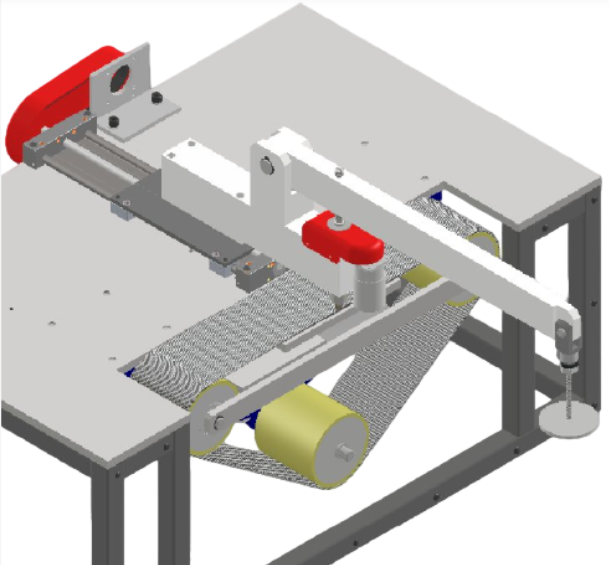
The Belt Abrasion Tester is a specialized instrument used to evaluate the abrasion resistance of materials. Its core function is to quantify material durability by simulating real-world wear conditions.
Simulation of Real Friction Environments
A rotating rubber wheel or abrasive belt (sandpaper belt) is used to apply friction to the specimen surface, replicating the wear conditions materials experience in actual use.
Wide Material Compatibility
Suitable for testing a variety of materials, including leather, plastics, rubber, coatings, textiles, flooring materials, and automotive interior components.
Precise Parameter Control
Load is typically applied using standard weights such as 250 g, 500 g, and 1000 g;
Turntable speed commonly ranges from 60 to 90 RPM;
Test cycles can be preset (e.g., 1000 revolutions) or run until specimen failure.
Automatic Measurement and Recording
Some advanced models are equipped with electronic counters, dust collection systems, and weighing modules, enabling automatic calculation of mass loss or abrasion index.
Compliance with International Standards
Meets testing requirements of standards such as ASTM, ISO, DIN, and GB/T, ensuring comparability and reliability of test results.
Product Development
Evaluates the wear resistance of new materials or processes, supporting formulation optimization and structural design improvements.
Quality Control
Performs sampling inspections of finished products on production lines to ensure compliance with industry standards.
Failure Analysis
Identifies causes of premature wear during product use, providing a basis for design and material improvements.
Wide Range of Industry Applications
Footwear and Luggage: Testing abrasion resistance of uppers and suitcase fabrics;
Home Furnishings and Building Materials: Assessing durability of flooring, carpets, and furniture surfaces;
Automotive Industry: Durability testing of interior materials and sealing components;
Paints and Coatings: Evaluating wear resistance of paint films, varnishes, and plated layers;
Electronics and Packaging: Testing surface abrasion resistance of plastic housings, labels, and packaging materials.
The Belt Abrasion Tester is a specialized instrument that evaluates material wear resistance by applying friction through a high-speed moving abrasive belt. Its applications are mainly concentrated in the following industries:
Protective Equipment Manufacturing
Particularly used for testing the abrasion resistance of leather and textiles in personal protective equipment (PPE), such as motorcycle riding suits, gloves, and protective gear. It simulates friction and wear conditions encountered during accidents.
Automotive Industry
Used to assess the durability of interior materials, including seat fabrics, seat belts, and door panel coverings, ensuring long-term performance under repeated use.
Textile and Apparel Industry
Evaluates the abrasion resistance of functional fabrics (such as cut-resistant and tear-resistant materials), supporting compliance with international standards like ASTM and EN.
Material R&D and Quality Control
Widely applied in the development of rubber, plastics, coatings, and composite materials for accelerated wear testing and service life prediction.
Safety and Occupational Protection Testing
Used for abrasion resistance certification of industrial gloves, cut-resistant clothing, and other protective products to meet standards such as EN.
The Belt Abrasion Tester is a specialized instrument designed to evaluate the abrasion resistance of materials, particularly flexible materials such as leather, textiles, and rubber. It is widely used in testing applications for motorcycle protective clothing, industrial protective materials, and related products. Its main technical features are as follows:
Core Technical Features
High-Speed Friction Simulation
Driven by an electric motor, the system uses an ալuminum oxide abrasive belt (e.g., OP 60), with operating speeds up to 8 m/s. This enables simulation of high-speed friction scenarios, such as sliding abrasion during traffic accidents.
Dynamic Impact and Sliding Separation Testing
By adjusting the drop height of the specimen (typically 1.0 m and 50 mm), the system can separately simulate the initial impact phase and the subsequent continuous sliding wear phase.
Precise Load Control
A static normal force of 49 N (equivalent to approximately 25 kPa pressure) is applied between the specimen and the abrasive belt, ensuring standardized and repeatable test conditions.
Automatic Timing and End-Point Determination
Using front and rear trigger wires in combination with an electronic timer, the system accurately measures the time required for the specimen to be worn through, typically within a range of 0.2 to 10 seconds.
Standardized Evaluation Benchmark
Abrasion performance is often assessed by comparison with the wear-through time of standard cotton canvas, enabling consistent and comparable results across tests.
Rational Structural Design
The specimen is mounted at the end of a rigid pendulum arm, with the pivot located 2 meters from the specimen center, ensuring stable contact with the abrasive belt during free fall. The belt is supported by a 25 mm thick steel plate to prevent deformation and ensure test accuracy.
The Belt Abrasion Tester is used to evaluate the abrasion resistance of materials such as leather, textiles, plastics, and coatings. Its core principle is to use sandpaper or an abrasive belt as the friction medium, applying constant load and speed to the specimen. Abrasion resistance is then assessed by measuring mass loss, wear time, or surface changes.
1. Specimen Preparation
Cut standard-sized specimens (typically circular samples with a diameter of 50 mm or an area of 100 cm²).
Clean the specimen surface (e.g., using acetone or alcohol to remove grease).
Condition the specimens in a controlled environment (e.g., 23±2°C, 50±5% RH) for at least 24 hours.
2. Installation of Abrasive Medium
Fix standard aluminum oxide sandpaper (such as OP 60) or a dedicated abrasive belt onto the rotating drum or belt system.
Ensure the abrasive medium is properly tensioned and free of wrinkles.
3. Specimen Mounting
Secure the specimen onto the pendulum arm or fixture, ensuring good contact between the test surface and the abrasive medium.
Adjust the position so that the center of friction aligns with the center of the abrasive surface.
4. Test Parameter Settings
Load Setting: Apply the specified pressure (commonly 25 kPa or 49 N).
Friction Distance or Cycles: Set the belt travel length (e.g., 40 meters) or number of rotations.
Speed: Typically 40 rpm or a belt linear speed of 8 m/s (depending on the machine model).
5. Start the Test
Turn on the power supply, dust collection system (if available), and motor.
Release the pendulum arm to bring the specimen into contact with the abrasive surface.
The test runs automatically and stops when the preset cycles or time are reached, or it can be stopped manually.
6. Result Evaluation
Remove the specimen and weigh it using a precision balance (accuracy of 0.1 mg or 1 mg).
Calculate mass loss (mg) or wear volume (based on material density).
Some standards define the endpoint as the time (in seconds) when a hole appears in the specimen.
Calibration: Regularly calibrate the equipment using standard reference materials (e.g., rubber or samples with known abrasion resistance).
Abrasive Replacement: Replace sandpaper after each batch of tests to avoid cross-contamination. New abrasive surfaces may require pre-conditioning (e.g., running 50 cycles in advance for certain systems like Taber).
Environmental Control: Temperature and humidity can significantly affect test results for materials such as leather and textiles; testing should be conducted under controlled conditions.
Safety: Do not touch moving parts during operation; always wear protective goggles.
The importance of the Belt Abrasion Tester is primarily reflected in its critical role in evaluating material wear resistance, ensuring product safety, and extending service life.
1. Realistic Simulation of Extreme Wear Conditions
The device uses a high-speed (e.g., 8 m/s) aluminum oxide abrasive belt to simulate wear processes under high-friction or impact conditions. It is especially suitable for safety-critical applications such as motorcycle protective clothing and personal protective equipment.
It can distinguish between the initial impact phase and the continuous sliding phase by setting different drop heights (e.g., 1.0 m and 50 mm), accurately replicating wear mechanisms encountered in real accidents.
2. Supporting Safety Standards and Regulatory Compliance
In the field of personal protective equipment (PPE), the Belt Abrasion Tester is a key tool for evaluating the abrasion resistance of protective garments (such as leather and high-strength textiles), directly affecting whether products meet safety certification requirements.
Test results—such as time to hole formation and material loss—provide quantitative data for material selection, design optimization, and quality control, helping reduce the risk of injury caused by material failure.
3. Wide Applicability and Industry Value
The tester is suitable for comparative evaluation of abrasion resistance in various materials, including leather, textiles, synthetic materials, and composites.
In industries such as footwear, conveyor belts, and industrial protective clothing, it is used to predict product lifespan under harsh operating conditions, helping manufacturers improve reliability.
4. Standardization and Repeatability
Test parameters—such as normal force (49 N), contact pressure (25 kPa), and abrasive type (OP 60)—are aligned with international standards (e.g., ASTM references), ensuring comparability and repeatability of results.
With electronic timing and trigger systems, the tester enables high-precision determination of wear endpoints (e.g., perforation time accurate to 0.1 seconds).
In summary, the Belt Abrasion Tester is a precise and efficient testing instrument that plays an indispensable role in material research and quality control. More importantly, it serves as a key technical safeguard for ensuring user safety in high-risk environments.We sincerely welcome your inquiries regarding technical specifications, testing standards, operating procedures, or any related questions. Feel free to leave a message or contact us directly for detailed product information, demonstration videos, or customized solutions to help you fully understand the system’s capabilities and advantages.


