The Multi-Axis Tribometer is a precision testing instrument used to simulate and measure the friction, wear, and lubrication performance of materials under multiple directions or degrees of freedom. It overcomes the limitations of traditional single-axis or dual-axis tribometers, enabling a more realistic reproduction of surface interactions under complex working conditions.This article provides a systematic introduction from key perspectives, including the instrument’s functions and applications, detailed operating procedures, and typical application scenarios. It aims to offer comprehensive technical reference and practical guidance for industry professionals, quality inspection personnel, and product development engineers, helping users gain a deeper understanding of and effectively utilize this important testing tool.
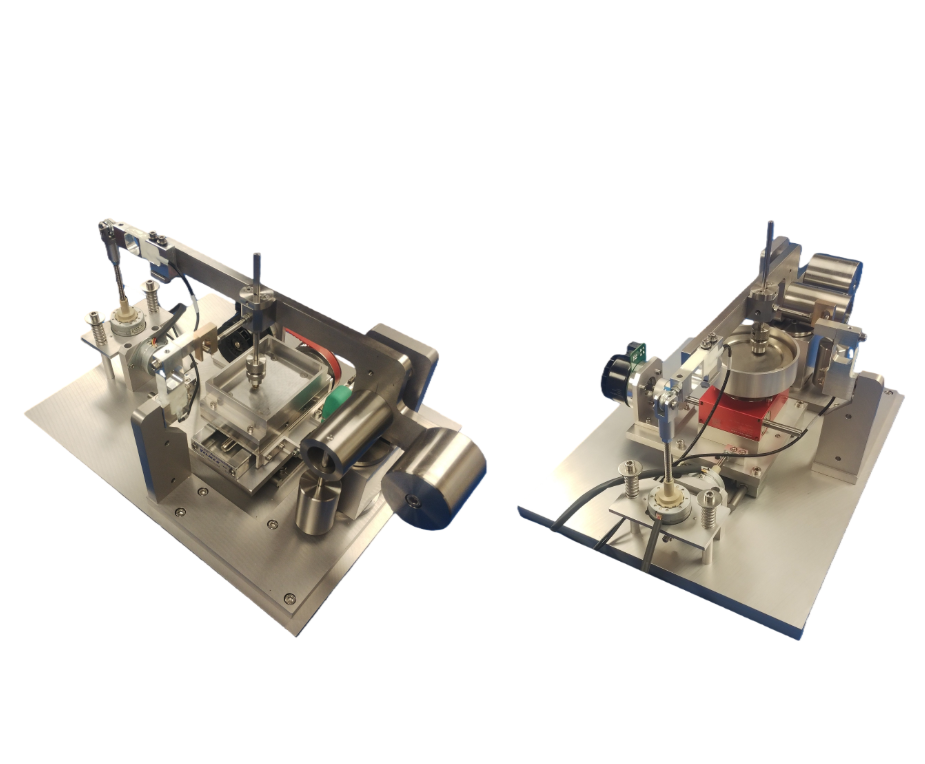
The Multi-Axis Tribometer is a precision instrument designed to simulate complex, multi-degree-of-freedom contact motions. It is specifically used to evaluate the friction, wear, and lubrication performance of materials under multi-directional and multi-mode coupled mechanical conditions.
1. Multi-Degree-of-Freedom Motion Simulation
The system can simultaneously or independently control multiple motion modes, such as rotation, reciprocation, oscillation, and linear sliding. This enables more realistic reproduction of complex contact behaviors encountered in real working conditions.
2. High-Precision Sensing System
Equipped with high-sensitivity sensors for load, displacement, temperature, and friction force, allowing real-time monitoring of key parameters such as coefficient of friction and wear rate.
3. Multi-Environment Adaptability
Some models support testing under extreme conditions, including high temperature, low temperature, vacuum, corrosive atmospheres, or lubricated environments, meeting advanced material evaluation requirements.
4. Multi-Station Parallel Testing
Certain manufacturers (e.g., multi-station systems from AMT) offer platforms capable of testing multiple samples simultaneously, significantly improving testing efficiency and data comparability.
1. Automotive Industry
Used to evaluate wear resistance and lubrication performance of components such as engine piston rings, transmission gears, and braking systems under coupled vibration and sliding conditions.
2. Aerospace Industry
Assesses the reliability of surface coatings on critical components like turbine blades, landing gear, and actuators under extreme temperatures and high loads.
3. Biomedical Field
Simulates multi-directional motion of artificial joints (e.g., hip joints) to study wear behavior and optimize the lifespan of implant materials.
4. Materials Research and Development
Accelerates performance validation of new coatings, composite materials, and solid lubricants, supporting standardized testing in accordance with ASTM and ISO.
5. Energy Equipment
Applied in tribological studies of long-life, high-reliability components such as wind turbine bearings and hydraulic seals.
The Multi-Axis Tribometer is a precision instrument capable of simulating complex multi-directional motion conditions to evaluate friction, wear, and lubrication performance of materials. It is widely used in industries where high requirements are placed on surface performance and the reliability of moving components.
Automotive Industry
Used to test friction and wear behavior of engine components (such as piston rings, valves, and crankshafts), transmission gears, clutch plates, and brake linings under realistic operating conditions. It also supports optimization of lubricant formulations and improvement of fuel efficiency.
Aerospace Industry
Evaluates the durability of critical components such as turbine blades, landing gear, and actuators under extreme temperatures, high vacuum, or corrosive environments. It also supports low-temperature lubrication research (e.g., liquid hydrogen systems) and coating development.
High-End Manufacturing and Industrial Automation
Although multi-axis force sensors are more commonly used in robotics, multi-axis tribometers provide essential tribological data for precision moving components such as micro-bearings and guide rails, supporting high-reliability mechanical design.
Medical Devices and Biomedical Implants
Simulates wear behavior of artificial joints (such as hip and knee joints) under multi-directional micro-motion (fretting) conditions, ensuring long-term biocompatibility and safety of implants.
Consumer Electronics
Used to test wear resistance and low-friction coating performance of small moving parts such as smartphone buttons, camera modules, and hinges, improving product lifespan and user experience.
Energy and Heavy Industry
Applied in tribological research of large-scale equipment such as wind turbine bearings and drilling equipment seals, supporting designs focused on long service life and low maintenance.
The Multi-Axis Tribometer is a precision instrument designed to study tribological behavior under complex motion conditions. Its technical strengths are mainly reflected in multi-degree-of-freedom motion control, multi-dimensional force/torque sensing, environmental simulation, and high-precision measurement capabilities. The key features are as follows:
Multi-Axis Coupling and Complex Motion Simulation
The system supports coordinated motion across multiple degrees of freedom, including rotation, reciprocation, and oscillation. It can simulate compound frictional motions (such as rolling + sliding + spinning), overcoming the limitations of traditional single-axis or dual-axis tribometers.
Multi-Dimensional Force and Torque Measurement
Integrated with multi-axis sensors (such as six-axis force sensors), the system can independently measure normal force, tangential friction force, and three torque components. It also features effective cross-talk suppression between channels (typically <1%).
High Sensitivity and Micro/Nano-Scale Measurement
Capable of measuring friction forces in the micro-Newton (μN) to milli-Newton (mN) range, making it suitable for tribological studies of MEMS devices, biomaterials, and other micro- or nano-scale systems.
Modular Design and Multi-Functional Integration
The modular architecture allows integration with in-situ observation systems such as optical microscopes or atomic force microscopes, as well as environmental control units (temperature, humidity, vacuum), enabling synchronized analysis of friction, wear, and surface morphology.
High Throughput and Automation
Some commercial models (e.g., multi-station systems from AMT) support parallel testing across multiple stations, allowing dozens to hundreds of tests per day. This is particularly valuable for industrial quality control and material screening.
Wide Environmental Adaptability
The system can operate under extreme conditions, including high temperatures (up to 500°C), cryogenic temperatures (as low as 4 K), and vacuum environments, meeting the needs of advanced fields such as aerospace and cryo-tribology.
1. Pre-Startup Preparation
Check that the equipment is placed stably. Confirm that the power supply (typically 220V AC), air supply (if required, pressure ≥ 0.7 MPa), and cooling system (e.g., circulating water) are properly connected.
Ensure that the limit switches, sensors, and actuators of all motion axes (X/Y/Z/R, etc.) are secure and free of debris or obstruction.
Wear appropriate personal protective equipment (PPE), such as gloves and safety goggles, especially during high-temperature or high-load testing.
2. Power-On and Self-Check
Turn on the main power supply and start the control system (e.g., PLC or PC-based software).
Wait for the system self-check to complete (typically within 30 seconds). Confirm that all axes return to their home positions, no alarms are present, and indicator lights function normally.
Log into the operating software (use default or authorized credentials if access control is enabled).
3. Sample Installation and Fixture Setup
Install the upper and lower specimens according to relevant standards (e.g., ASTM, ISO), ensuring they are securely fixed and properly aligned.
Select the appropriate tribo-pair configuration (e.g., ball-on-disk, pin-on-ring), and adjust the sample position to fall within the effective measurement range of the sensors.
For multi-axis systems, calibrate the initial coordinates of each axis (e.g., via laser alignment or mechanical limits).
4. Parameter Setting
Set key test parameters via the software interface:
Load: 10 mN – 100 N (depending on the model)
Sliding speed: 0.01 – 1000 mm/s
Motion trajectory: Define multi-axis paths (e.g., circular, elliptical, reciprocating combinations)
Test duration / cycles: From seconds to several hours
Environmental conditions: Temperature (room temperature up to 500°C), humidity (if equipped with an environmental chamber)
5. Test Execution
Confirm all samples are properly mounted and safety enclosures are closed.
Click “Start” or “Run” to initiate the test. The system will automatically perform preloading → motion execution → data acquisition.
Do not touch moving parts during the test. Monitor real-time data such as coefficient of friction, temperature, and displacement through the software interface.
6. Result Evaluation and Shutdown
After completion, the system will automatically stop and save data (typically exportable as CSV or Excel files).
Evaluate results (pass/fail) based on predefined criteria (e.g., wear depth < 50 μm).
Shutdown procedure:
Turn off motion axis power
Switch off the main power supply
Disconnect air supply and cooling system
Clean the test platform and fixtures
Following this procedure ensures safe operation, accurate data acquisition, and reliable evaluation of material tribological performance under complex multi-axis conditions.
The importance of the Multi-Axis Tribometer lies in its ability to simulate complex, real-world multi-dimensional mechanical interactions, thereby providing high-precision and highly reliable data for material development, quality control, and engineering optimization. Its significance can be summarized as follows:
Realistic Multi-Degree-of-Freedom Simulation
Traditional tribological equipment (such as pin-on-disk testers) typically allows only unidirectional sliding or rotational motion. In contrast, a multi-axis tribometer can simultaneously control normal force, tangential force, rotation, oscillation, and even micro-displacements. This enables more accurate simulation of real mechanical contact scenarios such as gear meshing, joint articulation, and reciprocating seals.
High Throughput and Improved Efficiency
Multi-station designs (such as systems offering 3 to 100 stations) enable parallel testing of multiple samples, significantly reducing R&D time. For example, a 3-station pin-on-disk system can test three samples simultaneously under identical conditions, improving both efficiency and data comparability.
Adaptability to Extreme Environments
Some models support high-temperature environments (up to 500°C) or low-temperature conditions (for cryo-tribology studies), making them suitable for evaluating lubrication and wear performance in extreme applications such as aerospace, deep-space exploration, and liquid hydrogen fuel systems.
High-Precision Micro/Nano-Scale Measurement
In MEMS and precision manufacturing fields, multi-axis tribometers equipped with multi-axis force sensors can independently separate friction components such as sliding, rolling, and spinning. With resolutions as high as 100 µN (friction force) and 1 mN (normal force), they are ideal for the development of micro-bearings, micro-gears, and other miniature components.
Enabling Critical Cross-Industry Applications
Biomedical field: Used for long-term wear simulation of implants such as hip joint prostheses (e.g., hip simulators), ensuring safety and durability
Automotive and energy sectors: Evaluates friction characteristics of engine piston rings and transmission lubricants, contributing to improved fuel efficiency
Electronics manufacturing: Assesses durability of flexible displays, buttons, and camera modules, extending the lifespan of consumer electronic products
In summary, the Multi-Axis Tribometer plays a vital role in modern tribology and engineering by bridging laboratory testing and real-world applications. Its advanced capabilities make it an essential tool for ensuring product reliability, accelerating innovation, and supporting high-performance material development.We sincerely welcome any inquiries regarding technical specifications, testing standards, operating procedures, or related questions. You are also invited to contact us directly for detailed product information, demonstration videos, or customized solutions tailored to your specific requirements.


