A Precision Rotary Vacuum Tribometer is a high-precision experimental device specifically designed to test and characterize the tribological properties of material surfaces under strictly controlled vacuum or specific atmospheric conditions. The core function of this equipment is to simulate and study the frictional behavior, wear mechanisms, and lubrication performance of materials under rotating contact and relative motion conditions, thereby providing critical experimental data for fields such as materials science, surface engineering, and mechanical reliability. This article aims to systematically introduce the principles, applications, and significance of this device. The following key sections will provide a detailed explanation in order to offer researchers and engineers in related fields a comprehensive understanding and practical reference.
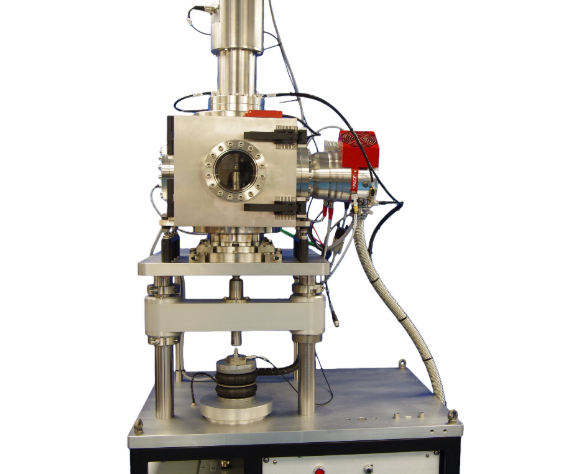
The Precision Rotary Vacuum Tribometer is an advanced testing instrument used to precisely measure the friction, wear, and lubrication behavior of materials or coatings under vacuum conditions. Its core function is to simulate sliding contact conditions in extreme or controllable environments such as high vacuum and low or high temperatures. It is widely applied in cutting-edge fields including aerospace, micro-electro-mechanical systems (MEMS), and cryogenic engineering.
High-precision friction coefficient measurement:
The device can detect extremely small variations in friction force under very low loads, making it suitable for micro- and nanoscale research.
Vacuum environment testing:
It supports high, medium, and low vacuum conditions, effectively eliminating oxidation or gas interference, and is ideal for simulating space or vacuum chamber environments.
Wide temperature range capability:
Some models (e.g., TE91) can operate within a temperature range from -50°C to +1000°C, meeting the requirements of extreme thermal conditions.
Multi-mode motion control:
It supports various motion modes, including continuous rotation, angular oscillation, and linear oscillation.
In-situ monitoring capability:
Advanced models can simultaneously collect multiple parameters such as friction force, wear volume, acoustic emission, and electrical contact resistance.
Modular design:
The system allows easy replacement of sample fixtures, loading mechanisms, and environmental chambers, and can be configured for different test standards such as pin-on-disc and block-on-ring.
Aerospace material evaluation:
Used to test the wear resistance of satellite bearings, rocket engine seals, and other components under vacuum and thermal cycling conditions.
MEMS/NEMS device development:
Used to study stiction, friction, and wear mechanisms in microscale structures.
Solid lubrication material development:
Evaluates the lubrication stability of coatings such as MoS₂, DLC, and PTFE under low-temperature or vacuum environments.
Fundamental tribology research in extreme environments:
Investigates the effects of temperature, vacuum level, and load on interfacial friction behavior.
Industrial lubricant validation:
Tests the performance degradation of lubricating oils and greases in oxygen-free environments.
The high-precision rotary vacuum tribometer is an instrument capable of performing precise tribological testing under vacuum and extreme temperature conditions. It is used to study the performance of materials under low-friction, high-wear-resistance, and extreme environments.
Aerospace:
Used to test the lubrication and wear behavior of key components such as rocket engine bearings and seals under low-temperature (e.g., liquid hydrogen/liquid oxygen environments) or vacuum conditions.
Semiconductor manufacturing:
Supports wafer-level micro-tribology testing for surface property analysis of microstructures in chip fabrication.
High-end equipment manufacturing:
Used for reliability evaluation of precision components such as bearings and gears under vacuum or high-temperature environments.
New energy and cryogenic engineering:
Includes mechanical components used in superconducting devices and liquefied natural gas (LNG) transportation systems operating in ultra-low temperature environments below 120 K.
Research institutes and university laboratories:
Used for fundamental tribology research and performance evaluation of solid lubricants such as MoS₂, DLC, and PTFE.
The Precision Rotary Vacuum Tribometer is a high-precision instrument used to investigate the tribological behavior of material surfaces (such as friction, wear, and lubrication performance) under vacuum and controlled temperature conditions. Its fundamental testing principle is to measure frictional force and wear characteristics at the contact interface under controlled motion modes, applied loads, and environmental parameters.
Basic Testing Principle
Vacuum environment control:
The test chamber can be evacuated to high or ultra-high vacuum conditions (as low as 1.3 × 10⁻⁶ Pa), simulating oxygen-free, low-pressure environments such as outer space or semiconductor manufacturing processes. This eliminates oxidation and gas interference that could affect frictional behavior.
Rotational motion mode:
High-precision rotational mechanisms such as ball-on-disc or disc-on-disc configurations are used to achieve continuous rotation or angular oscillation. This simulates the motion states of rotating mechanical components such as bearings and gears.
Multi-mode loading system:
The system supports both manual and automatic loading, capable of applying normal forces ranging from micro-Newtons to several hundred Newtons. High-resolution sensors, such as capacitive or piezoelectric transducers, are used to monitor contact force and friction force in real time.
In-situ measurement technology:
The coefficient of friction is calculated as the ratio of frictional force to normal load. Wear volume can be monitored online using optical microscopy, laser profilometry, or electrical contact resistance methods. Some systems also integrate acoustic emission and electrochemical impedance techniques to capture dynamic behaviors such as micro-motion and stick-slip effects.
Wide temperature adaptability:
The system can operate over a broad temperature range from -150°C to +1000°C, making it suitable for evaluating materials used in extreme environments, such as aerospace components.
Environment inspection:
Confirm that the vacuum system, cooling water system, power supply, and gas source (if applicable) are operating normally.
Chamber evacuation:
Start the vacuum pump and evacuate the test chamber to the required vacuum level (typically ≤ 10⁻⁵ Pa).
Temperature stabilization:
If high-temperature or low-temperature testing is required, activate the heating/cooling system and stabilize the chamber at the target temperature (ranging from -150°C to +1000°C).
Sample Installation
Sample cleaning:
Clean the specimens using ultrasonic cleaning methods (e.g., acetone or ethanol) to remove surface oils and particulate contaminants.
Specimen mounting:
Install the ball or pin specimen into the upper fixture, and fix the disc specimen on the lower rotating stage, ensuring proper coaxial alignment.
Load system calibration:
Apply the desired normal load using weights or an electro-mechanical loading system, covering a range from micro-Newton to several hundred Newtons.
Motion mode selection:
Select rotary mode and set the rotational speed (e.g., 1–1000 rpm).
Test duration configuration:
Set the total test time or number of revolutions according to experimental requirements.
Start testing:
After confirming all parameters, initiate the test. Real-time monitoring of friction force, wear behavior, and other relevant data is performed during operation.
Stop operation:
After completion, stop rotation first and then release the applied load.
Vacuum release:
Slowly introduce inert gas (such as argon) to bring the chamber back to atmospheric pressure.
Sample analysis:
Remove the specimens and analyze wear morphology and volume loss using optical microscopy or surface profilometry.
No-load operation is strictly prohibited:
Samples must always be installed and a minimum load applied before operation.
Avoid contamination:
Wear clean gloves when handling samples to prevent oil or particle contamination that could affect test results.
Regular calibration:
It is recommended to calibrate load sensors and displacement measurement systems quarterly to ensure measurement accuracy.
Cleaning of surfaces and key components:
Regularly use a lint-free cloth or soft brush to remove dust and oil contaminants from the instrument surface, rotor contact areas, sensors, and optical systems. Avoid strong organic solvents such as acetone; instead, use high-purity ethanol (≥99.5%) or dedicated cleaning agents.
Environmental requirements:
Temperature: Maintain between 15–30°C
Humidity: Control within 30%–60%
Dust and vibration control: Place the instrument on a clean, vibration-free workbench and keep it away from strong electromagnetic interference sources.
Rotational system and bearings:
Check whether the rotating shaft operates smoothly without abnormal noise.
Depending on usage frequency, apply a small amount of specialized lubricant (e.g., microscope-grade silicone oil) to bearings or moving parts every 1–3 months. Avoid excessive lubrication, which may attract dust accumulation.
Vacuum system:
Regularly inspect vacuum pump oil level and cleanliness, and replace it when necessary.
Ensure sealing rings are free from aging or leakage, and that the vacuum level meets the required specifications.
Sensors and measurement units:
Verify that friction force and normal load sensor connections are secure.
Keep optical encoders or grating scales clean to prevent signal distortion caused by contamination.
Calibration schedule:
Conduct a full system calibration at least once per year, including rotational accuracy, load accuracy, and friction force measurement.
Perform interim verification every quarter using standard samples to ensure repeatability of results.
Data recording:
Establish a maintenance log to document calibration results, fault handling records, and component replacement history for traceability and trend analysis.
Consumables and spare parts management:
Maintain a replacement schedule for consumable components such as seals, bearings, and sensors, based on manufacturer recommendations, and plan replacements in advance.
Professional servicing:
It is recommended to contact the equipment manufacturer or authorized service provider every 6–12 months for comprehensive maintenance, including internal cleaning, recalibration, and software updates.
The Precision Rotary Vacuum Tribometer is a high-end instrument capable of precisely measuring tribological properties of materials—such as friction coefficient, wear rate, and lubrication behavior—under vacuum conditions. Its importance is reflected in the following key aspects:
1. Enabling Material Performance Research in Extreme Environments
The device can operate under high or ultra-high vacuum conditions, simulating environments such as outer space, semiconductor manufacturing, and nuclear systems where oxygen is absent or pressure is extremely low. Some models (e.g., Plint TE91) support a wide temperature range from -50°C to +1000°C, making them suitable for both cryogenic and high-temperature tribological studies.
2. Supporting MEMS and Precision Device Development
It provides accurate micro-scale data on friction, adhesion, and wear for MEMS/NEMS applications. This helps improve the reliability of critical micro-components such as miniature bearings, gears, and sensors. It also enables in-situ measurement of parameters such as friction force, electrical conductivity, and acoustic emission, allowing multi-physics coupling analysis.
3. Advancing Solid Lubrication Technologies
The system is widely used to evaluate the performance of solid lubricants such as MoS₂, DLC, and PTFE under vacuum or low-temperature conditions—environments where conventional liquid lubricants fail. It also supports material validation for critical aerospace applications, including rocket engine seals and cryogenic fuel systems used by organizations such as NASA and other space agencies.
4. Improving Reliability of Biomedical Materials
By performing rotary or reciprocating wear tests in simulated physiological environments, the instrument helps optimize the service life of biomedical materials such as artificial joints and dental materials. Combined with SEM and laser microscopy, it allows detailed analysis of wear mechanisms and supports material formulation design and performance prediction.
5. Meeting Industrial Standards and High Reproducibility Requirements
With high-resolution load control, low-drift sensors, and automated data acquisition systems, the instrument ensures highly repeatable results that comply with international standards such as ISO and DIN. In addition, it supports multiple test modes, including pin-on-disc, ball-on-ring, and oscillating configurations, making it adaptable to a wide range of applications.
In summary, the Precision Rotary Vacuum Tribometer plays a vital role in modern materials science and engineering applications. Its significance is undeniable, and it continues to attract growing attention in advanced research and industrial fields. We sincerely welcome inquiries and feedback, and are always available to provide further information regarding technical specifications, application scenarios, and related services.


