The Multi-Purpose Sand/Rotary Wheel Abrasion Tester is a key laboratory instrument in the field of materials science and engineering, used for systematically evaluating the surface wear resistance of various materials.This instrument accurately simulates low-stress abrasive wear processes under dry sand or rubber wheel contact conditions, enabling precise reproduction of progressive wear behavior experienced by materials in real-world applications such as mechanical transmission, floor friction, or industrial grinding processes.Its core function is to provide quantitative analysis and comparative testing of material abrasion resistance, offering essential experimental data for material selection, performance optimization, and service life prediction.This article introduces the equipment from the following aspects, and we hope it will be helpful. You are also welcome to leave comments or make inquiries.
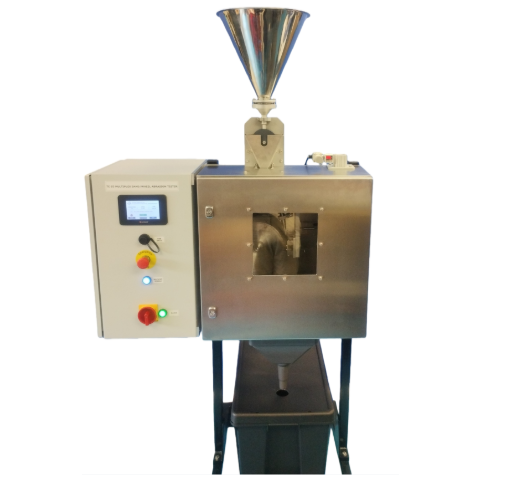
The Multiplex Sand/Wheel Abrasion Tester is used to evaluate the wear resistance of materials under dry sand or wet sand conditions. It is primarily compliant with the following international and industry standards:
ASTM Standards
ASTM G65 – Standard Test Method for Measuring Abrasion Using the Dry Sand/Rubber Wheel Apparatus
This standard evaluates the resistance of materials to low-stress abrasive wear in a dry sand environment.
ASTM G105 – Standard Test Method for Conducting Wet Sand/Rubber Wheel Abrasion Tests
This method is used to assess the scratch and abrasion performance of materials under wet sand conditions, with wear resistance typically determined by volumetric loss.
ISO / DIN / GB/T Standards
Some multifunctional abrasion and wear testers are designed to comply with ISO, DIN, and GB/T standards. This indicates that Multiplex-type equipment may also be compatible with these standard systems, particularly in applications involving automotive materials, coatings, and material research and development.
Additional Notes
Multiplex Sand/Wheel Abrasion Testers provided by manufacturers such as Standard Group (Hong Kong) Limited and Shanghai Qianshi Instruments explicitly support ASTM G65 and ASTM G105 standards. They may also be extended for both dry and wet testing applications, offering broader versatility across different industries.
The Multiplex Sand/Wheel Abrasion Tester is a specialized instrument used to evaluate the wear resistance of materials under dry sand–rubber wheel abrasion conditions. It is widely applied in materials science, industrial manufacturing, and quality control.
Its main applications include the following:
Evaluation of Low-Stress Abrasive Wear Performance
It is particularly suitable for simulating low-stress abrasive wear conditions encountered in environments such as mining, petroleum extraction, and agricultural machinery, where materials are exposed to continuous particle abrasion.
Material Wear Resistance Ranking and Comparison
By controlling parameters such as load, sliding speed, and sand flow rate, the instrument enables comparative testing and ranking of different materials, including metals, plastics, coatings, and rubber, based on their wear resistance.
Study of Wear Mechanisms
It is used to analyze material behavior under three-body abrasive wear conditions, where loose abrasive particles (such as sand) are trapped between the test specimen and the rubber wheel.
Optimization of Material Formulations and Surface Treatments
In research and development, it is used to evaluate the abrasion resistance of modified materials, such as composites, cemented carbides, and heat-treated steels, helping to optimize formulations and surface treatment processes.
The Multiplex Sand/Wheel Abrasion Tester is typically equipped with multiple test stations to improve efficiency. It is widely used across the following industries:
Automotive Industry
Used to test the wear and scratch resistance of interior components (such as instrument panels and door panel coatings), exterior clear coats, and anti-stone-chip coatings on vehicle bodies. Testing is often conducted in accordance with standards such as SAE J400 and GMW14688.
Coatings and Paint Industry
Used to evaluate the abrasion resistance of floor coatings, ship deck coatings, industrial protective paints, and surface coatings on plastic components. Common standards include ASTM D968 and ISO 7784-2.
Plastics and Composite Materials Industry
Used to test the surface wear resistance of laminated panels, reinforced plastics, and transparent sheet materials such as polycarbonate, based on standards like ASTM D1242 and ISO 9352.
Rubber and Tire Industry
Used to evaluate the wear performance of rubber products, conveyor belts, and shoe soles, typically expressed through mass loss or volumetric wear loss.
Metals and Engineering Materials
Particularly suitable for evaluating materials under low-stress abrasive wear conditions, such as D2 tool steel, stainless steel, and aluminum alloys, used in mining, agricultural machinery, and related applications.
Aerospace and Defense Industry
Used for rigorous evaluation of sand erosion resistance in materials such as radar dome coatings, aircraft window materials, and camouflage coatings.
Materials R&D and Quality Control
Widely used in universities, research institutes, and industrial QC departments for new formulation development, process comparison, and inter-laboratory data validation.
This type of equipment typically complies with international standards such as ASTM G65 (Dry Sand/Rubber Wheel Abrasion Test). It supports testing under various loads (250 g–1000 g), sliding speeds (30–150 RPM), and abrasive flow conditions, and can be configured for both dry and wet abrasion environments.
The operation of this equipment follows ASTM G105 and is a typical three-body abrasive wear test system. The basic procedure is as follows:
1. Specimen Preparation
Cut the specimen to standard dimensions (typically circular or square, depending on equipment requirements).
Clean and dry the specimen thoroughly.
Weigh the initial mass (W₀) using a precision balance with 0.001 g resolution.
2. Equipment Setup
Install the rubber wheel (typically vulcanized rubber with hardness of 70–80 Shore A).
Evenly distribute standard abrasive sand (such as silica sand or quartz sand) onto the rubber wheel surface.
Add an appropriate amount of water to form a wet sand slurry, simulating wet sand/rubber wheel conditions.
Set test parameters such as:
Rotational speed: typically 60–72 RPM
Load: e.g., 250 g, 500 g, 750 g
Activate the vacuum dust removal system to keep the testing area clean.
3. Specimen Installation
Fix the specimen securely onto the rotating platform.
Ensure the surface is level and firmly mounted without looseness.
Adjust the rubber wheel so it contacts the specimen surface under the preset load.
4. Test Operation
Start the machine and record the initial rotation count or test time.
Periodically inspect the specimen condition (e.g., every 500 cycles).
Stop the test when the preset number of cycles is reached (e.g., 5000 cycles) or when significant wear or failure occurs.
5. Result Evaluation
Remove the specimen and clean it to eliminate residual abrasive particles and debris.
Dry and weigh the final mass (W₁).
Calculate mass loss:
ΔW = W₀ − W₁
Optional evaluation:
Observe wear morphology using a microscope
Perform surface rating according to standards such as ISO 11507 (e.g., fuzzing, discoloration, scratch depth)
6. Key Notes
Material applicability:
Suitable for metals, coatings, plastics, and composites. It is not suitable for highly elastic materials (e.g., rubber), as their large deformation violates the assumptions of low-stress abrasive wear testing.
Load and speed influence:
Wear loss generally increases with load. However, for some materials (e.g., D2 tool steel), excessive load may cause sand particle fracture, resulting in reduced wear.
Environmental control:
It is recommended to condition and test samples under controlled temperature and humidity (20 ± 2°C, 65 ± 2% RH).
Calibration and maintenance:
Regularly calibrate load weights and rotation speed. Clean the rubber wheel and rotating platform to prevent cross-contamination.
To effectively extend the service life of the Multiplex Sand/Wheel Abrasion Tester, ensure long-term stable operation, and maintain consistent performance, routine maintenance and periodic system inspection are essential. The following guidelines are provided for reference:
1. Cleaning System
After each test, thoroughly remove residual sand, dust, and debris inside the test chamber to prevent buildup that may affect subsequent test accuracy.
Clean the surface of the rubber wheel to avoid embedded hard particles that may cause scratching or uneven wear.
2. Rubber Wheel Inspection and Replacement
Regularly inspect the rubber wheel for cracks, hardening, deformation, or uneven wear.
Replace the rubber wheel according to the manufacturer’s recommended interval (typically every 50–100 tests) to ensure stable contact pressure and consistent sliding conditions.
3. Loading System Calibration
Periodically calibrate the loading mechanism (weights or servo loading system) to ensure accurate normal force application.
Check moving components such as loading rods and bearings to ensure proper lubrication and smooth operation without jamming.
4. Drive and Speed Control System
Verify the rotation speed of the rubber wheel (typically adjustable from 10–100 rpm) to ensure compliance with standards such as ASTM G65 or ISO 93.
Inspect motors, belts, and couplings for wear to prevent speed fluctuations that may affect test results.
5. Abrasive Sand Supply System
Ensure that abrasive materials (such as quartz sand or silicon carbide) meet particle size distribution requirements specified in standards such as ASTM C117.
Regularly sieve or replace sand to prevent fine particle accumulation that may reduce abrasive efficiency.
6. Sensors and Data Acquisition System
Calibrate the balance or sensor system used for measuring specimen mass loss.
Check temperature and humidity sensors (if equipped), especially when operating in high-humidity environments, to ensure accurate readings.
7. Lubrication and Anti-Rust Protection
Apply light lubricating oil regularly to moving parts such as guide rails, lead screws, and bearings.
When the equipment is not in use, cover it properly and/or use desiccants to prevent corrosion of metal components.
The importance of the Multiplex Sand/Wheel Abrasion Tester comes from its significant technical advantages and its critical role in material evaluation. Its key value is reflected in the following aspects:
Core Importance
Simulation of Real-World Conditions
The instrument simulates the abrasive wear behavior of loose particles such as sand and mining debris under low-stress conditions. It is widely used in industries such as automotive, mining, and construction machinery to replicate real service environments.
Standardized Testing
Testing is conducted in accordance with international standards such as ISO and SAE, ensuring that results are comparable, repeatable, and widely recognized across industries.
Guidance for Material Selection and Optimization
By quantifying wear loss (such as mass loss or volume loss), the tester provides a scientific basis for material development, performance comparison, and surface treatment optimization.
Technical Advantages
Highly Adjustable Parameters
The system allows precise control of key variables such as load, sliding speed, and abrasive type (e.g., quartz sand, alumina), enabling testing under different material conditions and application scenarios.
Good Repeatability of Results
Under strictly controlled experimental conditions, the equipment can effectively distinguish differences in wear resistance between materials. Even in overlapping performance ranges (e.g., comparison between NiHard-4 and high-chromium molybdenum cast iron), multiple test runs can clearly reveal performance trends.
Multi-Industry Standard Compliance
The system complies with testing requirements across multiple industries, including mining, automotive, and materials research and development.
In summary, the Multiplex Sand/Wheel Abrasion Tester is not only a critical instrument for evaluating material performance under low-stress abrasive wear conditions, but also an indispensable tool in product development, production quality control, and compliance verification with industry standards.We sincerely welcome any inquiries regarding the instrument’s functions, configurations, operating procedures, or technical details. We will carefully respond to each question and provide comprehensive professional support.


