The Continuous Load Surface Performance Measurement Instrument is a specialized device used to monitor and evaluate the performance changes of material or component surfaces in real time under continuous mechanical loading conditions. Such instruments are widely applied in materials science, mechanical engineering, and quality control, with a core focus on simulating the behavior of surfaces under long-term or cyclic loads, such as wear, deformation, crack initiation, and surface roughness evolution.
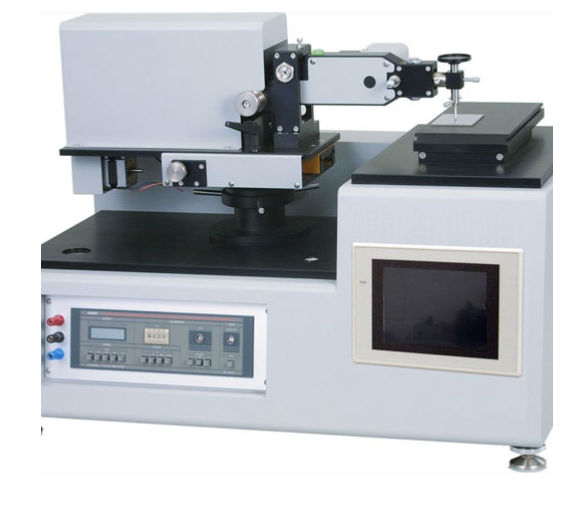
Continuous loading capability: Maintains constant or variable loads (e.g., tensile, compressive, torsional, or contact pressure) over a set time to precisely simulate real service conditions.
Surface performance monitoring: Integrates high-precision sensors (e.g., optical interferometers, laser displacement sensors, strain gauges, friction sensors) to measure surface morphology, roughness, contact stress, friction behavior, and other key parameters in real time.
Multi-parameter synchronous acquisition: Records load, displacement, time, temperature, humidity, and other environmental variables simultaneously, providing comprehensive support for data analysis and modeling.
Applicable for fatigue and durability testing: Commonly used to evaluate surface degradation mechanisms under high-cycle fatigue (HCF) or low-cycle fatigue (LCF) conditions.
Continuous Load Application:
The instrument uses a precise loading system (e.g., motor-driven, piezoelectric, or pneumatic) to apply constant or controllable normal or tangential loads to the material surface, simulating long-term service conditions.
Multi-parameter Synchronous Monitoring:
Surface morphology changes: Captured in real time using non-contact methods such as optical interferometry, laser scanning, or white-light confocal microscopy.
Contact performance: Measured accurately using strain gauges, piezoelectric sensors, or optical interferometry to determine contact stiffness and local contact pressure distribution.
Friction and wear: Friction forces are recorded with force sensors, and wear is quantified with displacement sensors.
Environmental coupling effects: Some systems integrate temperature, humidity, and corrosive atmosphere control modules to study multi-factor interactions on surface performance.
Data Acquisition and Analysis:
High-speed data acquisition systems record force-displacement-time curves, which, combined with statistical models (e.g., Greenwood-Williamson rough surface contact models), allow in-depth analysis of surface degradation mechanisms.
Manufacturing quality control: Online monitoring of surface morphology after machining processes (e.g., turning, milling).
Materials science research: Studying fatigue behavior and surface damage mechanisms under cyclic loading.
Biomechanics testing: For example, measuring intravaginal pressure distribution using instrumented probes.
Electronic device EMI testing: Continuous near-field radiation data acquisition in the native environment.
Aerospace and automotive component durability verification: Using platforms like Simcenter for load acquisition and fatigue life prediction.
Clean and dry the surface to avoid contamination affecting results.
Prepare samples to standard dimensions (e.g., ISO or ASTM), ensuring geometric consistency.
Secure the sample on the loading platform or test stage.
Install sensors (force sensors, displacement meters, optical probes, friction detectors, etc.).
Perform system calibration to ensure load accuracy and measurement sensitivity meet specifications.
Configure continuous load magnitude (constant or variable).
Set environmental conditions (temperature, humidity, atmosphere) if the device includes environmental control.
Select measurement mode (friction, surface deformation, electrical contact performance, wear rate, etc.).
Start the loading system to apply continuous load.
Start the data acquisition system to record surface performance parameters over time.
Monitor the test in real time, ensuring no abnormal vibrations or slippage.
Continuously record surface performance metrics (e.g., friction coefficient, surface roughness, temperature rise, conductivity).
After the test, export data for statistical analysis or plot performance curves (e.g., wear rate vs. time).
Generate the test report, including load-time curves, surface morphology changes (verified via SEM or white-light interferometry), and failure analysis.
The instrument’s core roles are:
Real-time monitoring of surface evolution: Tracks dynamic changes in surface morphology, roughness, hardness, contact resistance, temperature distribution, and other parameters under continuous loads simulating friction, wear, fatigue, or corrosion.
Evaluation of material durability and reliability: Long-term load testing reveals failure mechanisms under cyclic stress or constant load, providing critical data for life prediction.
Support for surface engineering optimization: Evaluates coatings, films, lubricants, and other surface modification technologies under realistic load conditions, guiding process improvements.
Integrated multi-parameter measurement: Advanced systems can simultaneously acquire mechanical, thermal, electrical, and optical signals for multi-dimensional surface performance correlation analysis.
Daily maintenance should follow systematic and preventive principles to ensure measurement accuracy and equipment longevity:
Cleaning and environmental control: After each use, clean sensor surfaces and instrument housing with a lint-free cloth to avoid dust or oil accumulation. Keep the instrument in a stable environment (20–25°C, ≤60% RH), away from corrosive gases and strong electromagnetic interference.
Air/fluid system management: If pneumatic or fluid systems are involved, check for leaks with soapy water and replace aged hoses. For liquid-containing components, regularly monitor fluid level and purity, replacing degraded solutions to prevent clogging or corrosion.
Electrical and mechanical maintenance: Check grounding monthly and remove dust from circuit boards. Lubricate moving components like lifting mechanisms with specialized grease to prevent dry wear. Avoid overloading and operate with gradual start/stop.
Calibration and verification: Every three months, calibrate with standard reference samples to verify data stability. Record deviation values and have professional maintenance if deviations exceed ±0.5%.
Personnel responsibility system: Assign trained personnel for daily inspections, maintaining logs of operation time, abnormalities, and maintenance actions. Operators must strictly follow protocols.
Preventive maintenance should be incorporated into the annual plan, including a comprehensive deep maintenance once per year, covering sensor calibration, internal component inspection, and software updates.
Continuous load surface performance measurement instruments are evolving toward intelligence, integration, and online operation. Leveraging AI and big data analytics, next-generation devices can automatically identify material characteristics, optimize measurement parameters, and generate quality reports, significantly improving testing efficiency and decision-making accuracy.
In hardware, breakthroughs in MEMS sensors and miniature optical systems are driving the development of portable and embedded measurement devices, suitable for real-time production line monitoring and mobile testing. Industrial 4.0 integration enables closed-loop data feedback and adaptive process control, improving manufacturing consistency and yield.
According to QYResearch, the global surface inspection equipment market is projected to reach $3.96 billion by 2029. with a CAGR of 7.91%, driven by manufacturing demand for automated inspection over manual methods. The rise of digital twins and additive manufacturing further expands the application of 3D surface morphology measurement in quality control of complex components.
Future trends will focus on high-precision (e.g., pA-level current response), multi-parameter integration (roughness, waviness, dimensional measurement), and cloud-based collaborative analysis, which will become key areas of technological competition.


