The Variable Load Friction and Wear Test System is a specialized testing device used to study the tribological behavior of materials under varying load conditions. By dynamically adjusting the normal load applied to the specimens, the system can simulate how load variations in real working environments affect the friction and wear performance of materials. It is widely used in medical devices, biomaterials, mechanical engineering, surface engineering, and fundamental scientific research.
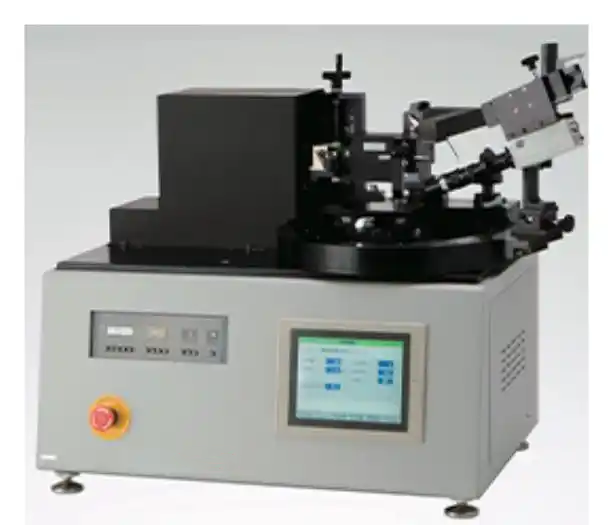
The selection of a Variable Load Friction and Wear Test System is mainly based on its significant advantages in simulating real working conditions, improving testing accuracy, and expanding research capabilities.
In many engineering applications—such as engine components, gears, bearings, and braking systems—friction pairs are subjected to variable loads rather than constant loads.
A variable load system can simulate alternating loads, impact loads, or cyclic loading during actual operation, thereby more accurately reflecting the friction and wear behavior of materials or lubricants under real conditions.
Such systems usually support programmable loading patterns (e.g., sine wave, triangular wave, square wave, etc.). Combined with high-precision sensors, they can monitor friction force, wear amount, temperature, and other parameters in real time, enabling multi-physics data acquisition.
Constant load tests may conceal failure mechanisms that occur during load fluctuations, such as fatigue wear and surface crack propagation.
Variable load testing helps reveal load–wear relationships, critical failure thresholds, and transitions in wear mechanisms, providing valuable references for material design and service life prediction.
In the development of lubricants, coatings, ceramics, and metals, standard testing methods (such as ASTM and ISO standards) increasingly require simulation of dynamic working conditions.
Variable load systems meet the testing flexibility requirements for advanced R&D and quality certification.
Some systems support high temperature, high speed, corrosive media, or electrical current environments (e.g., current-carrying wear).
They can also be configured with point, line, or surface contact friction pairs, enabling comprehensive evaluation under multiple interacting factors.
The core working principle of the Variable Load Friction and Wear Test System is to allow relative motion between friction pairs (such as ball-on-disk or ring-on-block) under controlled contact pressure while measuring parameters such as friction force, wear amount, and temperature in real time to evaluate the tribological performance of materials.
A mechanical lever, servo motor, or hydraulic/pneumatic device is used to apply the normal load.
The load magnitude can vary continuously according to a preset program (“variable load”), typically ranging from a few newtons to several thousand newtons.
A variable frequency motor or stepper motor drives one specimen (such as a test ring or disk) to rotate. Another specimen (such as a test block or ball) contacts it under normal force, forming sliding or rolling friction pairs.
High-precision force sensors or torque sensors collect friction force data in real time.
The coefficient of friction is calculated using:
[\mu = \frac{F_{friction}}{F_{normal}}]
After testing, wear is quantified by methods such as:
Mass loss measurement (weighing method)
Laser displacement measurement
Optical microscopy measurement of wear scar width or depth
Environmental and Parameter Control
The system may integrate temperature control systems (e.g., oil bath heating up to 100°C or higher), lubrication condition simulation, and automatic control of parameters such as rotational speed, load, and time.
Data Acquisition and Control
Using an embedded industrial controller or industrial computer, configuration software collects and records parameters such as friction force, speed, temperature, and load in real time, generating curves such as load–friction coefficient and time–wear amount.
Sample Installation
Fix the test material (e.g., A3 steel) onto the specimen holder, ensuring proper alignment between the contact surface and the counterface (such as a steel ball or pin).
Environmental Setup
Set the required temperature, humidity, or atmospheric conditions. Some advanced systems support high/low temperature or inert gas environments.
Load Mode Selection
Through the human–machine interface (HMI) (such as an ARM embedded system or PC software), set the load waveform (sine, square, sawtooth, triangular, or random waveform) and amplitude range.
Calibrate the force sensors, friction torque measurement devices, and temperature sensors to ensure accuracy (typical error ≤ ±1%).
Input experimental parameters such as:
Load frequency
Sliding speed (e.g., 1–3000 r/min)
Test duration
Activate the pneumatic or electric loading system to apply the variable load.
Start the spindle drive system, allowing the friction pair to slide at the preset speed.
The system automatically collects real-time data including:
Friction coefficient
Wear amount
Friction temperature
Vibration signals
Using closed-loop control algorithms (e.g., Fuzzy-PID), the system dynamically adjusts the load to ensure waveform stability.
Operators should monitor for abnormal conditions such as:
Severe wear
Slippage
Sudden temperature rise
Manual intervention may be required if anomalies occur.
After stopping the machine, remove the samples and analyze the wear morphology and volume loss using microscopes or surface profilometers.
Export the collected data to generate friction-time curves, wear rate calculations, and other analysis results.
Load Range
Typical systems support static loads of 10 N – 1000 N, and variable loads must remain within the equipment’s dynamic response capability.
Control Method
Advanced systems (such as UMT TriboLab) support modular drives and tool-free replacement, improving operational efficiency.
Safety Regulations
Because the system involves high rotational speeds and high loads, operators must wear protective equipment and avoid direct contact with moving components.
The Variable Load Friction and Wear Test System is a key research tool in materials science, mechanical engineering, and lubrication technology. Its future development will integrate advanced technologies and application needs, presenting several major trends.
Intelligent Control
Future systems will integrate more advanced sensors and closed-loop control algorithms, enabling real-time and adaptive regulation of load, speed, temperature, and lubrication conditions to simulate complex working environments.
Automated Operation
Automation will cover the entire workflow—from sample clamping and parameter setup to data acquisition and analysis—significantly improving test efficiency and repeatability.
Expanded Working Condition Simulation
Future systems will move beyond traditional constant load modes and accurately simulate impact loads, alternating loads, and random vibration loads, providing a more realistic representation of component service conditions.
Environmental Coupling
In addition to mechanical loading, systems will integrate environmental modules such as vacuum, high/low temperature, corrosive media, and radiation, meeting evaluation requirements in aerospace, new energy, and extreme environments.
In-Situ Monitoring and Micro-Analysis
By integrating high-speed cameras, acoustic emission monitoring, and online surface scanning technologies, the wear process can be observed in situ and in real time.
These observations can be combined with microscopic analysis techniques such as Scanning Electron Microscopy (SEM) and Energy Dispersive Spectroscopy (EDS) to establish relationships between macroscopic test data and microscopic wear mechanisms.
Digital Twins and Life Prediction
Based on test data combined with Finite Element Analysis (FEA) and wear models (such as the Archard wear model), digital twins of materials or components can be constructed.
These models can predict wear evolution and service life under complex load spectra.
Standardization and Data Sharing
Standardization of variable load testing methods is essential for broader application. Establishing shared load spectrum databases and wear model parameter libraries is crucial.
Interdisciplinary Integration
Future development requires close collaboration between mechanical engineering, materials science, data science, and control engineering to address complex challenges in system integration, data interpretation, and model development.
Cost and Accessibility
While pursuing advanced capabilities, developing modular and cost-optimized systems is essential to meet the needs of a wider range of industrial users and expand market adoption.
In summary, the future development of the Variable Load Friction and Wear Test System will focus on high-fidelity dynamic working condition simulation, intelligent data analysis, and compatibility with extreme environments and advanced applications.It will evolve from a single testing instrument into a comprehensive tribological solution platform that supports material development, equipment reliability design, and service life prediction.


