The Low-Load Wear Testing Machine is a specialized device used to evaluate the wear resistance of materials under light load conditions. Its design principle is based on simulating the friction and wear process in real-world applications, measuring the material’s surface quality loss or morphological changes by controlling parameters such as load, speed, and time. This equipment is widely used in industrial manufacturing, material research, and other fields, helping users understand material behavior under low-stress environments. It is particularly suitable for studying material performance under dry friction, wet friction, or abrasive wear conditions. It is also commonly used for evaluating new material compatibility, testing coating durability, and quickly determining the anti-wear and friction-reducing performance of lubricants.
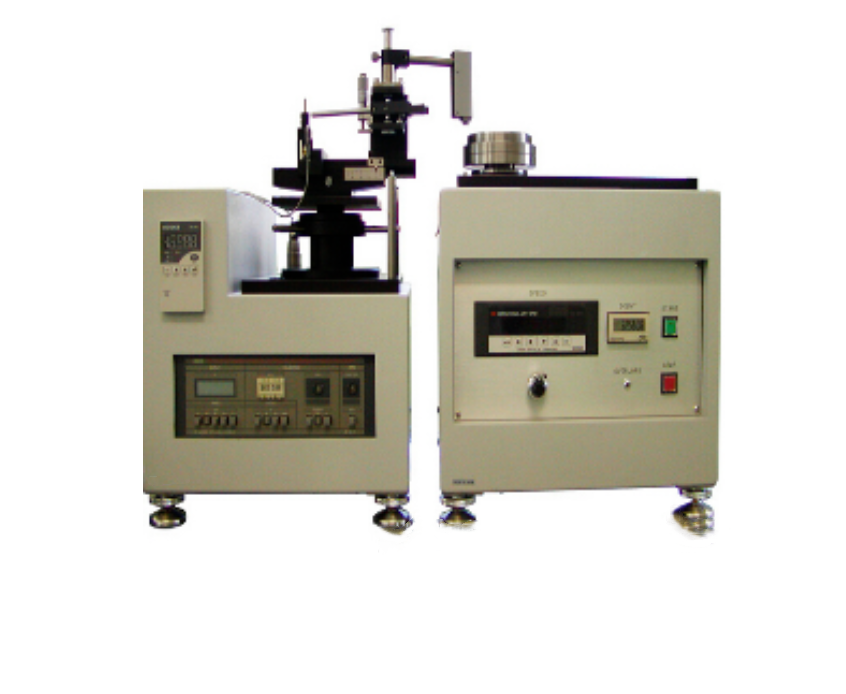
The Low-Load Wear Testing Machine is primarily used to simulate the wear behavior of materials or lubricants under sliding, rolling, or composite friction conditions with lower contact pressure, to assess their wear resistance. This device is extensively used in research and quality control of materials such as metal, engineering plastics, coatings, and lubricants. It employs electromechanical integration design to achieve quantitative analysis of the friction and wear process through precise control of experimental conditions.
Drive and Motion System:
The device uses an AC motor or AC servo motor as the power source, driving the lower sample axis (such as the friction ring) to rotate through a transmission system with a toothed belt, pulleys, and a photoelectric encoder, while the upper sample axis remains stationary. The main shaft speed can be continuously adjusted, typically ranging from 1-2000 rpm, to meet different testing needs.
Loading System:
The test force (normal force) can be applied through various methods, such as weight-lever loading, spring compression, or hydraulic servo systems. For example, some models use weights and lever principles to apply controllable loads, simulating low-stress contact environments in real-world conditions, while high-end models employ hydraulic closed-loop servo systems for precise load control.
Measurement and Data Acquisition:
The friction torque generated during the friction process is measured by high-precision torque or displacement sensors. The test force is determined by force sensors, and the rotational speed is monitored by a photoelectric encoder in real time. The system continuously collects and records data such as friction force, friction coefficient, and temperature over time, and supports data export and report generation. Some devices are equipped with laser displacement sensors for accurate wear measurement.
Friction Pair and Application Expansion:
Common friction pairs include pin-disc, ring-block, and four-ball configurations, which can be changed according to the test requirements. For instance, the four-ball machine is used to evaluate the load-bearing capacity of lubricants (such as PB and PD values), while the pin-disc configuration is suitable for studying the microstructural evolution of material surfaces. The device can also connect to a computer for full automation and visualization of the test process.
The correct operation of the Low-Load Wear Testing Machine follows a systematic process to ensure accurate test data, stable device operation, and personnel safety. Here are the detailed guidelines for operation:
Preparation Before the Test:
Equipment Inspection: Confirm the power supply is connected correctly, and check that all components are secure and undamaged. Ensure sensors, control panels, and transmission systems are functioning normally. The equipment should be placed in a stable, dry, and sun-free environment.
Sample Preparation: Clean and dry the sample, ensuring the surface is free from oils, oxidation, or other contaminants. It is recommended to use ethanol or acetone for cleaning and avoid direct hand contact with the friction surfaces. The sample dimensions and shape should meet the device fixture requirements.
Environmental Conditions: The test environment should match the material state conditioning conditions (such as temperature 23±2°C, humidity 50%±5%), unless high or low-temperature tests are required.
Safety Protection: Operators should wear protective goggles, ensure the work area is clean and free of obstructions, and avoid interference during operation.
Standard Operating Procedure:
Preheating the Device: After starting the equipment, idle for 5-10 minutes to allow the motor and transmission system to stabilize and reduce initial errors.
Sample Installation: Properly install the upper sample (e.g., pin) and lower sample (e.g., disc or ring) in the fixture, ensuring the friction surfaces are flat and aligned, and are fixed securely to prevent loosening or uneven loading.
Parameter Setting: Set the key parameters according to the test standards.
Starting the Test: First, turn on the power, then start the control software to avoid data collection delay. After starting the test, closely monitor the initial operation status to ensure there are no abnormal vibrations, noises, or overheating.
Monitoring During the Test:
The operator should stay close to the device and monitor real-time changes in friction force, temperature, and wear volume.
If any anomalies occur (such as sudden changes in friction coefficient or abnormal sounds), the machine should be stopped immediately for troubleshooting.
Post-Test Processing:
Safe Shutdown: After the test, wait for the friction pair to cool down before dismantling to avoid burns from high temperatures.
Data Recording and Analysis: The system automatically records data such as friction coefficient, wear volume, and temperature rise. This data can be exported for analysis of material wear resistance. If any irregular results occur, check whether the sample installation is correct or whether the device calibration is accurate.
Device Cleaning and Maintenance: Clean the friction surfaces to remove any residue, ensuring the fixture is kept clean. Periodically check the status of sensors and transmission components, and lubricate or replace oil as necessary.
Safety Precautions:
Operators should have relevant technical knowledge and strictly follow safety procedures. It is forbidden to use flammable or explosive lubricants, and bypassing safety devices is not allowed. If the equipment is not in use for a long period, the power should be turned off and dust and moisture protection measures should be taken.
The Low-Load Wear Testing Machine is a specialized experimental device used to evaluate the friction and wear performance of materials or lubricants under light load conditions. Its core function is to simulate friction behavior under light load conditions, providing high-precision quantitative analysis of material wear resistance, friction coefficient, and lubrication performance. Its main roles include:
Measuring Friction Coefficient and Wear Volume: Accurately measures the friction coefficient and wear volume between materials under low-load conditions, reflecting the material's anti-wear capability.
Simulating Real-World Light-Load Conditions: Suitable for simulating the behavior of friction pairs in bearings, precision machinery, MEMS (Micro-Electromechanical Systems), and other applications where low-load conditions are prevalent.
Evaluating Lubricant Performance: Tests lubricants such as oils and greases under low-speed, light-load conditions to assess their anti-wear and friction-reducing effects.
Supporting Multiple Friction Types: Enables sliding, rolling, reciprocating, or composite motion wear tests.
High Precision Control and Data Acquisition: Equipped with a closed-loop control system that can precisely adjust test force (often as low as several Newtons or even smaller), speed, temperature, and record real-time data of friction force, friction coefficient, temperature, etc.
In summary, the Low-Load Wear Testing Machine is essential for assessing the wear resistance and friction performance of materials under light load conditions. It is widely used in material research, quality control, and lubricant evaluation, providing valuable data to ensure the performance and reliability of materials and products in real-world applications.


