The Drum and Reciprocating Friction and Wear Testing Machine is a dual-purpose tribological testing system that integrates linear reciprocating sliding tests with drum rotational wear tests. This equipment combines traditional friction and wear measurement techniques with a drum rotation testing mechanism, enabling realistic simulation of the operational conditions of rollers, drums, paper, and sheet materials. As a result, it provides a comprehensive assessment of materials’ friction behavior and wear performance. Currently, this testing machine is widely used in industries such as textiles, coatings, plastics, leather, rubber, automotive interior materials, and functional films for quality control and research & development purposes.
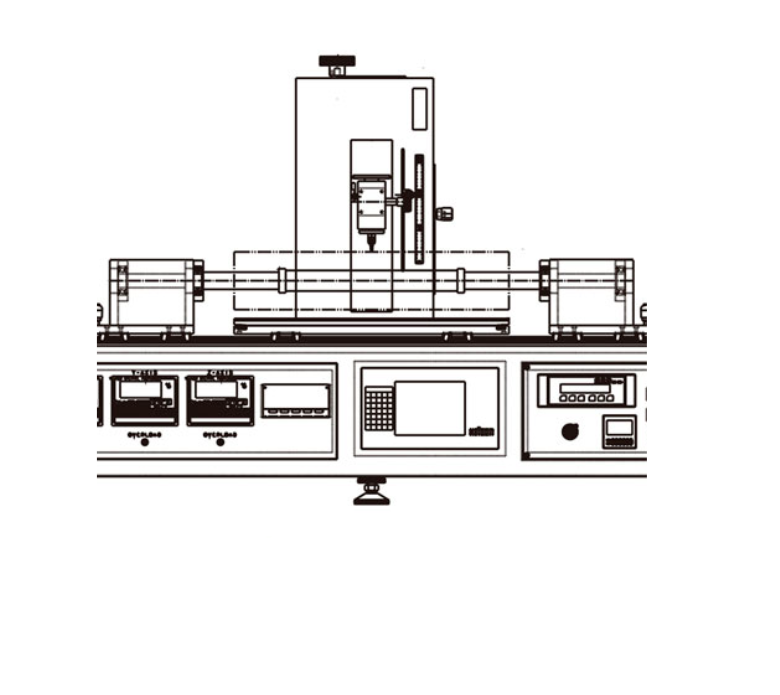
The core working principle of the drum and reciprocating friction and wear testing machine is to repeatedly bring the test specimen into contact with a friction medium (such as sandpaper, fabric, or standard abrasives) under preset pressure, speed, and reciprocation cycles. By measuring the degree of wear on the material surface, the machine evaluates its wear resistance.
The detailed process is as follows:
The motor drives the drum in a reciprocating motion.
The test specimen is fixed on the specimen holder.
A specific normal load is applied to the specimen.
Reciprocating friction is conducted according to the set stroke and frequency.
After the specified number of friction cycles, the specimen’s wear condition is observed and measured.
To ensure accurate and reliable test results and to guarantee the safety of both the equipment and the operator, the drum and reciprocating friction and wear testing machine must be operated strictly according to standard procedures.
1. Pre-Test Preparation
Environmental Check:
Ensure the machine is placed on a stable, dry surface with minimal vibration.
Room temperature is typically controlled at 20±5°C.
Relative humidity is recommended not to exceed 70%.
Confirm stable power supply.
Equipment Check:
Verify that power connections are secure.
Confirm the emergency stop button is released.
Ensure the drum surface is clean and free of debris.
Check that the loading mechanism moves freely.
Confirm that the control panel is functioning properly.
Specimen Preparation:
Cut specimens according to relevant standards.
Ensure specimen surfaces are flat and free of visible defects.
If required, precondition specimens under standard temperature and humidity.
2. Specimen Installation
Fix the specimen securely in the holder.
Ensure full contact between the specimen surface and the friction drum.
Adjust the specimen position for uniform load distribution.
Ensure the specimen is firmly clamped to prevent sliding during testing.
If using a standard friction medium (e.g., sandpaper or fabric), install it according to the standard.
3. Test Parameter Settings
Set parameters such as stroke length, friction speed, number of cycles (or test duration), and applied load based on standards or test requirements.
Confirm correct input and save the settings.
4. Applying Load
Apply load via standard weights or preset automatic loading.
Ensure vertical application and uniform distribution of pressure.
Recheck the specimen position after loading.
5. Start Test
Close the protective cover.
Press the “Start” button.
Observe the machine for smooth operation and check for unusual noise or vibration.
During testing:
Do not touch moving parts.
Do not adjust applied load.
Press the emergency stop immediately if any abnormality occurs.
6. Test Completion
The machine automatically stops after the set friction cycles.
Release the load.
Remove the specimen.
Turn off the power.
Operators must be familiar with the user manual before use.
Never insert hands into moving areas while the machine is running.
Regularly inspect electrical wiring.
Keep the surrounding environment clean and organized.
To ensure long-term stable operation, extend service life, and maintain accurate test results, routine maintenance is crucial. Key maintenance tasks include:
Cleaning the drum, specimen holders, and machine surface.
Lubricating moving parts (bearings, guide rails, and drive mechanisms).
Checking mechanical components, electrical systems, and load devices.
Calibrating measurement and control systems.
Maintaining safety devices such as emergency stops and protective covers.
Many real-world applications involve parts moving in a reciprocating rather than continuous unidirectional motion, such as pistons in cylinders, sliding rails, or relative motion between mechanical joints. Reciprocating motion is characterized by periodic direction reversal, which can create unique surface effects like accelerated fatigue wear or material transfer. Using a reciprocating friction and wear tester allows for more accurate simulation of these conditions, producing data that closely reflects actual application scenarios.
Main Components
Drive System: Generates reciprocating motion via motor-driven crank-slider mechanisms or linear motors.
Loading System: Applies vertical load using weights, hydraulic, or pneumatic systems.
Measurement System: Includes force and displacement sensors to monitor friction force and wear depth in real-time.
Control System: Allows users to set test parameters (frequency, stroke, load, and duration) and ensures stable operation.
Typical Test Parameters
Reciprocation frequency
Stroke length
Applied load
Test duration
Environmental conditions (temperature, humidity, lubrication)
Parameters are chosen based on the application scenario. For example, high-frequency reciprocation simulates high-speed machinery, and high load simulates heavy-duty conditions. Adjusting parameters allows systematic study of factors affecting friction and wear.
Applications
Automotive Industry: Evaluate wear resistance of engine components, braking systems, and transmission parts.
Material Science: Develop new composites, coatings, or lubricants.
Consumer Products: Test durability of furniture slides, window/door hardware, and other mechanical parts.
All applications rely on reliable and repeatable test results provided by the machine.
The drum and reciprocating friction and wear testing machine is a critical instrument for evaluating material wear performance. By simulating repeated friction conditions, it provides scientific assessment of material durability and service life, playing a key role in quality control, product development, and standard compliance. Proper maintenance, calibration, and operation ensure consistent performance and reliable data, helping manufacturers improve product longevity and market competitiveness.


