The vacuum friction and wear tester integrates various types of friction and wear testing equipment into a vacuum chamber, enabling testing in a vacuum environment. This specialized equipment is used to simulate the friction and wear performance of materials under vacuum conditions and is widely used in aerospace, automotive manufacturing, materials science, and other fields. By conducting friction and wear tests in a vacuum environment, it evaluates key performance indicators such as wear resistance and friction coefficient of materials.
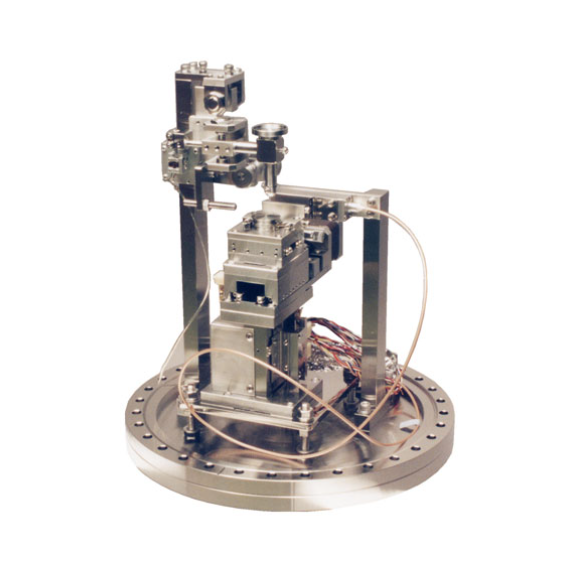
The vacuum friction and wear tester features high precision and high stability, capable of simulating the friction and wear performance of materials under vacuum conditions.
Supports Various Types of Friction and Wear Tests: The load method uses the well-regarded Heidon balance method, enabling precise loading from low to high loads. Additionally, the system supports high-speed friction tests using a rotary table and can meet the testing requirements of small loads.
Supports Various Testing Conditions: The device supports the use of a turbomolecular pump to generate vacuum levels as low as 10 Pa.
The core working principle of the vacuum friction and wear tester is to simulate the friction contact process under vacuum conditions. The motor drives the friction pair to perform relative motion in the vacuum environment, while sensors monitor the friction force and wear amount in real-time, thereby obtaining the friction and wear performance data of the materials.
The instrument typically consists of the following parts: a vacuum chamber, friction pair, loading system, driving system, and measurement system. The vacuum chamber is used to create and maintain the desired vacuum environment. The gas pressure inside the chamber is reduced to a specific level via the vacuum pumping system, thus minimizing the effect of gas molecules on the friction process. The vacuum level can be adjusted according to experimental requirements, with common levels including high vacuum and ultra-high vacuum.
The friction pair consists of two samples in contact with each other, typically comprising an upper and a lower sample. The upper sample is usually fixed to the loading system, while the lower sample is connected to the driving system. The loading system applies a vertical load to generate contact pressure between the two samples. The driving system causes the lower sample to rotate or move reciprocally at a specific speed, generating relative sliding motion.
The measurement system is used to monitor various parameters during the friction process in real-time. A friction force sensor records the changes in friction force, from which the friction coefficient is calculated. The wear amount can be assessed by measuring the mass loss, volume change, or surface morphology of the sample. Auxiliary devices such as temperature sensors and vacuum gauges are used to monitor environmental conditions.
When selecting and using the vacuum friction and wear tester, multiple technical parameters and application requirements should be considered:
Vacuum Level Range: Determine the required ultimate vacuum and working vacuum level according to the experimental requirements. Different research purposes have varying requirements for vacuum levels, ranging from low vacuum to ultra-high vacuum.
Load and Speed Range: The loading capacity and rotational speed range of the device should cover the conditions to be simulated. Loads typically range from a few millinewtons to several hundred newtons, while the speed range should meet the needs for low to high-speed tests.
Temperature Control Ability: If the experiment involves high or low-temperature conditions, attention should be paid to the device's heating method, operating temperature range, cooling system, and the uniformity and accuracy of temperature control.
Sample Size and Clamping: The size of the device's chamber and the design of the clamps should accommodate and securely hold the samples to be tested, including pins, discs, balls, and other shapes and sizes.
Data Collection Accuracy and Software Functionality: The accuracy of sensors, the frequency of data collection, and the analysis functions of the accompanying software directly affect the quality and reliability of the final data.
Operating and Maintenance Costs: The purchase cost of the equipment is just the initial investment, and long-term operating costs, such as energy consumption, vacuum pump oil replacement, spare parts stocking, and periodic calibration and maintenance, should be considered. The complexity of the device also impacts the technical requirements for the operators. Professional training is essential for ensuring proper operation and accurate data collection.
The vacuum friction and wear test primarily simulates different friction environments to study the friction and wear behavior of materials in a vacuum. Below is a typical procedure for conducting a vacuum friction and wear test:
Equipment Check: Ensure that the tester and vacuum system are functioning properly and that the pressure can be stably reduced to the preset vacuum level.
Sample Selection: Choose appropriate friction pairs based on the test requirements (typically combinations of two friction materials such as steel, aluminum, carbide, ceramics, etc.).
Sample Preparation: Treat the surface of the samples to ensure they are smooth and clean, free of oil or other contaminants. Use a cleaning agent if necessary.
Test Setup: Set the test parameters such as speed, load, friction type, and test duration. Ensure the vacuum chamber reaches the required vacuum level based on the experimental needs. If testing at specific temperatures, use heating or cooling equipment to adjust the temperature of the samples.
Sample Installation: Place the sample into the sample holder and ensure it is in contact with the friction pair.
Vacuum Pumping: Start the vacuum pump and reduce the pressure inside the chamber to the required vacuum level.
Test Execution: Start the friction and wear test, setting the movement type, speed, load, and other parameters of the friction pair. The sample will come into contact with the opposing material and generate relative motion.
Monitoring: Monitor the friction force, wear amount, temperature changes, and other relevant data in real-time. Ensure that the data collected is accurate and complete.
Test Stop: After the test, stop the friction motion and bring the device back to normal temperature and pressure.
Vacuum Restoration: Gradually increase the pressure inside the vacuum chamber to normal atmospheric pressure.
Sample Removal: Carefully remove the sample, avoiding contamination from external sources.
Examine Wear Surface: Use scanning electron microscopy (SEM), optical microscopy, or other equipment to inspect the wear surface of the sample.
Evaluate Wear Characteristics: Analyze the surface morphology, wear amount, and wear types (such as adhesive wear, abrasive wear, oxidation wear, etc.) to evaluate the friction performance of the sample in the vacuum environment.
Friction Coefficient Calculation: Based on the recorded friction force data, calculate the friction coefficient and analyze its variation over time or with load changes.
Data Analysis: Analyze all the test data and compare the performance under different materials and friction conditions.
Report Generation: Generate a detailed test report based on the results, analyzing the friction and wear characteristics to provide recommendations for material selection and design.
When using the vacuum friction and wear tester, attention should be paid to several factors to ensure accurate and safe testing:
Vacuum Control: Fluctuations in vacuum level may affect test results, so it is important to maintain a stable vacuum environment.
Temperature Control: If materials exhibit unique behaviors at high or low temperatures, ensure that the temperature is maintained within the desired range during the test.
Material Selection: Some materials may exhibit significantly different friction and wear behavior in a vacuum compared to atmospheric conditions, so material selection should take these differences into account.
Vacuum System Maintenance: Contaminants may affect the vacuum level or contaminate the samples, leading to data deviation. Regular checks of seals and pump oil are necessary.
Correct Sample Installation: Ensure proper alignment and fixation of the sample to avoid additional vibrations or uneven loading.
Calibration: Regular calibration of the friction force sensor, temperature sensor, etc., is necessary to ensure the reliability of the measurements.
Safety Protocols: Vacuum equipment may involve high electrical voltages or mechanical movements, so operators must be properly trained and wear protective equipment.
This is a comprehensive translation of the text, ensuring clarity and accuracy in explaining the vacuum friction and wear tester's functionalities, operation, and safety precautions.
In summary, the vacuum friction and wear tester, as an important material characterization device, provides an indispensable technical means for in-depth understanding of the tribological behavior of materials in harsh environments. From fundamental research to engineering applications, its value is increasingly prominent, continuously driving the development of new materials and technologies.


