Shoelaces may appear simple, yet they are a crucial component of footwear—they not only secure the shoes on the feet but also directly affect wearer comfort, safety, and overall durability of the shoes. The Shoe Lace Abrasion Tester is a specialized testing instrument designed to evaluate the resistance of shoelaces to friction and wear during actual use. By simulating shoelace friction under standardized testing conditions, it measures the durability of shoelace materials, structures, and overall performance. This article provides a comprehensive explanation of the Shoe Lace Abrasion Tester, addressing common questions to help understand its purpose, testing principles, standard frameworks, operational procedures, and significance within the footwear industry.
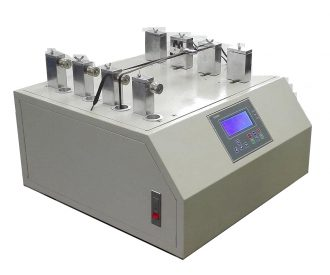
A Shoe Lace Abrasion Tester is a laboratory instrument used to assess and measure the abrasion resistance of shoelaces. The device employs automated mechanical movements to repeatedly rub the shoelace under controlled tension, testing its durability and recording the number of friction cycles until wear or breakage occurs. Its primary purpose is to simulate the friction and wear shoelaces endure during daily use or while tying shoes, allowing for the evaluation of their durability and quality.
In daily life, shoelaces constantly rub against eyelets, lace holes, or themselves. Their abrasion resistance directly determines their service life and wearing experience:
User safety: A shoelace that breaks during use may cause the shoe to lose its fit, potentially leading to falls or other safety risks.
Product durability: Shoelaces with poor abrasion resistance are prone to fraying or cracking, which not only affects the shoe’s appearance but also reduces the overall durability of the footwear.
Product quality evaluation: Shoelaces are a routine test item in footwear quality assessment, particularly in high-intensity products such as sports shoes and hiking boots.
Material development and optimization: Abrasion testing provides data to help material engineers and designers select superior fibers or structures, enhancing product competitiveness.
In summary, shoelace abrasion testing is an essential part of footwear quality control and plays a key role in ensuring user experience and product safety.
The Shoe Lace Abrasion Tester operates by simulating mechanical reciprocating friction. It applies a fixed tension to the test sample, repeatedly rubbing the shoelace at a set angle and friction mode, and records the number of cycles until the shoelace shows wear or breaks.
The main steps include:
Friction setup: A shoelace is threaded through another shoelace loop or a standardized eyelet device to create a load-bearing structure. Angles and positions usually follow standard specifications (e.g., fixed angles of 52.5° or 90°).
Applying standard tension: A fixed load (commonly around 250 g) is applied to the shoelace, ensuring continuous tension during the friction process.
Reciprocating friction: The tester’s clamps move linearly with a set stroke (typically ~35 mm) and frequency (~60 cycles per minute), causing the shoelace to rub repeatedly against another shoelace or eyelet.
Recording breakage cycles: The machine automatically records the number of cycles until the shoelace breaks or reaches the predetermined cycle count, providing an abrasion resistance measurement.
This principle provides a highly realistic simulation of shoelace wear under actual use, making it widely applied in footwear design, material development, and quality control processes.
To ensure scientific, comparable, and internationally accepted results, testing is typically conducted according to global and industry standards:
ISO 22774: Provides standardized methods for testing the abrasion of footwear accessories, including shoelaces. It includes shoelace-to-shoelace, shoelace-to-standard-eyelet, and shoelace-to-actual shoe eyelet tests. Results are reported as the average number of friction cycles until breakage.
SATRA TM154 / TM93: Methods issued by the footwear and leather testing organization SATRA, widely used for evaluating abrasion between shoelaces and between shoelaces and eyelets.
GB/T 3903.36 (China): Specifies testing methods for shoelace abrasion under standardized conditions.
DIN 4843 / QB/T: Includes German and Chinese textile standards covering shoelace abrasion testing.
These standards define sample size, tension, friction angles, and testing speed to ensure consistent experimental conditions and comparable results.
Depending on the standard and testing purpose, shoelace abrasion tests generally follow these methods:
Shoelace-to-shoelace friction: Two shoelaces are looped together to create a crossing structure, rubbing against each other until breakage. This method emphasizes the material’s inherent abrasion resistance.
Shoelace-to-standard-eyelet friction: The shoelace passes through a standardized eyelet (metal or plastic) and undergoes repeated rubbing at the eyelet edge to evaluate its performance when combined with eyelets.
Shoelace-to-actual eyelet friction: Uses eyelets from real shoes to simulate actual wear conditions more closely, providing a realistic assessment of shoelace performance during use.
Each method follows standards specifying process, angle, force, and friction pattern, providing data for material evaluation and product quality comparison.
Although specific models vary, the typical testing procedure includes:
Sample preparation: Precondition shoelaces in a standard laboratory environment to ensure consistent testing conditions.
Mounting samples: Install shoelaces according to the chosen test method, ensuring correct tension and angle.
Instrument parameter setup: Set friction stroke, speed, and cycle count in the tester control system. Recommended stroke is ~35 mm with a frequency of ~60 cycles/min.
Start testing: The tester moves the samples according to the preset parameters, recording the number of cycles or stopping when breakage occurs.
Results recording and analysis: Record wear or breakage cycles, then calculate averages from multiple samples to determine abrasion resistance.
This workflow ensures repeatable and scientific evaluation of shoelace durability and is useful in product development, mass production, and quality control.
What types of shoelace materials can be tested?
The tester can evaluate cotton, polyester, synthetic fibers, nylon, blended fibers, and more. Different materials exhibit varying cycle counts during friction testing, helping determine which materials are more durable.
1.How do the results help assess shoelace quality?
Results are usually reported as the number of cycles until damage or breakage. Higher cycle counts indicate better abrasion resistance, meaning longer service life and higher quality in real use.
2.Does breakage indicate test failure?
Not necessarily. Breakage is a key result of abrasion testing, but some standards allow setting a predetermined cycle count. If the shoelace withstands this number, it passes the test. Breakage data can also be used to analyze material durability limits.
3.How does abrasion testing differ from strength testing?
Abrasion testing focuses on wear under friction, while strength testing measures breaking strength under tension or impact. Both assess performance, but with different emphases.
4.Does the testing environment affect results?
Yes. Samples should be preconditioned under standard atmospheric conditions (temperature and humidity) to minimize environmental effects on results.
5.How to select appropriate methods and standards?
Selection depends on product positioning and market requirements. ISO 22774 is commonly used internationally, while SATRA or national standards may apply in specific regions. The test method should match the actual use scenario.
6.How many samples are needed for reliable results?
It is generally recommended to test at least six independent samples and average the results to reduce variability and improve comparability.
The Shoe Lace Abrasion Tester is widely used in footwear manufacturing, quality inspection agencies, research institutions, and product certification processes:
Quality control: Random sampling during production ensures product durability meets standards and customer expectations.
Product development: New materials and shoelace structures are tested to verify that designs meet durability requirements.
Third-party testing and certification: Independent laboratories provide performance certification reports for market recognition and regulatory compliance.
Market quality evaluation: Comparing abrasion data across brands gives consumers and companies reliable performance insights.
To ensure stable and accurate operation, regular maintenance is essential:
Keep clean: Remove dust and debris from clamps, guides, and components to prevent mechanical blockage.
Calibrate instruments: Regularly check tension sensors, counters, and motion mechanisms, and calibrate if necessary.
Check electrical components: Ensure control systems, motors, and PLCs operate normally.
Lubricate moving parts: Proper lubrication of reciprocating mechanisms extends the tester’s lifespan.
These steps help guarantee long-term stability and accurate results.
The Shoe Lace Abrasion Tester is an indispensable tool in footwear testing systems. By simulating friction conditions experienced by shoelaces during use, it evaluates material and structural durability. It plays a critical role in production quality control, product development, third-party testing, and market evaluation. Understanding its testing principles, standards, operation, and applications enables companies to more scientifically assess shoelace performance, thereby improving overall product quality and wearer safety.


