In the field of materials testing, wear resistance, scratch resistance, and surface durability are key indicators of long-term product performance. Whether for plastics, automotive components, coatings, textiles, leather, electronic housings, or printed patterns, standardized testing is necessary to evaluate how surfaces perform under friction, abrasion, and scratching conditions. The TABER 5750 Linear Abraser (Taber Linear Abraser Model 5750) is a professional linear friction testing device designed to assess material wear resistance and related surface properties. This article provides a detailed introduction to its principles, structure, core functions, standards, applications, parameters, and testing procedures, offering comprehensive reference for research, quality control, and product development.
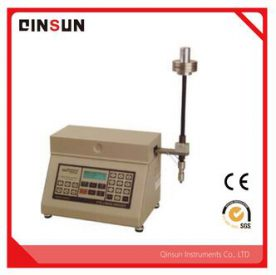
The TABER 5750 belongs to the category of linear abrasers. It is primarily used to simulate the wear behavior of materials under repeated contact with abrasive media. Unlike traditional circular abrasion testers, the TABER 5750 employs a linear reciprocating motion, moving the abrasion head directly along the sample surface to replicate wear patterns that occur in real-world use. The device features a free-floating head design, allowing the head to automatically follow the surface contours of the sample. This ensures uniform wear testing on flat, curved, or complex surfaces.
Core test parameters in linear abrasion testing include stroke length, reciprocating speed, applied load, and test cycles. Operators can freely set these parameters according to the material characteristics and standard requirements to evaluate wear resistance, scratch resistance, colorfastness, and other surface properties. Tests are typically performed using specialized abrasive media such as the Taber Wearaser® heads to simulate surface damage caused by friction, impact, or abrasion in practical applications.
Free-Floating Test Head and Linear Motion Mechanism
The TABER 5750’s key feature is its free-floating test head, which allows vertical movement within a defined load range to maintain stable, uniform contact with the sample surface during linear abrasion. This design is especially important for testing irregular or curved samples.
The test head is connected to the load system via a spline shaft, and load adjustments can be made using standard weights, allowing applied loads to vary from several hundred grams to several kilograms, depending on the testing requirements.
Adjustable Stroke and Speed Control
The device supports multiple standard stroke lengths, including options from approximately 5 mm to 102 mm, with the ability to customize for specific sample requirements. The reciprocating speed is variable, typically ranging from 2 to 75 cycles per minute, with pre-set options available for quick adjustments. Custom speeds can also be programmed to meet specialized test conditions.
Adjustable Load and Test Cycles
The load system uses main weights and optional calibration weights to provide an adjustable range, typically from 350 g to 2100 g. The number of reciprocating cycles can be set up to 999.999. supporting long-term durability testing.
Abrasive Media and Accessories
The standard abrasive media are the Taber Wearaser® series, designed for consistent friction performance. The device supports multiple types of abrasion heads for elastic or rigid friction tests. Optional accessories include scratch kits, colorfastness attachments, and coin scratch clamps, enabling simulation of various damage modes that products may encounter during real-world use.
The TABER 5750 is not only used for wear resistance testing but also for evaluating scratch resistance, color transfer, and other surface properties, making it a comprehensive surface durability testing instrument.
Wear Resistance Testing
Wear resistance measures a material’s ability to withstand frictional wear. Under controlled load and speed, the abrasion head moves reciprocally across the sample, and the resulting wear, scratch depth, and color changes are evaluated. This test applies to plastics, coatings, metals, printed patterns, rubber, and other materials.
Scratch and Scuff Testing
Using scratch kits and diamond or metal-tipped heads, the TABER 5750 can simulate scratches from sharp objects, assessing the material’s scratch resistance. This is particularly useful for coatings, panels, and plastic housings.
Color Transfer and Frictional Colorfastness Testing
For textiles, prints, and other colored surfaces, the device can simulate friction to test color transfer and colorfastness using specialized attachments.
Simulation of Various Wear Modes
By selecting different abrasive media, loads, speeds, and attachments, the TABER 5750 can replicate a range of wear and damage modes, including scratching, scuffing, abrasion, and indentation, providing comprehensive data for material design and quality control.
The TABER 5750 supports a variety of international and industry standards to ensure test results are comparable and reliable:
ASTM D3884: Standard test method for abrasion resistance of textile fabrics
ASTM D1175: Abrasion test standard
ASTM D1044 and D4060: Coating and plastic wear resistance methods
ISO 9352 and ISO 5470‑1: Standard abrasion testing for plastics and coatings
JIS K7204. JIS A1453: Japanese standards for textile and plastic abrasion testing
DIN standards: Various wear resistance specifications for different materials
Compliance with these standards allows engineers, researchers, and quality departments to perform comparative analyses globally, supporting product design optimization and market approval.
The TABER 5750 is widely used in multiple industries for evaluating wear resistance and surface durability:
Plastics and Composites: Assessing the impact of composition, manufacturing, or coatings on wear resistance for consumer electronics, furniture, and automotive interiors.
Coatings and Protective Films: Testing long-term surface loss for paints, coatings, and protective films on metals.
Textiles and Leather: Evaluating fabric durability and colorfastness for apparel, footwear, and interior materials.
Electronics and Precision Components: Measuring abrasion and scratch resistance of device housings, displays, and automotive screens for product development.
Typical testing procedure includes:
Sample Preparation: Select and prepare samples according to standard dimensions and requirements. Curved samples do not require special fixtures due to the floating head design.
Set Test Parameters: Configure stroke length, reciprocating speed, load, and number of cycles based on material and standard requirements.
Install Abrasive Media: Mount the appropriate Wearaser® or other friction heads.
Align Sample and Start Test: Use alignment guides to position the sample accurately, start the instrument, and record test data.
Data Recording and Analysis: Evaluate wear, scratch depth, color changes, and generate reports for material assessment.
The TABER 5750 stands out in laboratory abrasion testing due to:
Wide applicability: suitable for flat or curved surfaces of various sizes.
Fully adjustable parameters: stroke, load, speed, and cycles tailored to diverse materials.
Multiple test modes: wear, scratch, color transfer, and other surface property assessments.
Compliance with international standards: ASTM, ISO, JIS, DIN, etc.
High data consistency: precise mechanisms and high-quality abrasive media ensure repeatable results.
The TABER 5750 Linear Abraser is a versatile, professional instrument for materials research, quality control, and product certification. Applicable to plastics, coatings, textiles, leather, and electronics, it provides objective, reliable data on wear resistance and surface performance. Combined with standardized testing methods and scientific operation procedures, the TABER 5750 is an essential analytical tool for laboratories and production quality systems, supporting product competitiveness and reliability.


