In materials performance testing and product quality control, the Alcohol‑Pencil‑Eraser Abrasion Tester is an important device for evaluating surface wear resistance. It is widely used to assess the abrasion resistance of coatings, printed surfaces, and product exteriors. The instrument can simulate everyday friction scenarios such as finger rubbing, cleaning wipes, and pencil scratching, quantifying the material’s resistance to wear under frictional load. This article provides a detailed overview of the instrument’s functions, testing principles, methods, applicable materials, standards, result analysis, and maintenance.
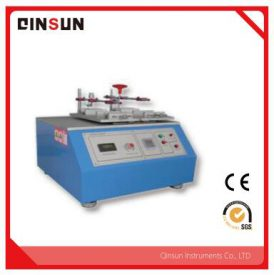
The Alcohol‑Pencil‑Eraser Abrasion Tester is a multifunctional device for evaluating material or product surface durability under friction. It uses different friction media—such as cotton cloth moistened with alcohol, eraser strips, or pencil tips—to apply reciprocating or back-and-forth friction on the test surface, simulating real-world wear scenarios like wiping, touch, or writing.
Typical test modes include:
Alcohol friction test: Using cotton cloth moistened with alcohol or other liquids to simulate wear during cleaning.
Eraser friction test: Using an eraser attached to the friction head for reciprocating motion, simulating light surface abrasion.
Pencil friction test: Using pencil tips or pencil‑based friction tools to create scratches or friction on the surface.
This type of tester is commonly used in electronics, plastics, coatings, screen printing, labels, leather, and textiles to evaluate how surfaces withstand daily use and cleaning.
Surface abrasion resistance is a key quality indicator. In real-world use, products may encounter:
Cleaning with alcohol or other solutions (e.g., wiping smartphone screens)
Everyday contact (e.g., bag surfaces, touch operation)
Mechanical wear from pencils or other hard objects
The tester standardizes these scenarios, allowing companies to:
Quantitatively evaluate wear resistance: Set friction cycles, load, and speed to measure material durability.
Compare materials or processes: Evaluate differences in coatings, protective films, or surface treatments.
Meet standards and regulations: Many materials standards require abrasion testing for compliance.
Guide design improvements and quality control: Ensure products meet expected durability during R&D and production.
Overall, the instrument provides scientific data for optimizing material formulations, production processes, and product warranty strategies.
The tester typically consists of:
Frame and test stations: Provide stable support, with one or multiple test positions.
Friction heads and media fixtures: Hold erasers, alcohol‑moistened cloth, or pencil friction tips.
Drive system: Motor-driven to produce reciprocating or back-and-forth motion at set frequency and stroke.
Load application device: Applies specific friction force via weights or springs.
Control system and counters: Set friction cycles, speed, count, and automatic stop functions, while displaying actual cycles.
Working principle: The friction head repeatedly rubs the sample surface under a specified load, speed, and number of cycles. Surface wear, scratches, or coating changes are observed to assess abrasion resistance quantitatively or qualitatively.
Sample and medium preparation: Secure the sample on the platform; moisten the cloth with alcohol and attach it to the friction head.
Parameter setting: Define the friction load, cycles, and motion frequency. Ensure flat contact between sample and friction head.
Execution: Start the tester, allowing the alcohol‑moistened cloth to reciprocate across the surface.
Result observation: Examine the sample for wear, pattern loss, color change, or coating damage.
Alcohol friction testing simulates wear caused by daily cleaning, chemical exposure, or touch, making it suitable for coatings, printed layers, and decorative surfaces.
Differences Between Eraser and Pencil Friction Tests
Eraser friction: Uses standard eraser material as the friction medium, suitable for evaluating resistance to soft or flexible friction such as light rubbing, wiping, or touching.
Pencil friction: Uses a pencil tip to simulate harder object contact, testing scratch resistance and surface durability under greater pressure. Standard angles (e.g., 45°) are used for reproducibility.
A multifunctional tester can switch friction heads to accommodate all three test types.
Common standards for abrasion testing include:
ASTM F2496: Provides guidance for friction and wear testing.
ISO 1518 series: Specifies friction and abrasion tests for plastics and other materials.
Local or industry-specific standards (e.g., GB/T) may also apply.
Standards define friction media, applied load, cycles, and surface evaluation criteria to ensure comparability and reproducibility.
Results are evaluated based on surface condition after friction:
Appearance changes: Scratches, paint loss, color change, or blurred markings
Wear level: Assessed visually, microscopically, or via color measurement instruments
Durability relative to test cycles: Determining whether the material withstands the intended number of cycles without critical damage
Reports typically record friction cycles, applied load, and evaluation grades (e.g., negligible wear, slight wear, severe wear) to indicate compliance or performance level.
More cycles do not always mean better results: Cycles should match standards or realistic use; excessive cycles may cause unnecessary damage.
Single friction medium is insufficient: Different media simulate different scenarios; using only one may not fully assess wear resistance.
Unstandardized load and speed: Friction force and speed must follow test protocols to ensure comparability.
Ignoring surface preparation: Samples should be clean, dry, and consistent with untested controls.
Regularly clean friction heads and test platforms to prevent residue affecting results.
Inspect and replace worn erasers, cloth, or pencil holders.
Lubricate moving parts to maintain smooth operation.
Calibrate counters and load devices to ensure accurate readings.
Proper maintenance extends equipment life and ensures consistent test results.
Electronics: Screen, body coating, or printed keys abrasion resistance.
Plastics: Automotive interiors, appliance housings, and surface treatments.
Printed patterns: Labels, screen printing, or decorative surfaces subject to daily contact or cleaning.
The Alcohol‑Pencil‑Eraser Abrasion Tester is a reliable tool for evaluating surface wear resistance. By simulating real-world friction scenarios in a standardized manner, it quantifies resistance to wiping, cleaning, touch, and scratches. It is widely used across electronics, plastics, coatings, and other industries requiring surface durability assessment. Understanding its working principle, test methods, standards, and maintenance ensures effective product development, quality control, and standardization.


